Jun 22, 2015
I look forward to exploring that further with you in the next round of questions.
The Public Record
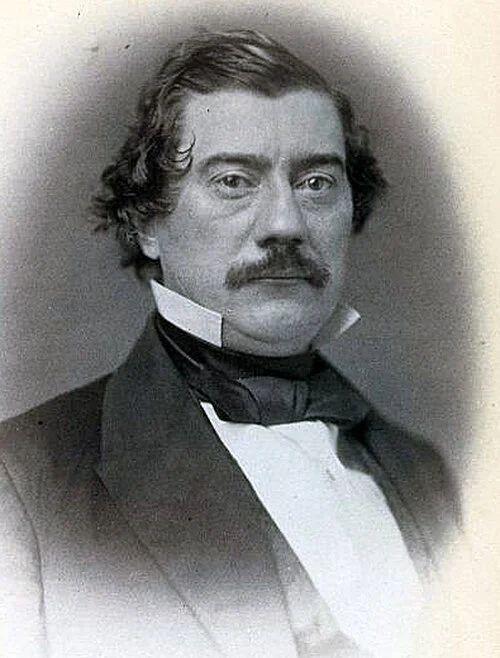
Chris Coons is a United States Senator from Delaware, serving since 2010. A member of the Democratic Party, Coons has been involved in various Senate committees, focusing on issues such as foreign relations, judiciary matters, and small business. He is known for his advocacy on topics including military policy and legal transparency in government actions. Coons has also been active in promoting bipartisan efforts in the Senate.
I look forward to exploring that further with you in the next round of questions.
My question was not whether it would have prevented the breach. It was whether it would have prevented the accessibility and use of personally identifying information once the system was breached.
I am particularly concerned about Federal law enforcement officers and their families, because they have credible reasons to be concerned.
If you had actually encrypted Federal employees' Social Security numbers or their personally identifying information, would that have prevented the disclosure?
I am eager to follow up with you on that and to get some reassurance about the swiftness with which gravely concerned Federal employees of all backgrounds are able to get updates.
We are here today, as the chairman has laid out, to review information technology spending and data security at the Office of Personnel Management.
We have seen significant data breaches for Home Depot, JPMorgan, Target, Sony, Neiman Marcus, just to name a few.
If OPM had completed its planned IT upgrades, would this breach have been prevented?
We also need to address the late-breaking inspector general audit that expresses concerns about OPM's IT modernization project.
Would it be reasonable for us to have expected that OPM could achieve data security given the resources they currently have available to them?
Are there additional tools or enhancements that you need in order to deal with the critical issues that are now well and widely known?
I also urge us to put this in the context of larger cybersecurity challenges that face our Government and our society as a whole.
It is 3.7 times more likely that an African-American will be charged with marijuana possession than a white person despite identical rates of use.
Collateral consequences in terms of employment, access to housing, access to skills or training programs, lots of other things that once you have a criminal record continue to accumulate.
The right to counsel is one of the foundational rights of our constitutional order.
If I could, Chief Justice Cady, we have heard testimony today that suggests as much as $1 billion in government resources could be saved by decriminalizing some offenses that would really be better treated as civil infractions.
There is an uneven collection of data, uneven access to counsel, uneven representation both in terms of quality and timeliness and its impact on outcome.
I want to take us back to access to broadband and making sure that we have an E-rate program and an USF that works.
I suspect something you will find bipartisan agreement about is the need to continue with investment for rural access.
I think it is critical for us to sort them out, regardless of the timeline, to make sure that we manage to meet Congress' expectation for this auction.
Thank you for a broad and vigorous conversation about a lot of different issues.
It is important to recognize a patent is only as strong as the owner's ability to enforce it and the awareness of others of that ability.
Politicians like Chris Coons