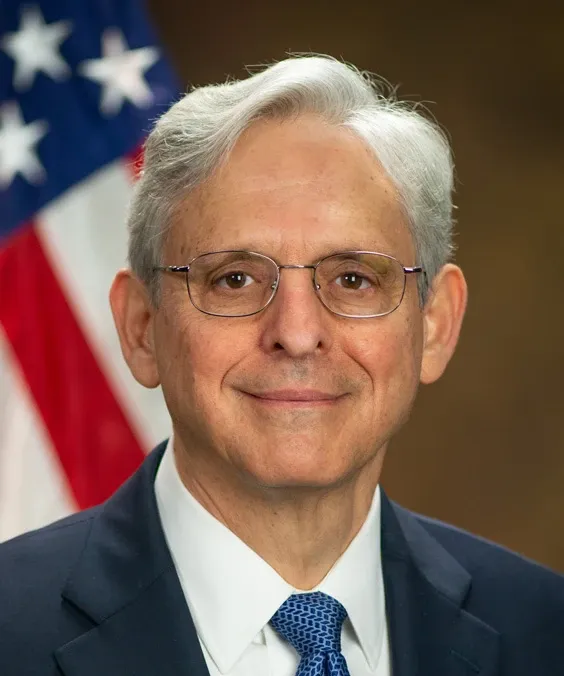
Antony Blinken
The Public Record
Antony Blinken is the 71st United States Secretary of State, having been appointed by President Joe Biden in January 2021. A member of the Democratic Party, Blinken has played a significant role in shaping U.S. foreign policy, focusing on issues such as international alliances, climate change, and global security. He previously served as Deputy National Security Advisor and Deputy National Security Advisor during the Obama administration, where he was involved in key diplomatic initiatives, including the Iran nuclear deal.
Jan 20, 2015
I regret that I did not live up to the standard I set during that hearing and in the remarks that you just quoted.
Jan 20, 2015
As part of the JPOA we also committed, within the bounds of our system, not to impose new nuclear-related sanctions while the JPOA is in effect.
Jan 20, 2015
Any agreement with Iran would require the kind of access, monitoring, and transparency that actually would put Iran in a place that is exceptional.
Jan 20, 2015
I were aware generally that the White House was conducting secret discussions with Cuba.
Jan 20, 2015
We seek to achieve a long-term comprehensive solution to the Iranian nuclear issue.
Jan 20, 2015
Iran still is not open for business, and its economy remains in a deep hole.
Jan 20, 2015
The concern that we would have is that if we are saying we are going to be suspending certain sanctions early on, and yet that is still subject to an initial vote by the Congress in some fashion, they will doubt our ability to actually…
Jan 20, 2015
I do not think that is possible. Can we significantly increase our ability... to detect an effort by Iran to develop a covert program?
Jan 20, 2015
We will be no worse off, and, indeed, we will be infinitely better off, given the knowledge that we will accumulate over time about their program.
Jan 20, 2015
Any agreement has to eliminate its production of 20 percent fissile material in a permanent fashion.
Jan 20, 2015
Even if Iran does not walk away or promptly returns to the table, its negotiators are likely to adopt more extreme positions in response.
Jan 20, 2015
Because of the scope and intensity of the sanctions Iran currently is subject to, and because of the economic pressure those sanctions continue to apply, we believe that new sanctions are not needed at this time.
Jan 20, 2015
We believe that the best way to proceed is based, not only the commitments they make, but also the steps they take to implement those commitments.
Jan 20, 2015
Thanks to cooperation on the international stage between the United States and its allies, and the joint work of Congress and this administration, Iran is negotiating with its back against the wall.
Jan 20, 2015
At the end of the day, we will all have to judge whether what we have achieved in any kind of solution meets our security interests.
Jan 20, 2015
We have real reasons to be deeply concerned and skeptical about the ability to reach any arrangement.
Jan 20, 2015
So far from being able to implement additional sanctions, we would be unable probably to implement the existing sanctions regime.
Jan 20, 2015
In our efforts to prevent Iran from obtaining a nuclear weapon, sanctions were never an end in themselves.
Politicians like Antony Blinken