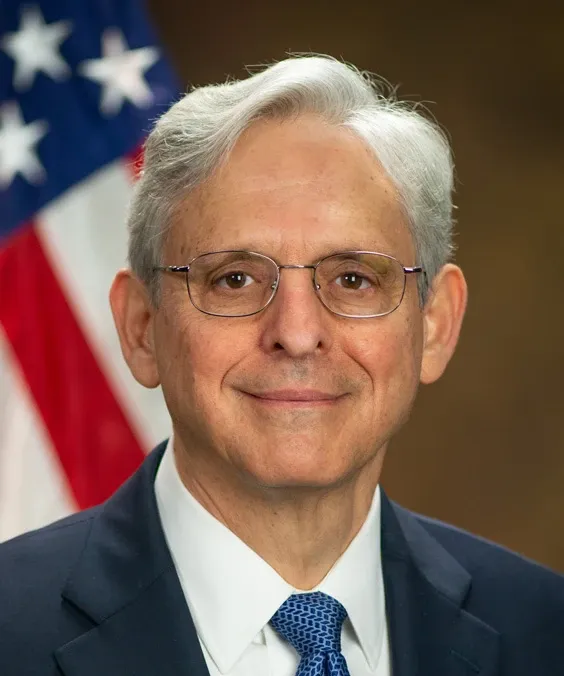
Antony Blinken
The Public Record
Antony Blinken is the 71st United States Secretary of State, having been appointed by President Joe Biden in January 2021. A member of the Democratic Party, Blinken has played a significant role in shaping U.S. foreign policy, focusing on issues such as international alliances, climate change, and global security. He previously served as Deputy National Security Advisor and Deputy National Security Advisor during the Obama administration, where he was involved in key diplomatic initiatives, including the Iran nuclear deal.
Apr 11, 2016
What we are doing, instead, is trying to identify, elevate, and build the capacity of local credible voices.
Apr 11, 2016
we must address the ideology and tactics these groups employ to attract new recruits.
Apr 11, 2016
The challenge of actually moving from...liberating territory to then stabilizing it...is where the challenge really comes in.
Apr 11, 2016
We have to find ways to create what amounts to a win-win solution, that is, the host communities have to benefit along with the refugees.
Apr 11, 2016
In the absence of creating space in their society for people to express their views, to associate freely, and to come together, they are going to sow the seeds of long-term instability.
Apr 11, 2016
I think it varies very much program to program, sector to sector. It would be hard to rank order, I think, countries across the board.
Apr 11, 2016
Our ultimate success in the fight against violent extremism will be determined by our ability to hold fast to the very values that terrorists oppose: our capacity for reason, for wisdom, and for compassion.
Apr 11, 2016
The multi-sector programming is vitally important. We have to have these interconnections, and that's exactly what we're trying to do.
Apr 11, 2016
It is not the violence, because that's gone. It's two things: it's an absence of access to school and education for the kids, and it's a lack of access to employment, to jobs, for the parents.
Apr 11, 2016
Your leadership is helping to ensure that in their very acts of terror, violent extremists are precipitating exactly what they hope to destroy, a world a little bit more closely bound together in defense of dignity, justice, and peace.
Apr 11, 2016
The burden on Jordan, the burden on Lebanon, the burden on Turkey, as you saw firsthand, Mr. Chairman, is extraordinary.
Apr 11, 2016
we found that actually wasn't so effective. We were not the best messenger in this space.
Apr 11, 2016
We are at risk of creating a lost generation of children, and we know what that means.
Apr 11, 2016
We want to make sure that, in fact, what we're trying to do is really leverage our assistance in different ways.
Mar 18, 2015
Well, of course, if there is no deal Iran could rush to a nuclear capacity and a nuclear weapon tomorrow, which I imagine is exactly what would spark an arms race.
Mar 18, 2015
We will insist that the IAEA have the access it must have in order to do its job and to verify.
Mar 18, 2015
At the end of the day, again, we have to deal with--and by the way, I should say we don't accept the proposition that they would get a nuclear weapon.
Mar 18, 2015
The administration's support for Israel is absolutely unshakable. We have done more for Israel's security over the last 6 years.
Mar 18, 2015
The only reason that they are there is in order to relieve some of that pressure.
Politicians like Antony Blinken