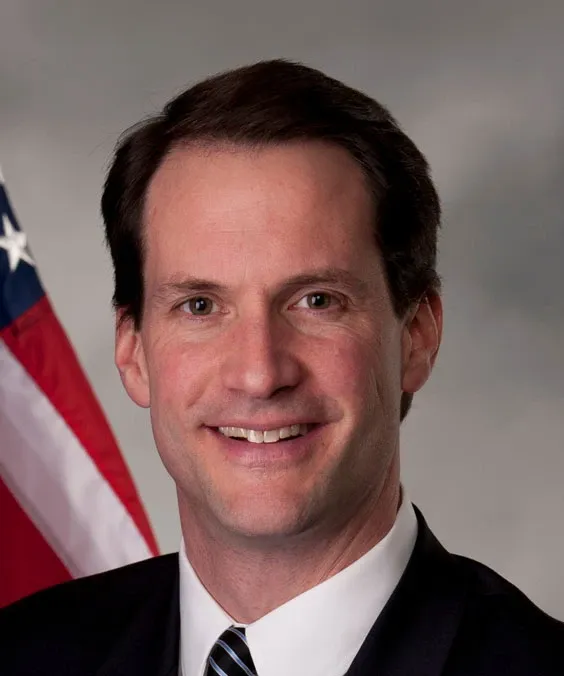
Joe Lieberman
The Public Record
Joseph Lieberman is an American politician and attorney who served as a United States Senator from Connecticut from 1989 to 2013. Initially a member of the Democratic Party, he gained national prominence as the party's nominee for Vice President in the 2000 election alongside Al Gore. After losing the election, Lieberman continued to serve in the Senate, where he became known for his centrist views and willingness to cross party lines, particularly on issues such as national security and energy policy.
Jun 8, 2009
It's been a very constructive panel and it helps to guide us as we go forward to our markup next week.
Jun 8, 2009
One thing I'm confident of is that Senator Inhofe will stay on this until he gets that answer.
Jun 8, 2009
I hope we've all learned. I agree with you, we're going to get a lot out of it, we've already gotten a lot out of it, some of it quite amazing really in technological advances.
Jun 8, 2009
Do you want to flesh out that conclusion just a bit, about why did you conclude that in some cases the Army was too close to the lead systems integrator?
Jun 8, 2009
We're in a most unusual moment, which is, as you said, recruitment is going very well, there is a high level of recruits coming in.
Jun 8, 2009
So here, as well as in some other key decision areas, you're really waiting for the QDR to give some guidance about where we go from here?
Jun 8, 2009
I take from that you support the changes in the FCS program as recommended by Secretary Gates and ultimately the President.
Jun 8, 2009
We're going to work to increase the authorization by 30,000 and hope that together we can find the money
Jun 8, 2009
There will be a serious effort in this subcommittee... to increase the authorized end strength of the Army by 30,000.
Jun 8, 2009
To say that the service of the personnel of the Army has been extraordinary, whatever the phrase is, it seems to me that this is the next greatest generation in service of our country.
Jun 8, 2009
We are adamant, and I know the members of this esteemed subcommittee are equally adamant, that we never want to send our soldiers into a fair fight.
Jun 8, 2009
However, we understand that initial insights will be available to Army budget planners as early as the end of July.
Jun 8, 2009
This is not unusual, of course, in the first year of a new administration, but it does make our subcommittee's work in Army modernization oversight that much more difficult.
Jun 8, 2009
The implementation of these decisions will require detailed analysis and planning, prioritization, and resource alignment, none of which has been done yet.
Jun 8, 2009
Today's topic, which is Army modernization, merits particular concern because of the many changes that are underway to reorient and restructure our national defenses.
Jun 8, 2009
The subcommittee will come to order. Good afternoon. We particularly welcome General Chiarelli and General Thompson.
Jun 8, 2009
We on this committee are always mindful that we're a Nation at war, and obviously the budget has to play some role and resources have to play some role.
Jun 8, 2009
I agree. I was thinking when Senator Chambliss said you were messengers that you should be assured that this is a subcommittee where we do not kill the messengers.
Jun 8, 2009
We can't afford the second engine and it will compromise the JSF program. So I hope we stick with the President's recommendation on that one.
Jun 8, 2009
So this has real consequences. In a normal case, of course you'd like to have two programs. But you can't have it all.
Politicians like Joe Lieberman