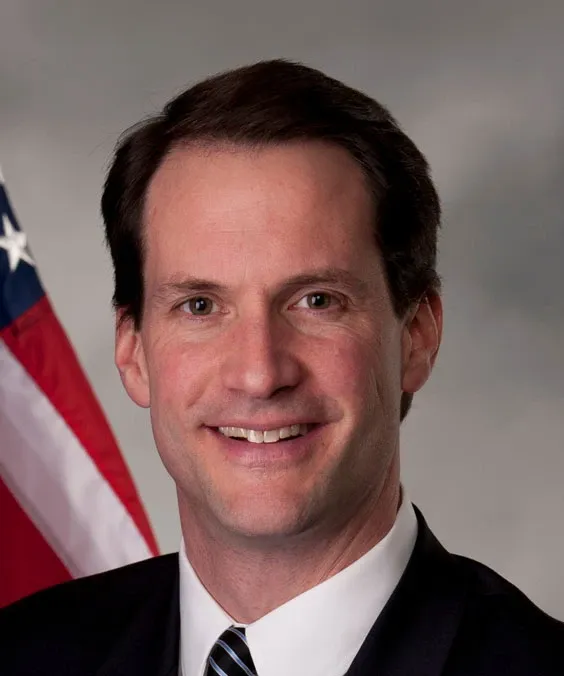
Feb 1, 2010
We've been providing security for sea lines of communication that are moving over a trillion dollars of commerce per year.
The Public Record
Joseph Lieberman is an American politician and attorney who served as a United States Senator from Connecticut from 1989 to 2013. Initially a member of the Democratic Party, he gained national prominence as the party's nominee for Vice President in the 2000 election alongside Al Gore. After losing the election, Lieberman continued to serve in the Senate, where he became known for his centrist views and willingness to cross party lines, particularly on issues such as national security and energy policy.
We've been providing security for sea lines of communication that are moving over a trillion dollars of commerce per year.
We seek a constructive, obviously a peaceful, relationship with them, but we also have both historic presence in the Asia Pacific region.
State-sponsored WMD programs and extremists seeking to acquire such weapons pose a grave threat to our allies and interests.
Military-to-military discussions with Russia, as well as China, are important.
Many of us here have been concerned that the Russians might try to bring into the treaty some limitations on our freedom of action with regard to defensive systems.
We have to both maintain the peacefulness of the relationship, but a clarity and an honesty in our relations with the Chinese.
I appreciate your answer. Look, I agree that the transfer of OPCON is the right thing to do.
Personally, I worry that these ideas are ill-advised, although I'm sure we all look forward to the time when there can be reconciliation.
You describe Iran as 'the primary state-level threat to stability in the region,' add that its nuclear program is, to use your words, 'serious,' and 'part of the regime's broader effort to expand its influence.'
That 71-percent appreciation of the United States in Latin America may be higher than the appreciation of the United States in America today.
I was unsettled a bit when the recent QDR said that it would basically scrap the second and third of those.
I wanted to ask you, as you sort of prepare to retire, whether you believe we should continue to develop and test the two-stage GBI, for instance, as a hedge against a possible Iranian breakout.
Moving them in a direction that is integrated I think will be very encouraging to the body politic in Bosnia-Herzegovina.
I think we feel a sense of pride about what the United States was able to do in the 1990s to stop the aggression and genocide there.
I want to understand--make, just, clear for the record--will the one brigade-sized force remain in effect?
I think we in the United States do not have the market cornered on all the smart technology.
I think we were paying too little attention to this critically important continent.
The current Transition Federal Government... is an effort that I would continue to endorse.
Politicians like Joe Lieberman