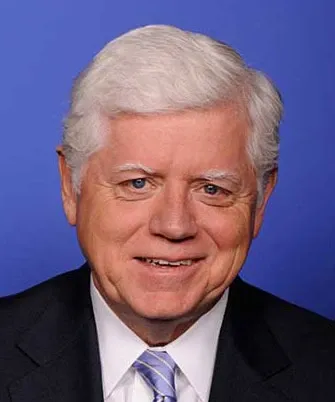
Joe Courtney
The Public Record
Joe David Courtney is a U.S. Representative for Connecticut's 2nd congressional district, serving since January 4, 2007. A member of the Democratic Party, he has focused on issues such as education, healthcare, and veterans' affairs during his tenure. Courtney has been an advocate for policies that support working families and has worked on initiatives to improve infrastructure in his district. He has also played a role in discussions surrounding military and defense matters, given the presence of military installations in Connecticut.
Mar 12, 2019
This morning, myself along with a lot of my colleagues on this committee are reintroducing the Bank on Students Emergency Loan Refinancing Bill.
Mar 12, 2019
Hopefully, this is going to be the year that the 116th Congress reauthorizes the Higher Ed.
Mar 5, 2019
I think we are--with this administration, I mean, we may be looking at a situation where there is no effort made to extend it.
Feb 26, 2019
I think that we can all agree that going to work shouldn't mean getting hurt at work.
Feb 26, 2019
I want to again thank Dr. McClain and Ms. Moon-Updike for coming here and really putting a human face on this issue.
Feb 26, 2019
And again, within that year period for an interim rule, which I think the data from GAO more than justifies...
Feb 26, 2019
Well, thank you, Madame Chairwoman. And again, I want to thank you for your leadership.
Feb 26, 2019
Congressman Courtney from Connecticut, who will be with us today, has introduced the Workplace Violence Prevention for Health Care and Social Service Workers Act.
Feb 25, 2019
Senator McCain...was the most adamant during the conference during the 2019 NDAA to make sure that the many recommendations actually are now a part of law and statute.
Feb 25, 2019
I look forward to continuing the close and ongoing work between the two committees, Readiness and Seapower.
Feb 11, 2019
While crumbling schools are a visible risk to students, the effect of chronic underfunding on our teachers is equally, if not more, concerning.
Feb 11, 2019
An overwhelming majority of Americans understand the correlation between consistent nationwide failure to support public schools and inequality in educational opportunity.
Feb 11, 2019
I joined Congressman Norcross and Senator Jack Reed, along with 180 Members of Congress, to introduce the Rebuild America's Schools Act.
Feb 6, 2019
I am just curious, can you describe how our legal framework has changed regarding those protections and supports for individuals in all aspects of society and how this does impact and necessitates the phasing out of 14(c)?
Feb 6, 2019
You have a chance here to live up to the legacy of Congresswoman Mary Norton.
Feb 6, 2019
Early votes on raising the minimum wage showed the national consensus on raising the wage and the importance of maintaining a decent floor of wages.
Feb 6, 2019
The reason the exclusion was so devastating to African Americans is that from 1930 to 1940, 40 percent of Southern Blacks were in agriculture.
Feb 6, 2019
Those original components in the 1938 bill had exemptions that, however, were not benign.
Politicians like Joe Courtney