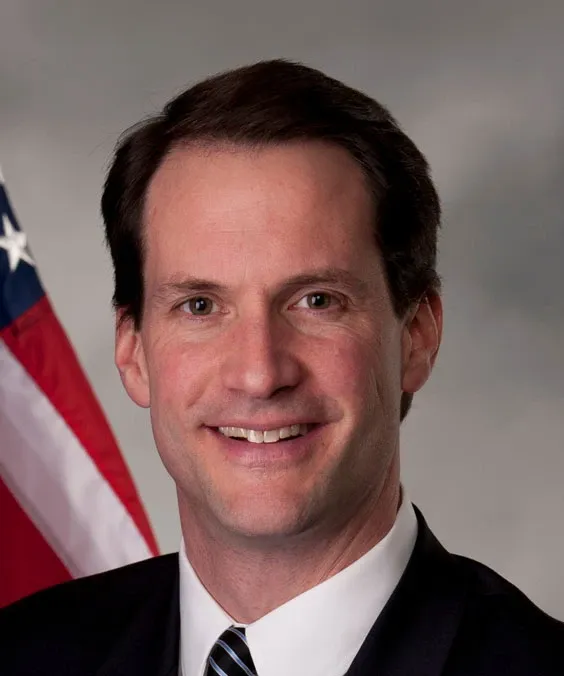
Jessica Rosenworcel
The Public Record
Jessica Rosenworcel is a prominent Democratic politician from Connecticut, currently serving as a Commissioner of the Federal Communications Commission (FCC). She was first appointed to the FCC in 2012 and has been a strong advocate for expanding broadband access and ensuring equitable communication services across the United States. Rosenworcel has focused on issues such as net neutrality and the importance of keeping communication networks robust and accessible for all citizens.
Sep 19, 2023
I could offer the services of my office and my whole agency to assist you because I want to make clear that when our commercial wireless economy grows, technology expands, and the U.S. does better.
Sep 19, 2023
We need to update it from time to time and reaching out to them regularly as we do has been useful.
Sep 19, 2023
The covered list is a list of equipment that our Nation's National Security authorities have found to be insecure.
Sep 19, 2023
I strongly support identifying a way to fund the Affordable Connectivity Program into the future to help more families get and stay connected to the high-speed Internet they need to participate in modern life.
Sep 19, 2023
I want to acknowledge that the Emergency Connectivity Fund, championed by Chairman Van Hollen, has also been instrumental in closing the digital divide.
Sep 19, 2023
Thank you for providing full funding for the FCC in your fiscal year 2024 bill.
Sep 19, 2023
We have come too far to turn back. Keeping this program funded needs to be a priority.
Sep 19, 2023
We are also implementing the Martha Wright-Reed Just and Reasonable Communications Act to ensure that the rates for prison pay phone calls are truly just and reasonable.
Sep 18, 2023
We can't do this on our own. We have got to find like-minded nations and then work with others.
Sep 18, 2023
I suspect the consent of the Department of Justice, and that might prove more challenging in identifying the resources.
Sep 18, 2023
Keeping these other agencies reporting to us about where their grants are going is a really important part.
Sep 18, 2023
We have also been exploring whether or not when we give you an authorization to participate in our economy, what kind of national security questions we should ask at the outset.
Sep 18, 2023
We need an additional $3.08 billion to fully take that equipment out securely.
Sep 18, 2023
I think that if we choose to take this equipment out of our networks and fully fund its replacement costs, we have to go tell everyone around the world that we chose to do that.
Sep 18, 2023
The covered list is a list of equipment that our Nation's National Security authorities have found to be insecure.
Sep 18, 2023
We are going to the World Radio Conference. That is a conference where global spectrum authorities gather every 4 years to discuss their plans for the wireless future.
Sep 18, 2023
I strongly support identifying a way to fund the Affordable Connectivity Program into the future to help more families get and stay connected to the high-speed Internet they need to participate in modern life.
Politicians like Jessica Rosenworcel