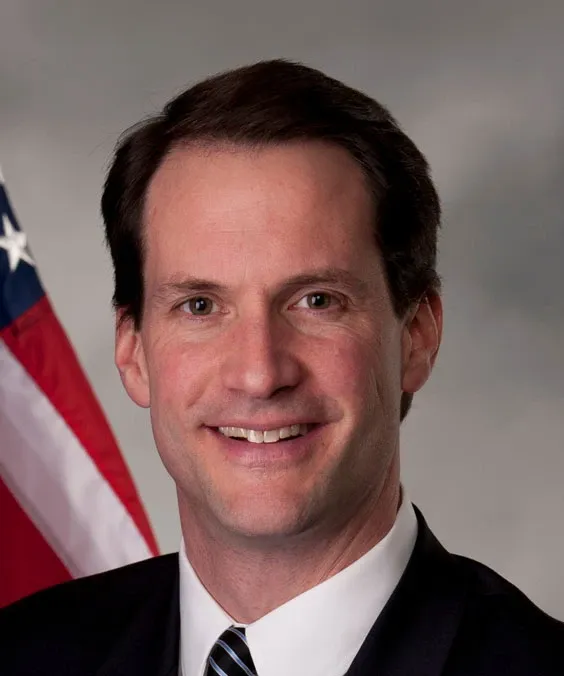
Jessica Rosenworcel
The Public Record
Jessica Rosenworcel is a prominent Democratic politician from Connecticut, currently serving as a Commissioner of the Federal Communications Commission (FCC). She was first appointed to the FCC in 2012 and has been a strong advocate for expanding broadband access and ensuring equitable communication services across the United States. Rosenworcel has focused on issues such as net neutrality and the importance of keeping communication networks robust and accessible for all citizens.
Sep 14, 2016
What happened 15 years ago on September 11 changed us all. It left an indelible mark.
Jul 11, 2016
If you don't have access to modern communications today, you don't have a fair shot at prosperity in the 21st century.
Apr 12, 2016
I believe it is our duty and a duty to our constituents to make sure that their money is only spent responsibly.
Apr 12, 2016
What we cannot support, however, is a fund that lacks external controls and is susceptible to waste, fraud, and abuse.
Apr 12, 2016
I don't think this is the way government should be handling the American people's dollars with cavalier disregard for basic fiscal discipline.
Mar 21, 2016
This is a law from 1991 and one of the challenges that the agency has right now...
Mar 1, 2016
It is absolutely necessary to have access to broadband to have a fair shot of prosperity in the digital age.
Mar 1, 2016
This month, at the FCC, we will begin the world's first spectrum incentive auction.
Mar 1, 2016
While we have only 5 percent of the globe's population, we have over one-third of its 4G deployment.
Mar 1, 2016
The good news is that the United States leads the world in the current generation of wireless technology known as 4G.
Nov 16, 2015
I think the homework gap is the cruelest part of our new digital divide, but it is within our power to bridge it and fix it.
Nov 16, 2015
By some measures, one-third of our Nation's real estate is owned by the Federal Government.
Nov 16, 2015
Privacy is a cherished principle, and it is also a complicated one in the digital age.
Nov 16, 2015
The challenge, as you acknowledge, comes with the Congressional Budget Office, which reviews spectrum legislation and has a heavy bias towards spectrum that gets auctioned.
Nov 16, 2015
It is a huge part of our daily lives, and it is a huge part of our economy, responsible for more than $140 billion in economic activity annually.
Oct 27, 2015
The Telephone Consumer Protection Act is a law from 1991. It is old, and it treats wireless phones and wired phones differently.
Oct 27, 2015
I think shot clocks and deadlines are really important. They have a way of motivating us toward action.
Oct 27, 2015
I think the greatest value in that legislation is, candidly, we have some reports that we have to produce annually that are a waste of commission resources.
Politicians like Jessica Rosenworcel