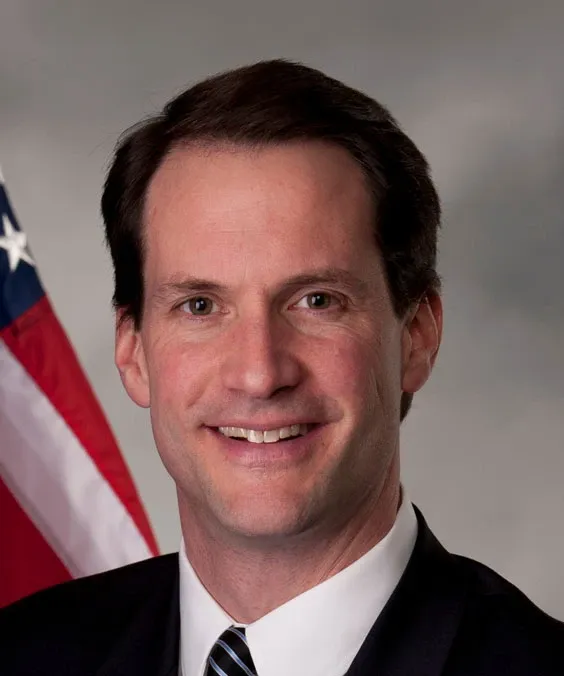
Jahana Hayes
The Public Record
Jahana Hayes is an American politician and educator currently serving as the U.S. Representative for Connecticut's 5th congressional district since January 3, 2019. A member of the Democratic Party, she made history as the first African American woman to represent Connecticut in Congress. Prior to her election, Hayes was a high school history teacher and was named the 2016 National Teacher of the Year, highlighting her commitment to education and advocacy for students.
Mar 27, 2023
As of September 2023, 16,500 jobs have been created in Connecticut since President Biden took office.
Mar 8, 2023
The Commodity Futures Trading Commission, the agency tasked with overseeing this activity, has not been fully authorized in over 10 years.
Mar 8, 2023
We are intentional in the way that we legislate to make sure that the impact is felt across the whole agricultural sector.
Mar 8, 2023
The Commodity Futures Trading Commission... has not been fully authorized in over 10 years.
Mar 8, 2023
Small farms account for 89 percent of the farms in the United States and 93 percent of the farms in my district in Connecticut.
Sep 28, 2022
This hearing of the Subcommittee on Nutrition, Oversight, and Department Operations entitled, A 2022 Review of the Farm Bill: Title XII--Department Operations and Outreach, will come to order.
Sep 28, 2022
Ensuring that Congress properly funds, supports, and oversees USDA operations so that the Department operates effectively... is critical to maintaining the American food supply.
Sep 13, 2022
Our producers use ecofriendly practices like cover crops to run their small, diversified farms.
Aug 30, 2022
I truly appreciate your interest pertaining to the barriers to entry for young, beginning, and small (YBS) farmers.
Aug 30, 2022
How can Congress reduce barriers for underrepresented farmers--for young, BIPOC, minorities farmers.
Jun 14, 2022
The best way to achieve greater participation of small farmers in Federal conservation incentive programs, is to make more resources available across the board to farmers of all size for environmental protection and climate-smart…
Jun 14, 2022
Thank you for asking how USDA programs, particularly those providing climate and environmental stewardship incentives, can be scaled appropriately so that smaller sized and underserved farmers can participate freely.
Jun 7, 2022
Several states provide E&T services through their community college networks.
Jun 7, 2022
The positive impacts of SNAP have been particularly felt during the pandemic and are continuing to grow.
Jun 7, 2022
This hearing is one in a series of hearings to review the 2018 Farm Bill and prepare for the 2023 Farm Bill.
May 25, 2022
I want to shift my line of questioning because like you, I was in the classroom when Sandy Hook happened.
May 11, 2022
I am concerned that removing intermediaries from the equation could create an opening for fraud and abuse.
Politicians like Jahana Hayes