The principle openly advocated is that none shall be obliged to contribute for the support of religious institutions.
David Daggett
The Public Record
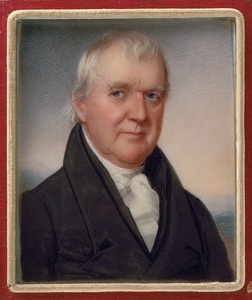
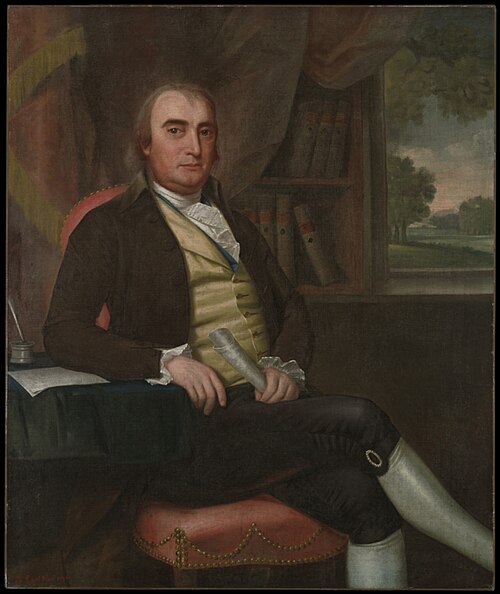
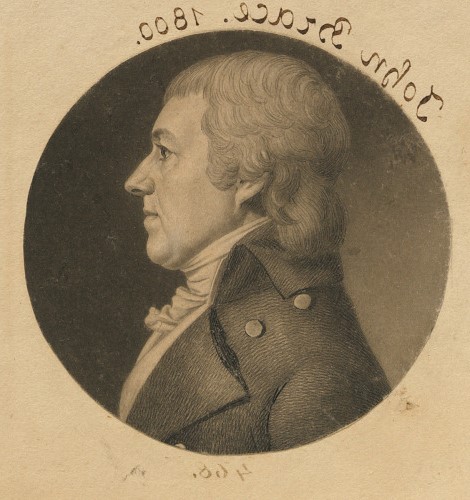
David Daggett was a U.S. senator, mayor of New Haven, Connecticut, Judge of the Connecticut Supreme Court of Errors, and a founder of the Yale Law School. He helped block plans for the first college for African Americans in the United States and presided over the conviction of a woman running a boarding school for African Americans in violation of Connecticut's recently passed Black Law. He judged African Americans not to be citizens and supported their colonization to Africa.
gutenberg.org
The constitution of the United States was first attacked by an unconstitutional repeal of a law, and now the independence of the Supreme Court is to be destroyed, by impeachments of the judges.
Another part of the cost of these projects, is the loss of all our institutions of religion.--It is not here intended that these institutions will be at once abolished--Such a measure would alarm some honest men of the party--a gradual but…
In the mean time all subordinate tribunals will partake of the same character.--Thus instead of a government of laws, there will be the tyranny of a desperate faction.--Let no one reply that there is no danger of such evils in Connecticut.
Be not deceived my fellow citizens--no nation hath yet made such an experiment without feeling its bitter and dreadful effects.
Can a Court be a shield against the proud oppressor when a daring leader can crush them with his nod?
Is it worthy of no consideration that judges who are to be the arbiters of controversies--who are to adjudicate on the lives of their fellow citizens, and to whom is committed the dearest and highest interests of society, should be men of…
What could now be expected from these men but that they become immediately the creatures of a party--the tools of a faction?
What can a nation or state expect from such men?
Another part of this expense will be the elevation of men to office who are unworthy of public confidence.
To revolutionize Connecticut it will be necessary to circulate, without any intermission, many gross falsehoods respecting the men in power, the judges, legislators and magistrates, and the acts and proceedings of the General Assembly.
Another item in the expense of accomplishing these projects, is a corruption of morals.
One part of this cost will be an increase of the violence of parties.
It is to be recollected that the proposition is to change the vital principles of our government--to displace our present rulers and to fill their places with men who never enjoyed the public confidence.
Why laugh at your folly---take all the offices and leave you to take care of yourselves.
The leaders in this Convention knew full well that there is intelligence enough in Connecticut to meet them on any complaint, and to shew that it is groundless.
To that suffering nation turn your eyes and reflect that the mighty mass of woe under which they have groaned, was produced by an ambition, fierce, cruel and destructive as hell, and that an ambition alike terrible reigns every where.
In the grave of anarchy and despotism with millions of deluded inhabitants who have been sacrificed by the Robespieres and the Bishops of that suffering nation.
The people of France have had six Constitutions within fifteen years, and where are those Constitutions?
In Georgia they have had two Constitutions, and in Vermont two, and who dare pronounce their political situation equal to that of Connecticut.
Look also at these Delegates from ninety- seven towns, and say if they can have any other object in view but the dignity, happiness and glory of their country?
My fellow citizens, look at the whole course of the lives of Judd, (I place him first on the list because he was chairman) of Bishop and of Wolcott, and say if they have not ever been under the influence of the most disinterested virtue…
Is it not clear that this whole proceeding originates in a pure unmixed affection for the people and a sacred regard to truth?
Can any man doubt either the truth of this remark or the sincerity with which it is uttered?
Who commissioned these gentlemen for this important labor of providing them with a Constitution?
Politicians like David Daggett