Feb 9, 2015
We have to decide, as a community, do we want to protect the most vulnerable among us, or do we want to provide choices and options for protection?
The Public Record
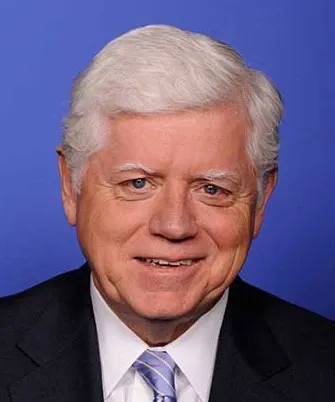
Chris Scott Murphy is a United States Senator from Connecticut, serving since January 3, 2013. A member of the Democratic Party, Murphy has been a prominent advocate for various progressive issues, including gun control, healthcare reform, and climate change action. He has played a significant role in national discussions surrounding these topics, often emphasizing the need for legislative changes to address pressing societal challenges.
We have to decide, as a community, do we want to protect the most vulnerable among us, or do we want to provide choices and options for protection?
If we want to protect the vulnerable, like Dr. Jacks' children, then immunization needs to take place to do that.
We've seen just in the last 3 years, that the number of people who are applying for and getting religious exemptions has doubled--just in 3 years.
Here's a pretty stunning one from 2006. In States that had higher bars for exemptions, they were 50 percent less likely to have whooping cough outbreaks.
I think there was a natural political dynamic that played out, in which these kids just didn't get represented.
Most educators in my State of Connecticut would love this concept of flexibility, the idea that Washington should just send a chunk of money down to the States and let them decide what to do with it.
Regardless of the terminology, we've got to figure out some way to have accountability.
We need to remember what was happening before NCLB was put into effect. The reality was that the act is named what it's named because there was a whole cohort of kids, millions of them, who were being left behind.
The Affordable Care Act, according to you, is, in and of itself, an incentive to move from employer-sponsored care to other forms of health care.
We're spending, on average, about $1,000 less per Medicare beneficiary than we had initially thought.
We have spent about $2 trillion less on health care since the passage of the Affordable Care Act than the CBO had initially estimated.
I believe the latter, the reducing coverage, is not materially affected by this.
They were pretty wrong in estimating the health care expenditures of the United States in the wake of the passage of the Affordable Care Act.
And there was a legitimate concern raised about the JPOA that did not end up coming true.
The Constitution spells out very clearly that it is our responsibility to declare war, and thus, we need to weigh in on what is happening today in Syria and Iraq.
I have been one of the strongest proponents of Congress exercising its constitutional authority and responsibility when it comes to being coequal with the executive branch with respect to the management of foreign affairs.
It's important for us not to abandon the gains that we've made with respect to children with learning disabilities.
I came to Congress as a vocal opponent and critic of No Child Left Behind for a lot of the reasons that Senator Whitehouse enunciated.
For me, this is not about politics. This is about policy. It is about the national interests and security of the United States.
We stand by the Iranian people when they are abused by their own government, when their rights are not respected.
There has been a suggestion that because there is an element of the agreement that obligates us not to take steps that would stop economic relations between other countries and Iran, that we could perhaps be in jeopardy of breaching the…
We are in the process of negotiating very closely, discussing very closely with the IAEA and Russia what exactly that will look at.
Politicians like Chris Murphy