May 19, 2015
If we are going to have an open and honest discussion about the energy needs of this country, a necessary part of that dialog must be dedicated to how that energy gets from point A to point B.
The Public Record
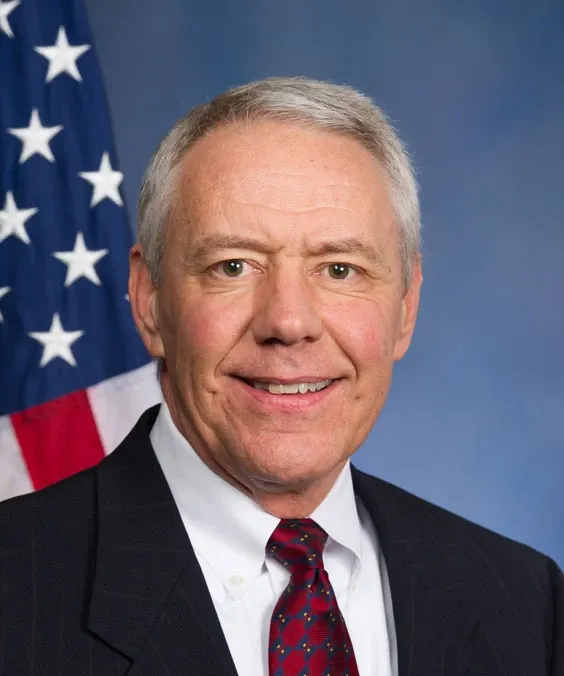
Doug Lamborn is an American politician serving as the U.S. Representative for Colorado's 5th congressional district since January 4, 2007. A member of the Republican Party, he has focused on issues such as military and veterans' affairs, energy policy, and fiscal responsibility during his tenure in Congress. Lamborn has been an advocate for the military presence in Colorado and has worked to support local defense industries. He has also been involved in various legislative efforts aimed at reducing government spending and promoting economic growth in his district.
If we are going to have an open and honest discussion about the energy needs of this country, a necessary part of that dialog must be dedicated to how that energy gets from point A to point B.
I would just conclude by saying that we are being taken for suckers if we are expected to keep up one end of a bargain and we are dealing with a country that, in so many cases, is not keeping their end of the bargain. That is why this…
If the gentleman will continue to yield, I thought that it was better timing to do it in this particular venue because we had other things going on in committee.
Ms. Goldfuss, you said that your revised draft guidance 'is not a rule or regulation, and is not legally enforceable.'
If all of the climate models that Ms. Goldfuss and others do adhere to were correct, are you still saying that a single country, or a single project within a country, like a particular electrical generating coal-fired power plant, is going…
I want to commend you. You had an excellent reputation, your whole organization, and you did an exemplary job.
Today, the subcommittee is meeting to discuss H.R. 1937, the 'National Strategic and Critical Minerals Production Act of 2015' that was introduced on Wednesday, April 22, 2015, by Congressman Mark Amodei and 37 original co-sponsors.
I would like to enter into the record a recent letter led by Senators Mark Warner of Virginia and Tim Scott of South Carolina that expresses support for offshore energy development in the Mid- and South Atlantic, and revenue sharing for…
Bottom line, an aggressive offshore leasing strategy would clearly demonstrate a true commitment to OCS oil and gas production in the United States.
If BOEM truly wanted to show that the United States is committed to more offshore production, we would be seeing a path toward streamlining the seismic permitting process.
I bring it up because the Administration often says it is 'committed' to promoting oil and gas production on Federal lands.
There has to be accountability, we have to change the way things are done in the future.
I back up my Chairman's position a hundred percent. I am still staggered and stunned by what is going on.
I have a real problem with the two major limitations that the President has put into his proposed language: a limitation on time and a limitation on scope.
I am really concerned that, just this week, President Barack Obama was interviewed and compared fighting ISIS to a big-city mayor fighting crime.
And I have 100,000 veterans in my district and almost that many dependents and other family members.
Good. And I hope that means fewer people doing the same job which means less budget dollars going to personnel.
I will do everything I can to make sure that those funds are in the budget and I will work with other folks to try to achieve that.
When he was first saying the Army Corps of Engineers need to be brought in, a lot of people didn't believe him.
Politicians like Doug Lamborn