And one of the things that I've heard over the past several months--and, in fact, I held a series of farm bill roundtables earlier this spring, where one of the things we heard about so much, and this is part of the fiscal cliff that we're…
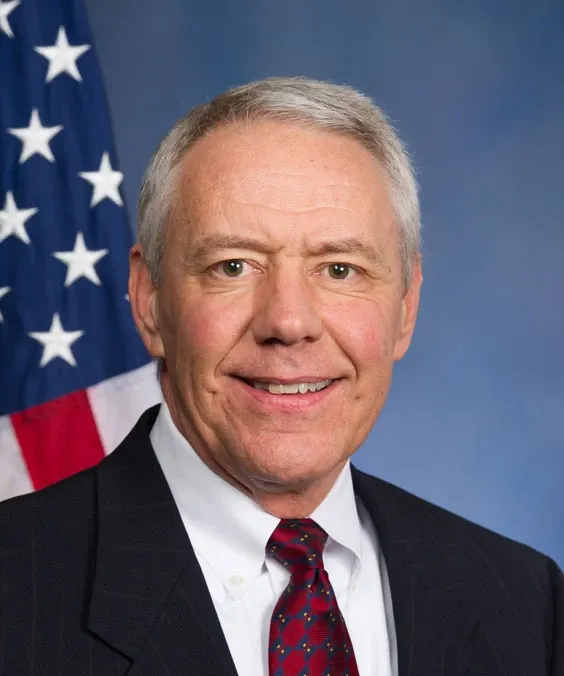
Cory Gardner
The Public Record
Cory Gardner is a former Republican U.S. Senator from Colorado, serving from 2015 to 2021. He was the first Republican to win a U.S. Senate seat in Colorado since 2002. During his tenure, Gardner focused on issues such as energy policy, healthcare, and national security. He was known for his efforts to promote renewable energy and for his work on legislation related to nuclear weapons and defense. Gardner lost his re-election bid in 2020 to Democrat John Hickenlooper and has since stepped away from active political office.
Well, and I think that's the key, actually, as you mentioned, spurring economic growth. And we can talk about what happens to our economy with this policy or this legislation. But the bottom line is we've got to address that debt and…
You talk about those bills, the regulations that we've passed. You talk about the things that we have done to avoid the fiscal cliff, the things that we have done to avoid sequestration. There's a word that's been missing that we haven't…
And the gentleman from Kansas and I share a common, we share the border, eastern Colorado, western Kansas. And so many of the challenges that my farmers are facing your farmers are facing. And you're right, we won't get into water tonight…
I thank the gentleman from Aurora for yielding time to share today, and thank the gentleman from Colorado (Mr. Perlmutter) for your leadership and your comfort and encouraging words during an incredible tragedy. And to the President, thank…
These are individuals whose sole job it is is to write new regulations; 34,000 new people to write new regulations.
I want to thank my colleagues from Indiana, Alabama, Colorado, Arizona, and North Carolina who stood on the House floor tonight talking about what we could do to get this country moving again, what we could do to unleash the innovators and…
And I think the gentleman from Arizona brings up a good point because the President likes to blame Congress for not increasing taxes or for spending enough money. But we know that this President is in charge of his executive branch…
You're exactly right, the punitive approach to regulation that's not actually trying to make a business improve, it's not trying or concerned with safety, but it's more concerned with the number of tickets or violations that they write…
The gentleman from Indiana brings up a great point. And as I mentioned earlier tonight, there was an article in Politico that was printed last week. The President's jobs council hasn't even met for 6 months. I don't know if they have given…
I often tell my constituents a story about my great- granddad when he came to Colorado and opened up the farm equipment dealership that still remains in our family today. I tell the story about how they came to our hometown, a small town…
And I would like to ask the gentleman from Colorado tonight--you know, the gentleman from Indiana mentioned the Regulatory Freeze for Jobs Act. This is the idea that we put a freeze on regulations when the economy's down, but it is…
Somehow they have cost and benefits, yet they consider their economic analysis complete, even though it doesn't take into account jobs.
It's one of the greatest frustrations I have. You're talking about major regulations and their impact on job creation and impact on jobs, and yet this bureaucrat admitted that they don't take into account in the economic analysis they…
We continue to hear testimony before our committees that talk about how for every $1 million you spend on regulations, it creates 1.5 jobs, as if regulations and adding burdens to business is actually job creation in and of itself.
2011. So that's 82,000 pages of regulations written in 2011. During the first 3 years in office, the Obama administration unleashed 106 new major regulations that increased the regulatory burdens in this country by more than $46 billion…
I thank the gentlelady. In going back to some of the comments that have been made tonight, the gentleman from Indiana talked about the 34,000 new rule makers--the people who have been hired to do nothing but write rules. I live in a town…
And $1.75 trillion is the yearly cost of regulations. If you were to hire 35 million people at $50,000 a year, that would equal $1.75 trillion. $1.75 trillion could hire 35 million people at $50,000 a year.
I thank the gentleman from Arizona. You mentioned at the beginning of your comments tonight the President's statement that, if you have a business, you can thank government for that. Have you ever had a small business owner or somebody who…
And I would point out, too, as the gentleman has mentioned, the cost of regulations and the time that regulations take, this is a--again, going back to that same economist article talking about the issue of overregulated in America. And it…
I thank the gentleman from Colorado. And again, I will highlight some of the statistics that he pointed out. And the gentleman from Colorado can correct me. You said $1.75 trillion cost of regulations. That's per year?
I thank the gentlelady from Alabama for making the point, especially on the issue of farm dust. I can remember a committee hearing we had a month ago where the assistant administrator of the EPA was asked directly whether or not the EPA…
I want to just ask a quick question about something that you said there. I believe you said, since 2008, 34,000 regulators have been hired by the Federal Government?
And that's just money that businesses are using to comply with more and more regulations that are in place every year by the Federal Government.
I thank the gentlelady from Alabama, and The Economist article, I've got a copy of it here as well, this is not exactly the bastion of conservatism that Republicans hold up all the time to highlight their beliefs. This is the Economist…