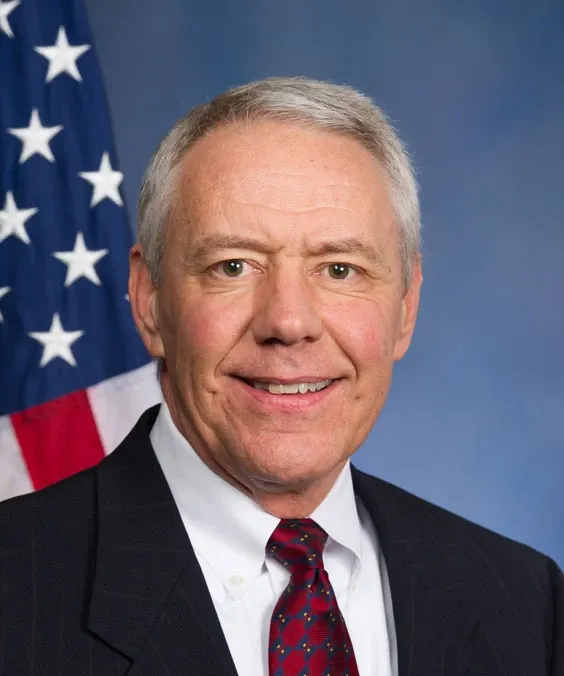
Cory Gardner
The Public Record
Cory Gardner is a former Republican U.S. Senator from Colorado, serving from 2015 to 2021. He was the first Republican to win a U.S. Senate seat in Colorado since 2002. During his tenure, Gardner focused on issues such as energy policy, healthcare, and national security. He was known for his efforts to promote renewable energy and for his work on legislation related to nuclear weapons and defense. Gardner lost his re-election bid in 2020 to Democrat John Hickenlooper and has since stepped away from active political office.
Jul 12, 2016
I mean, one of the things I am most proud of and that has really taken place is that there is a renaissance in the relationship between the United States and the Philippines.
Jul 12, 2016
I think the general point to recognize here is that, in diplomacy, there are areas that cannot be immediately resolved.
Jul 12, 2016
But I think, in many respects, we have a moment when the United States is going to be asked that very question by our allies.
Jul 12, 2016
I have no quarrel with the Chinese people... I have a big quarrel with the Chinese Communist Party.
Jul 12, 2016
I think, over time, China will start to adjust its position because they will realize that, right now, it is not in their best strategic interests.
Jul 12, 2016
I think, in a way, Xi tried to use these to basically assist in the nationalist drive in his own domestic efforts.
Jul 12, 2016
He has essentially dismantled collective leadership in China. He makes all the decisions.
Jul 12, 2016
I think we have to watch China's reaction. If not, then we can take some stiffer actions ourselves.
Jul 12, 2016
I think if you look at Chinese actions over the last 6 or 7 months, they, in fact, have been tapering off from the aggressive activities of last year or 2.
Jul 12, 2016
Obviously, there is a lot of discussion that we have to have in light of the tribunal decision yesterday, this very strong decision that goes to the very heart of a rules-based system and a rules-based order of international law.
Jul 12, 2016
Now what we have seen in China of late are some tendencies to want to go back to really a 19th century spheres of influence approach.
Jul 12, 2016
What the United States and other countries have done has created an operating system in Asia, right?
Jul 12, 2016
This ruling in many respects is about a fundamental struggle that is ongoing in the Asia-Pacific region right now in which we play a key part.
Jul 12, 2016
I would also add, echoing Senator Cardin, that the decision makes it very clear that the U.N. Convention on the Law of the Sea is very much in the American interests, and I hope that this committee can move it forward again.
Jul 12, 2016
I believe that the issue on which we can clearly draw a bottom line would be at Scarborough Shoal, where we should make it clear that the U.S. will support the Philippines to oppose Chinese aggression, if necessary, by military force.
Jul 12, 2016
Earlier this year, Senator Gardner and I introduced the Asia-Pacific Maritime Security Initiative Act of 2016.
Jul 12, 2016
Will China help to support peace and stability in Asia? Or seek to overturn the order?
Jul 12, 2016
The ruling also underscores the need for the Senate to take action to ratify the 1982 Convention on the Law of the Sea.
Jul 12, 2016
We must continue to be clear and consistent in our policy to oppose unilateral actions by any claimant seeking to change the status quo through the use of coercion, intimidation, or military force.
Jul 12, 2016
I believe the ruling is a good precedent for other South China Sea claimants to seek resolution of maritime disputes through peaceful means.
Jul 11, 2016
I want to ensure my constituents that--I want to ensure their private information is protected.
Politicians like Cory Gardner