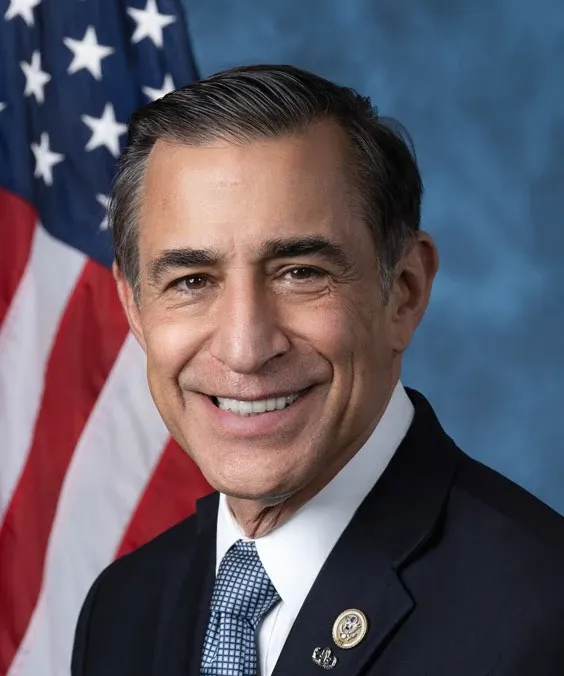
Tom McClintock
The Public Record
Thomas Miller McClintock is an American politician serving as the U.S. Representative for California's 5th congressional district since 2009. A member of the Republican Party, he has been an advocate for limited government and fiscal conservatism throughout his political career. McClintock has focused on issues such as tax reform, environmental policy, and government spending. He previously served in the California State Assembly and as a member of the California State Senate, where he gained recognition for his commitment to conservative principles.
Oct 28, 2013
What we suffer is a super abundance of bureaucracy and a catastrophic shortage of vision and political will. That is what has to change.
Oct 28, 2013
The status quo is simply not working and the purpose of today's hearing is to chart a path that leads us to a new era of abundance.
Oct 28, 2013
It seems to me that we are moving more and more toward a European model vision of sovereignty.
Oct 28, 2013
The purpose of today's hearing is to identify the current impediments to increasing water storage and hydropower capacity, and to look at new concepts on the construction of smaller high elevation dams.
Oct 28, 2013
What can you recommend to us as changes that need to be made at the Federal level to bring about this new era of water storage?
Oct 28, 2013
You have all told heartrending stories of threats by your own government, of everything from jail time to financial ruin.
Oct 28, 2013
Just in that single watershed, 30 potential sites. So suitable geological sites are not in short supply.
Politicians like Tom McClintock