May 21, 2019
Congress has a responsibility to strengthen and invest in institutions that are promoting economic mobility as we continue to work toward a reauthorization of key Federal higher education policy.
The Public Record
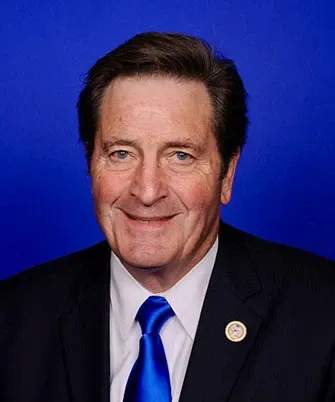
Susan A. Davis is a former U.S. Representative for California's 53rd congressional district, serving from January 3, 2001, to January 3, 2021. A member of the Democratic Party, Davis focused on a range of issues during her tenure, including education, health care, and women's rights. She was known for her advocacy in promoting policies that support families and children, as well as her efforts to improve access to health care services.
Congress has a responsibility to strengthen and invest in institutions that are promoting economic mobility as we continue to work toward a reauthorization of key Federal higher education policy.
Depriving the institutions that serve our most vulnerable college students of the resources made available to predominantly white 4 year universities is contrary to our values and the best interest as a Nation.
Tribal Colleges and Universities (TCUs) were developed as part of a political and social movement to regain Tribal autonomy and to combat centuries of forced assimilation and destruction of Native communities.
I wonder if you could talk a little bit more about the $380 million of HAVA funds that--I guess with the grant expenditure report, there were certainly a number of questions of whether that should have been spent more quickly.
I am going to support my colleague and my Ranking Member on the higher ed subcommittee because I think that there actually is a lot of excitement here about how we best develop programs, apprenticeship programs, that really are going to…
I was really happy to hear you talk about that, because, you know, we worked hard on that trying to make people understand how important that was for quality of life.
``On Saturday, June 17, 2017, the President called McGahn and directed him to have the special counsel removed . . . In interviews with the Special Counsel's Office, McGahn recalled that the President called him at home twice and on both…
It is important that we make sure that people complete because when they do that, we all win.
When a student is admitted to an institution, it has to be a two way agreement.
I have long said institutions need to be more responsive to the needs of the students they sign on to serve.
We don't need to view a period of government dependency as a rite of passage for Americans.
The lasting, undeniable benefits of a college degree illustrate our responsibility, as a Nation, to ensure that students have an opportunity to enroll in and graduate from college.
We must invest in higher education so that all students who begin college, no matter their race, their income, their background, or circumstance, can complete a degree that leads to a rewarding career.
MDA established a hypersonic defense program in fiscal year 2018 to develop and deliver a series of material solutions to defeat hypersonic threats.
How close is MDA to maturing directed energy technology to where it is suitable and effective for missile defense?
I look forward to working with you on these issues because I think these are critical and we need to address them.
So can you please confirm that the Department of Labor will not take regulatory action that hands over the department's statutory role in establishing the labor standards to third parties?
Mr. Secretary, I am actually struggling to see how these cuts to programs supporting workers are in line with the DOL's mission as it is currently stated.
The economy doing well does not necessarily always mean that workers are doing well.
Despite this, the Department of Education under this Administration has failed to protect students against low-performing institutions.
Politicians like Susan Davis