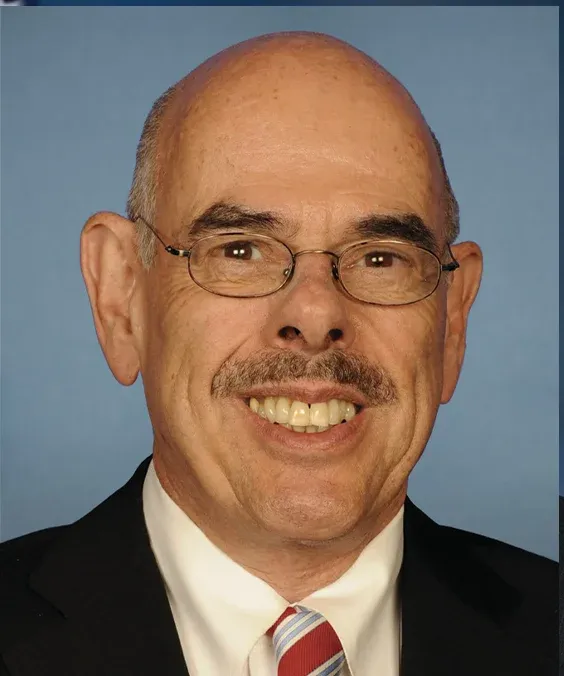
Nanette Barragán
The Public Record
Nanette Barragán is a U.S. Representative for California's 44th congressional district, serving since January 3, 2016. A member of the Democratic Party, she has focused her legislative efforts on issues such as environmental justice, healthcare, and civil rights. Barragán has been an advocate for policies that address the needs of underserved communities and has worked to promote equity in various sectors. Her background includes experience in law and public service, which informs her approach to governance.
Dec 4, 2019
The point is that air quality in my district is poor. The majority of air pollution is not created in my district.
Dec 4, 2019
It's critical for communities that are experiencing the deepest effects of climate change to lead conversations on how to mitigate its impacts.
Dec 3, 2019
I was disappointed to see, like, with many other issues that there are substantial racial disparities when it comes to the dangers associated with the cosmetic products.
Dec 3, 2019
Does the FDA have the authority to force manufacturers to remove their products off the shelves if they are contaminated with asbestos?
Dec 3, 2019
Internal documents from one talcum powder manufacturer, Johnson & Johnson, showed that the company knew of the health risk of talc.
Dec 3, 2019
The American Cancer Society estimates that 22,280 women in the United States will be diagnosed with ovarian cancer this year.
Dec 3, 2019
I am in a congressional district that is majority minority, very working class.
Nov 19, 2019
This is environmental racism going on in our very communities, where communities of color are being disproportionately impacted, and they are hit, as you said, the worst and first.
Nov 18, 2019
This administration is doing everything they can to end legal immigration. Asylum is legal immigration.
Nov 18, 2019
When we had Secretary McAleenan come in, it was clear that the United States didn't bother to assess any type of the risk and the harm that would be done to migrants.
Nov 18, 2019
It feels to me as though our Government is saying, well, as long as it doesn't happen on our land, as long as it doesn't happen here, it is OK.
Nov 18, 2019
Let me start by--I want to--echoing some of the comments from my colleagues about the outrage that should be happening over the return of migrants into dangerous places.
Nov 13, 2019
The best way for us to understand these challenges and how to overcome them is to meet environmental justice communities where they are.
Nov 13, 2019
Not everyone can make it down to DC for a hearing or a meeting with their representative.
Nov 13, 2019
Not everyone can make it here to Washington, D.C., for a hearing or a meeting with their Representative.
Nov 13, 2019
We need a climate bill that rises to the scale of both the climate crisis and the damage from environmental racism.
Nov 13, 2019
People of color are on the front line of this issue. We are hit first and hit worst.
Oct 29, 2019
It is heartbreaking that this country is closing the door on people who are fleeing violence and sending them back to dangerous places.
Oct 29, 2019
It is unbelievable to me that we believe that this is OK, that because it is not happening on U.S. soil, that it is just OK.
Oct 29, 2019
Sending pregnant women back to these areas to be raped, killed, and abused is not a compassionate Nation.
Oct 29, 2019
The name almost assumes that this program will actually protect migrants when it does the complete opposite.
Politicians like Nanette Barragán