Mar 6, 2012
I think we have a responsibility, obviously, to protect the strongest military in the world, and to help defend this country.
The Public Record
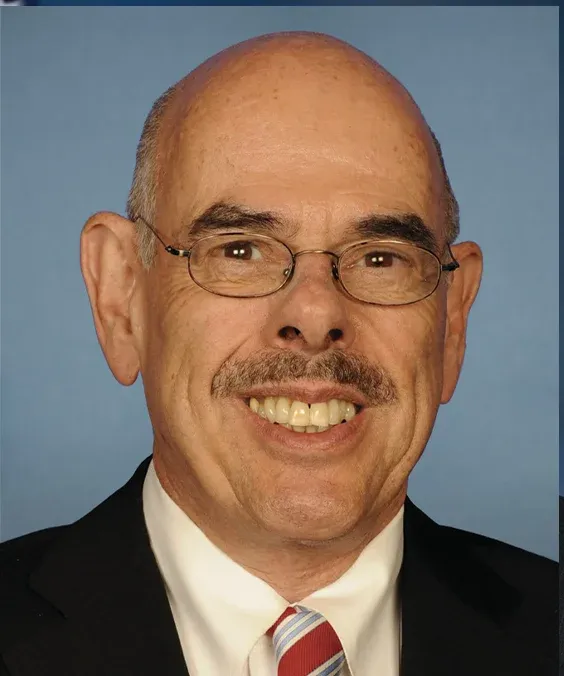
Leon Panetta is a prominent Democratic politician from California, known for his extensive career in public service. He served as the 23rd Secretary of Defense under President Barack Obama from 2011 to 2013, where he played a key role in military operations, including the Navy SEAL raid that killed Osama bin Laden. Prior to that, he was the Director of the Central Intelligence Agency (CIA) from 2009 to 2011, focusing on national security and intelligence reform. Panetta has also served in the U.S. House of Representatives, representing California's 16th congressional district from 1977 to 1993, where he was known for his work on budget and agriculture issues.
I think we have a responsibility, obviously, to protect the strongest military in the world, and to help defend this country.
It would be a disaster if sequestration happens, not only in terms of the amount of money that would be taken out of defense, but also in the way it would be taken out.
the United States should use its position in several regional organizations, including the East Asia Summit, the ASEAN Regional Forum, and the ASEAN Defense Ministers Meeting Plus, to facilitate initiatives and confidence-building measures…
if we repeated the mistake of not paying for the war that we decide to engage in, whatever that might be, the result would be that you would simply add more to the deficit and to the debt of this country for the future.
I think I've been able to reassure our allies and partners, that we have a strategy-based approach to dealing with national security.
Our strategy all along in Afghanistan has been to turn more and more responsibility over to the Afghan Army as they become capable.
I think they have always expressed concerns about some of the approaches that had been agreed to...
I have a deep appreciation for the very important role that is played by this committee in trying to achieve fiscal discipline.
You cannot ignore the two-thirds of the budget that are blowing through the ceiling right now.
I believe that we must give the Japanese government and the Okinawan people their rightful negotiating power to fully address their concerns in any future agreement.
sequestration would be totally irresponsible. It would devastate our national defense, it would weaken this country.
One of the fundamental duties of the federal government is to protect our national security.
Our goal in the next five years is to continue to develop the Navy to a 300-ship Navy.
A strong national security cannot be just dependent on our military power and our military weaponry and our military men and women.
I remain hopeful that you will do the right thing with regards to sequester.
I think to just put it all on the backs of the civil servants in this country I think would not be a wise step.
I think that the very least we owe them is the ability to be able to enjoy whatever time they take off from going to war.
I believe that the United States Institute for Peace (USIP) is a cost-effective resource and contributes significantly to our collective efforts to manage conflict worldwide.
We are committed, not just to contain, but to prevent Iran from getting a nuclear weapon.
I sure as hell hope it does not happen. I think, as I said, it would be a terrible reflection, I think, on the Congress and the leadership of this country if the leadership of both parties were not able to come together and de-trigger that…
it is totally irresponsible for the congress to allow a sequester to take place that will weaken our defense system
We have a smaller force, we will depend a lot more on mobilization, we will have to depend on our ability to develop new technologies for the future.
a choice between fiscal discipline and a strong national defense is a false choice.
Our support to Israel is unshakable and we have reflected that, frankly, in our budget request.
Politicians like Leon Panetta