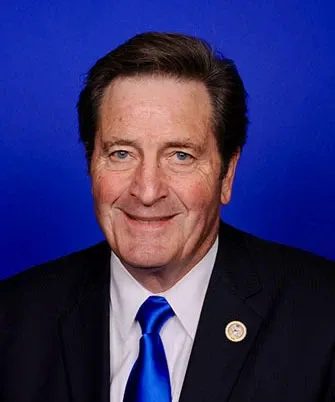
Jerry McNerney
The Public Record
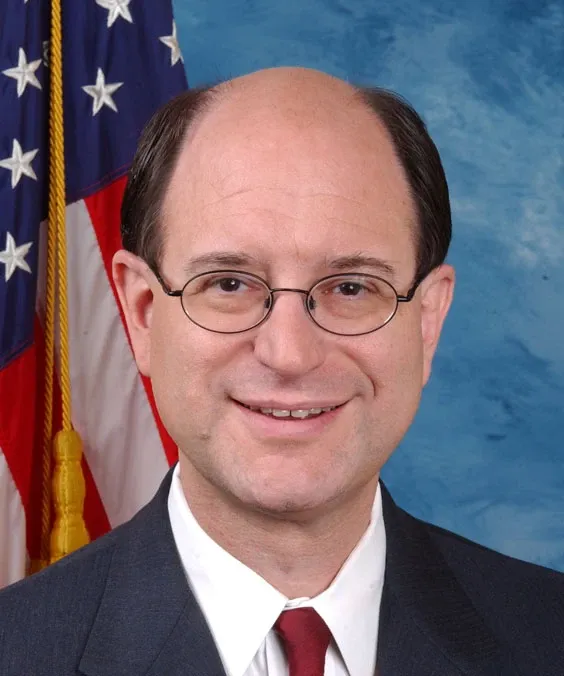
Jerry McNerney is an American politician and a member of the Democratic Party, serving as the U.S. Representative for California's 9th congressional district since 2007. He has focused on energy and environmental issues throughout his tenure, advocating for sustainable practices and policies to combat climate change. McNerney has also been involved in various initiatives aimed at improving healthcare and supporting education in his district.
Mar 9, 2011
The majority party is willing to risk our ability to protect our communities from toxic waste
Mar 9, 2011
I think that that is a false choice. We can have jobs, and we can have clean air, and we can have clean water.
Mar 2, 2011
I spent 20 years developing wind energy technology, and because of poor government policy, I saw that technology go overseas.
Mar 1, 2011
This is certainly an issue that I think everybody is interested in in this country, space exploration, spaceflight and so on.
Jul 28, 2009
Mr. Chairman, while you and I don't always see eye-to-eye, we are in total agreement on the value of using sports to improve the lives of our disabled veterans.
Jul 28, 2009
I salute VA and all their partners for being pioneers in the adaptive sports arena.
Jul 28, 2009
Chairman Filner also introduced legislation, and we merged our ideas together into one bill which were signed into law last year as part of title 38.
Jul 28, 2009
I also introduced a bill that authorized VA to provide grants via the USOC to other local disabled sports programs.
Jul 28, 2009
I believe that sports therapy is among the most valuable rehabilitative tools we can provide our wounded warriors.
Jul 28, 2009
I mean, it is important for them to see someone that has sort of been through the same thing.
Jul 28, 2009
This legislation was not about producing athletes for the U.S. Paralympic Team itself. It is about increasing the number of disabled veterans who participate in all types of sports.
Jul 28, 2009
I am proud that through our combined efforts, Mr. Chairman, we have also helped formalize the VA Sports and Special Events Programs and expanded sports therapy for disabled veterans.
Jul 28, 2009
I truly wanted to create an avenue for our military athletes who now find themselves disabled, if in fact they can aspire to go and find access to the Paralympic Games.
Jul 28, 2009
I want to say when I first came in here I was sleepy from jet lag. And hearing your testimony, it inspired me.
Apr 29, 2009
The DAV, just a while ago, highlighted a need to collect more results-oriented data.
Apr 29, 2009
One of the things I am hearing is that the element of leadership that is missing as a clear, concise metrics.
Mar 18, 2009
If the Chairman will indulge me one more question, what do we need to do here to make sure that the VA can provide these sort of home-based services, make them available?
Mar 18, 2009
How effective is that in terms of reaching a veteran with these sorts of problems as opposed to having someone that can actually touch their hands and look them straight in the eye?
Mar 18, 2009
We need to look at how to entice physicians, health care professionals of all kinds to come into rural areas.
Mar 18, 2009
One of the problems we are facing in California is that our prisons are severely overcrowded resulting in poor health care for prisoners.
Politicians like Jerry McNerney