Apr 25, 2007
Even if the president vetoes it, I think it was an important position for us to take.
The Public Record
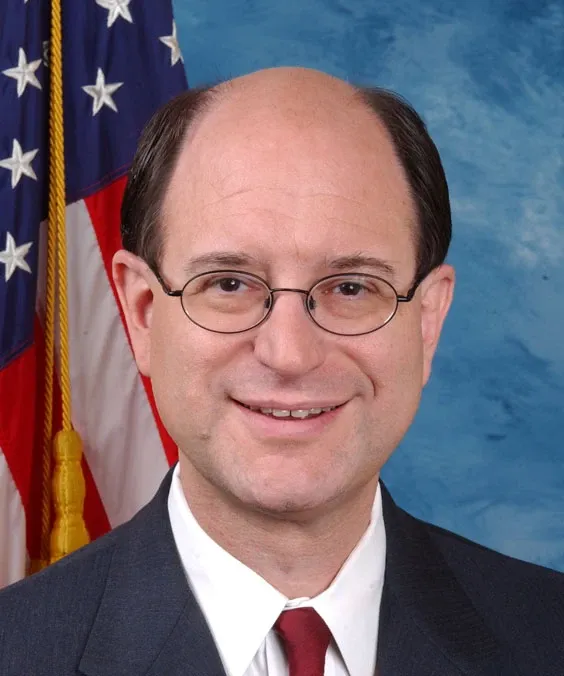
Henry Waxman is a former U.S. Representative from California, serving from 1975 to 2015. A member of the Democratic Party, he was known for his work on health care, environmental policy, and consumer protection. During his tenure, Waxman played a key role in the passage of the Affordable Care Act and was a prominent advocate for climate change legislation. He chaired the House Energy and Commerce Committee, where he focused on issues such as tobacco regulation and health care reform.
Even if the president vetoes it, I think it was an important position for us to take.
What we have is a very clear, deliberate abuse intentionally done. Why is it so hard to find out who did it? Why is it so hard to find out who's responsible and to hold them accountable, Mr. Gimble?
As I understand the way we wrote this bill, it would have to be a person at a senior level who is substantially involved in the awarding of the contract. I don't think being on a range is an awarding of the contract.
What this provision provides is if somebody is personally and substantially involved in that contract, they should not be then going out and working for the contractor. I just think that is improper. There ought to at least be a…
I think the gentleman is misinformed about what is in the legislation because we do permit under exigent circumstances a no-bid contract to be awarded. We understand there are times that there are emergencies, but we ask that after a year…
Worst of all, did some of this money get in the hands of the insurgents and those who are fighting us today in Iraq?
Private contractors may be hurting U.S. military efforts overseas due to several deadly shootings.
I hope this will be resolved very quickly. This is to give a push so it will be resolved. Mr. Chairman, I have time, and I yield the balance of the time to the gentlewoman from California (Ms. Lee), a cosponsor of this amendment, who…
But the Reporter Bethany McLean, who started their great unraveling, did not. However at a congressional hearing Congressman Henry Waxman highlighted her very basic, but very profound question.
The gentleman will not yield further. The SPEAKER pro tempore (Mr. Hayes). The House will be in order.
The system has failed because the Bush administration paid 97 percent of the charges that the Pentagon auditors found to be unreasonable. So our amendment is structured to apply in the future. We will have a chance to continue to look at…
I want to assure you we were very careful in drafting this amendment. It is prospective. It would not affect the funding of existing contracts for troop support. They will continue untouched. The amendment simply says we will not reward…
Well, Mr. Chairman, I will be in opposition to the amendment and claim the time in opposition. The Acting CHAIRMAN. The gentleman from California (Mr. Waxman) is opposed and will control the time. The gentleman from California (Mr…
If no one rises in opposition to the amendment, I would like to claim the time, for purposes of debate, by unanimous consent. The Acting CHAIRMAN. Without objection, the gentleman from California (Mr. Waxman) will control the time in…
It gives 180 days for the FDA to act. They do not have the resources to do it, but they can simply say this is a burden on interstate commerce, the State law is gone. It does not mean that the State law stays in effect until the Federal…
The standard in this bill is not sound science. The standard is for the FDA to decide if it unduly burdens interstate commerce to allow a State to have its own law. Now, I do not know how the FDA makes those kinds of decisions. They are a…
The problem I have with what you are saying is that a State has to go to the Food and Drug Administration and argue that case, and they may then be allowed to continue their laws. But even if there is no Federal law on the subject, the…
You would not, however, want the Federal Government to legislate in every area that any State thinks ought to be done in their State?
It does because there was no nutritional labeling at the State level. It had been done by the industry voluntarily, and they had different kinds of labels, and it was not in a way that we could compare the calorie content, the carbohydrate…
The gentleman raises an interesting point that it would be a violation of law. A lot of times these are not violations of law because there are no laws that pertain.
Whatever time we have, I would also yield to the gentlewoman from Illinois (Mrs. Biggert) so she will have her full time. The Acting CHAIRMAN. The gentlewoman from Illinois (Mrs. Biggert) is recognized for 6 minutes.
I am willing to be as cooperative as possible, but I am not sure what the gentleman is suggesting. We have a Member on our side who wants to speak in favor of the proposal.
The popular claim that condoms help prevent the spread of STDs is not supported by the data.
Politicians like Henry Waxman