Jun 23, 2020
I think Facebook has taken a particularly narrow definition of imminent harm, and maybe that was an excusable position three, four months ago.
The Public Record
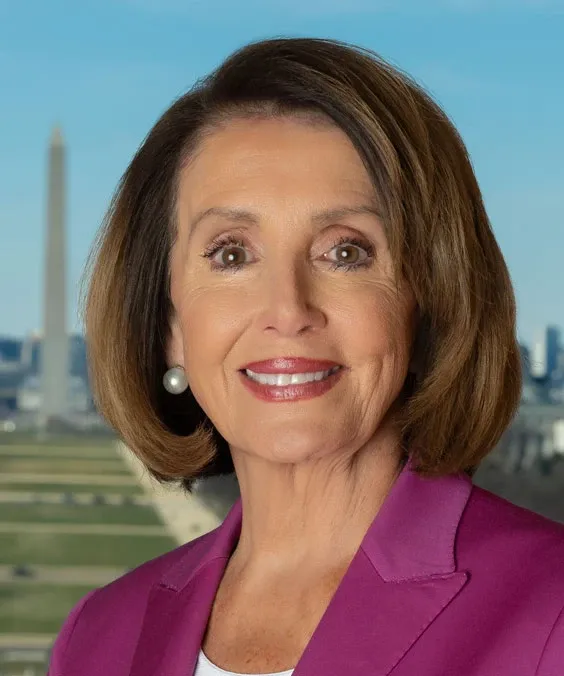
Doris Okada Matsui is a member of the United States House of Representatives, representing California's 6th congressional district since January 4, 2005. A member of the Democratic Party, she has focused on issues such as healthcare, education, and environmental protection throughout her tenure. Matsui has been an advocate for technology and innovation, particularly in relation to the Sacramento region's economy.
I think Facebook has taken a particularly narrow definition of imminent harm, and maybe that was an excusable position three, four months ago.
Representative Johnson and I have introduced the Suspicious Order Identification Act of 2019, legislation that sets up a workable real-time reporting system through DEA to help us prevent diversion and maintain integrity in the supply…
Telemedicine is a critical tool that should be leveraged to expand the ways a patient can receive medication-assisted treatment.
Addiction is a devastating disease that knows no bounds and we must provide solutions in a comprehensive manner.
We must adopt a holistic approach, one that addresses environmental, economic, and human factors that contribute to our changing climate.
The natural disasters we will examine at today's hearing were, just a few years ago, irregularities, unavoidable but uncommon events.
I recently sent a letter to Chairman Pai, urging him to include wildfire-specific recommendations in the Wireless Resiliency Framework.
I am glad to see the RESILIENT Networks Act, introduced by Chairman Pallone and Representative McNerney, takes steps to mandate elements of the Framework.
Our current approach of relying on Members of Congress to call on the FCC to act is no longer sustainable.
We need to thoughtfully prioritize projects that consider the long-term consequences of climate change.
Wildfire season is getting longer. Wildfire incidents are becoming more common and their intensity is increasing.
This change will help advance proposals for needed projects in the region that would protect California residents and improve safety and sustainability.
In the face of a changing climate, we must begin taking a new look at Federal flood control projects, starting with WRDA 2020.
We need to be thoughtfully prioritizing projects that consider the long-term consequences of climate change.
As a Representative of Sacramento, California, WRDA is uniquely meaningful to me and to my constituents who live in the second most flood-prone city in our country, after New Orleans.
The Federal Communications Commission, the FCC, has an obligation to assist State and local governments to prepare for, respond to, and learn from disasters.
This committee has an obligation to move quickly and collaboratively to advance legislation that will help prepare our country for the natural disasters of tomorrow.
Our top priority should be in proposing policies that consider the impacts of climate change in our country.
When Hurricane Michael hit Florida, that very next day I had contacted one of my colleagues, Congressman Dunn, who represents the Big Bend area, via text to assure him that our staff would help him with any casework that would come up…
The catastrophic flooding we have seen across the country in just the last year is telling, and I fear the severe flooding will no longer be 100- or even 500-year events, but a new norm for my constituents.
By improving the ways in which we monitor and manage these complex and multifaceted diseases, we can better understand, treat, and maybe one day prevent food allergies.
I know that some stakeholders have raised concerns about certain provisions in the bill.
Representative Doris Matsui's MODERN Labeling Act will make sure generic drugs have up-to-date safety labeling.
We are thankful for organizations like FARE, who advocate on behalf of the food allergy community, and Congresswoman Matsui for introducing this important legislation.
I am pleased we have the opportunity today to discuss a bill I recently introduced with Representative Guthrie to modernize outdated drug labels.
Politicians like Doris Matsui