Mar 2, 2010
While that amount is virtually unchanged from what was provided last year--so the budget is flat--there are significant funding increases that we should look at in several program areas.
The Public Record
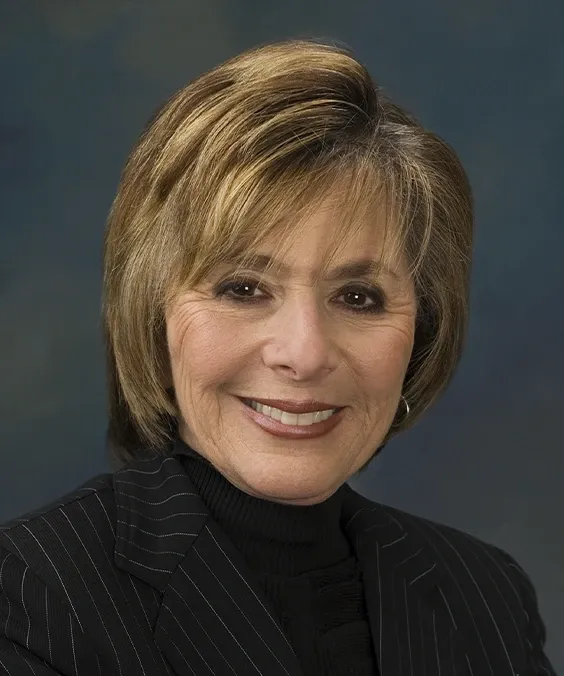
Dianne Emiel Feinstein was an American politician who served as a United States Senator from California from 1992 until her death in 2023. She was the first woman to hold this position, breaking significant barriers in a predominantly male political landscape. Throughout her tenure, Feinstein was known for her advocacy on issues such as gun control, environmental protection, and intelligence oversight, playing a pivotal role in shaping legislation in these areas.
While that amount is virtually unchanged from what was provided last year--so the budget is flat--there are significant funding increases that we should look at in several program areas.
I have always felt that an incremental approach to the legislative approach is a much better way of going.
We believe this is an extremely important public policy matter with many critical questions yet to be answered.
It will probably be at least 2 years before we would look at something like, say, a 50,000 threshold.
In Senator Feinstein's home state of California, 24 grants have been funded by the DOD OCRP since the program was created in 1997.
I have proposed the Mojave Trails National Monument, and I have endorsed your effort to establish solar study zones.
How dare you to see a more difficult permit process than the State of California has anywhere.
We put in nearly $10 billion for water and sewer projects in fiscal year 2010, including $6 billion through the stimulus.
So--and I am extrapolating here, and please disabuse me of the notion if it's incorrect--you are essentially saying that this new system offers a much better umbrella of protection.
I am more concerned about a rational policy for protecting treasured landscapes as we move in appropriate ways to take advantage of renewable energy.
Thank you Chairwoman Feinstein, Ranking Member Alexander, and members of the Senate Appropriations Subcommittee on Interior, Environment, and Related Agencies for the opportunity to provide testimony.
I think it is that, which I think is a very good record. We got those projects funded and that was good.
What percent of emissions do you believe will come under some form of regulation during 2011?
We thank you for this opportunity to present your subcommittee with our views regarding the Bureau of Land Management's (BLM) budget request for fiscal year 2011.
I still, to this day, believe that if we move to institute a system affecting the electricity sector first, that it would work well.
Sixty-seven percent of U.S. stationary source emissions come from sources that emit more than 100,000 tons per year of CO2 equivalents.
Politicians like Dianne Feinstein