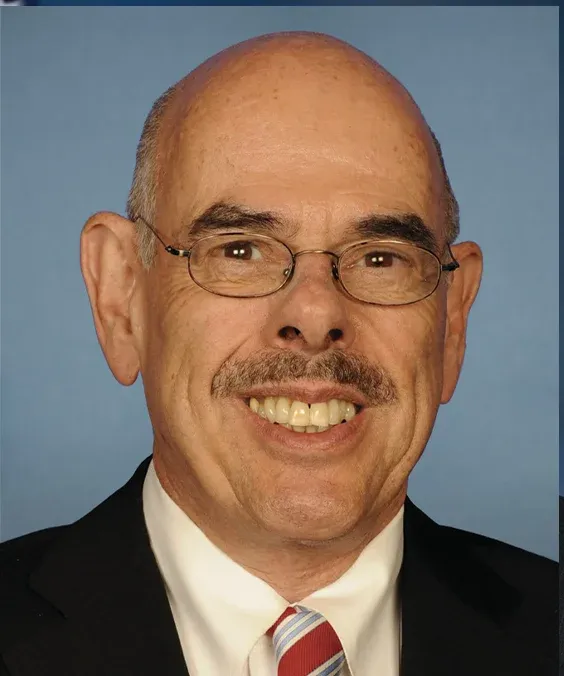
Ami Bera
The Public Record
Ami Bera is an American physician and politician currently serving as a member of the United States House of Representatives from California's 7th congressional district since 2013. He is a member of the Democratic Party and has focused on issues such as healthcare, education, and environmental protection during his tenure in Congress. Bera has been involved in various legislative efforts aimed at improving access to healthcare and addressing climate change.
Apr 20, 2021
I urge Congress to act quickly to pass Uyghur Forced Labor Prevention Act, which your committee marked up on April 21.
Mar 21, 2021
I should point out my vice chair, the Congressman from Michigan, Andy Levin, he has got a very important resolution on the floor today, condemning the actions that we are seeing in Burma and standing with the Burmese people against this…
Mar 21, 2021
We have seen a dramatic rise in hate crimes against Asian Americans over the last year.
Mar 17, 2021
If we take the politics out of this, it's not, you know, one type of electrical source versus another versus another.
Mar 17, 2021
We have to make those investments in research in both the physical security of our electrical grid but also the cyber risk.
Mar 17, 2021
The bill that you plan to introduce is a very powerful tool to help with security and resilience in the face of cybersecurity events
Mar 17, 2021
It's the politics that prevent us from recognizing that our climate is changing, that we're having more extreme events.
Mar 16, 2021
When they leave the military, the challenge sometimes is we don't actually recognize and put a value on that skill set.
Mar 16, 2021
We ought to work on that as a Subcommittee perhaps to address this critical need and, you know, do something in a bipartisan way.
Mar 16, 2021
I've always thought that, you know, instead of just retiring that student debt and forgiving it, we ought to use that as a mechanism to try to get folks to serve.
Nov 18, 2020
Today I am proud of American democracy, and I want to talk about American democracy. In this election, record numbers of voters turned out to cast their ballots, with very few voting irregularities. A record number of young people turned…
Oct 1, 2020
But let's get through this in a more resilient way and a stronger way, and a way that we can protect against the next pandemic or future bio threats.
Oct 1, 2020
As we are spending that, how can we do that in a very strategic way that allows us to start building the surveillance tools, and what should those tools look like?
Oct 1, 2020
And I think the vast majority of scientists are pursuing and using this technology for the advancement of common good.
Oct 1, 2020
Well, great. I certainly want to thank all four of our witnesses for their service to our country.
Sep 30, 2020
The friendship on the people-to-people relationship or legislator-to-legislator relationship is one of our finest alliances.
Sep 30, 2020
I do not want this to be like a eulogy because I hope you are not leaving the scene and you will continue to be a resource for all of us and continue your strong advocacy for U.S. global leadership.
Sep 29, 2020
I, once again, urge support of this commonsense, important legislation, and I yield back the balance of my time.
Sep 29, 2020
I, too, also want to recognize the bipartisan nature of this bill. It shows what we can do when we get together. I recognize the hard work of the staff from the Committee on Science, Space, and Technology. Mr. Speaker, I have no additional…
Sep 21, 2020
It does occur to me that multilateralism, working with our like-minded colleagues in countries like Korea, Japan, Australia, India, and taking a multilateral approach.
Sep 21, 2020
We welcome criticism and feedback just as our partners around the world and in the region should also recognize and welcome our feedback and criticism.
Politicians like Ami Bera