Sep 6, 2017
Let's say NASA is thinking about something like the Moon buggy or a research vehicle. They can now in this new world of space travel say okay, let's do some competitive bidding.
The Public Record
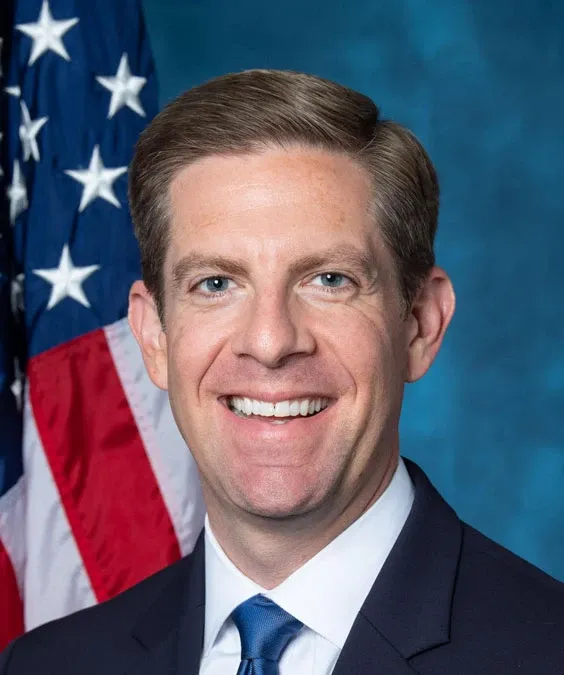
Ami Bera is an American physician and politician currently serving as a member of the United States House of Representatives from California's 7th congressional district since 2013. He is a member of the Democratic Party and has focused on issues such as healthcare, education, and environmental protection during his tenure in Congress. Bera has been involved in various legislative efforts aimed at improving access to healthcare and addressing climate change.
Let's say NASA is thinking about something like the Moon buggy or a research vehicle. They can now in this new world of space travel say okay, let's do some competitive bidding.
So if I think about when I was a kid, probably six or seven years ago, and thinking about what I thought was the coolest Apollo mission when they sent up the lunar rover, the Moon buggy, and you think about how space was done then.
However, let's also not forget that the Moon remains an important scientific research center and the importance of finding that public-private nexus.
I think this is an incredibly important time for both lunar exploration but also for deep space exploration.
This is an incredibly important time for the United States... to continue to stay engaged and involved.
There is no greater responsibility that we have when we send someone's son or daughter, mother or father, husband or wife, into harm's way and, again, I feel that this body owes it to them to have that debate.
We owe it to our men and women who are making that ultimate sacrifice to their families to clear up this ambiguity.
The American people expect us as their representatives to engage in the necessary things.
I would argue we are not doing our job by not having the courage to engage in what are not easy conversations.
I think for both of us, we've talked about this, and for many of us of a generation that grew up in the space race, just the imagination, thinking about, you know, whether it was going to the moon or beyond, the Apollo missions to Skylab…
These missions are incredibly important because it allows us to know that we're part of something bigger, and now we've got Voyager One that is traveling through interstellar space.
the smaller missions form a framework and they set the stage for the kinds of bigger expeditions that we want to do
We're here to talk about large flagship missions like Mars 2020 and Europa Clipper missions because they play an important role in using complex instruments to help us understand the challenge of exploring hard-to-reach locations.
Here we go again. Today, we are debating a bill that many of my California colleagues and I have opposed time and time again on this House floor. This bill allows Washington, D.C., politicians to pick winners and losers when it comes to…
I would like to ask a couple questions. I think, Ms. Iskenderian, you talked a little bit about kind of going cashless.
I'm a simple person. I'm a doctor, not a rocket scientist, but if I'm thinking about this correctly...
One reason we would want to go back to the Moon is that that is a potential secondary launch site.
At that point, some point in the future as we start to go further out, especially with human-scale missions, we're going to need to have nuclear power developed.
We shouldn't just throw everything out if there is a single program--a lot of women are going to suffer.
So can I get your assurances that you will look at these programs as opposed to just zeroing out and eliminating these programs?
I am pleased to introduce the House to our guest chaplain, Reverend Kevin Kitrell Ross, Senior Minister of Unity of Sacramento. Kevin is regarded as a respected interfaith social justice leader, committed to building bridges of…
Politicians like Ami Bera