Alan Lowenthal
The Public Record
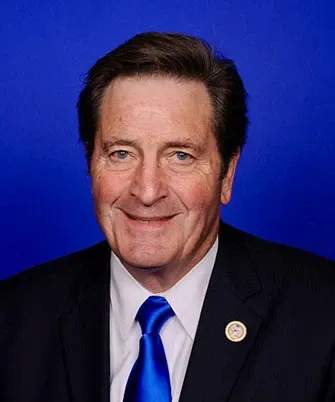
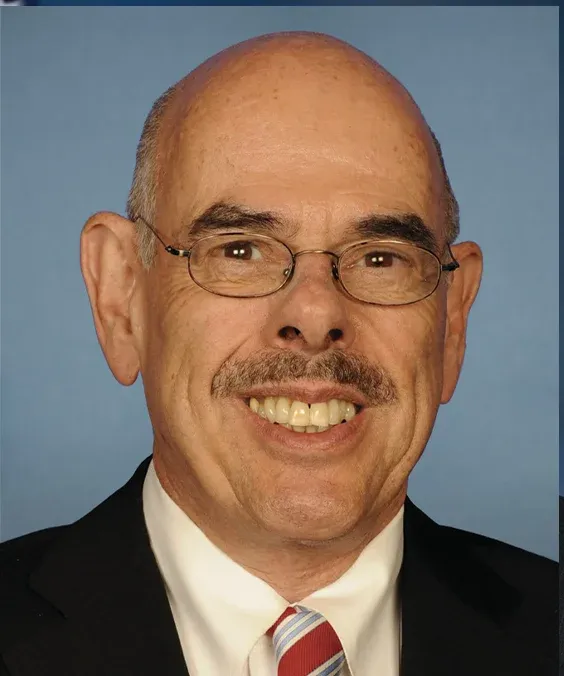
Alan S. Lowenthal is a Democratic politician from California, born on March 24, 1941. He served as a member of the U.S. House of Representatives from 2013 to 2023, representing California's 47th congressional district. During his tenure, Lowenthal focused on issues such as education, healthcare, and environmental protection, advocating for policies that support working families and promote sustainable practices. He has a background in academia and local government, having previously served in the California State Assembly and as a Long Beach city council member.
Jul 9, 2014
First, I would like to thank the ranking member and Chairman Simpson for bringing to the floor a bill that has incorporated interests from both parties within the limit of the Bipartisan Budget Act. In particular, I want to thank the…
Jul 9, 2014
I thank the ranking member, and I look forward to working with her in the future.
Jun 26, 2014
I demand a recorded vote. The Acting CHAIR. Pursuant to clause 6 of rule XVIII, further proceedings on the amendment offered by the gentleman from California will be postponed. Amendment No. 3 Offered by Mr. Duncan of South Carolina The…
Jun 26, 2014
I have an amendment at the desk. The Acting CHAIR. The Clerk will designate the amendment. The text of the amendment is as follows: Page 49, beginning at line 7, strike section 10410. The Acting CHAIR. Pursuant to House Resolution 641, the…
Jun 26, 2014
I urge my colleagues to vote ``yes'' to States and tribes having a seat at the table for Federal oceans decisions and vote ``yes'' on the Lowenthal amendment. I yield back the balance of my time.
Jun 26, 2014
I would like to point out that the opposition said that six times the House is on record for striking out the National Ocean Policy. I would like to remind him that all six times that has been put back in by the U.S. Senate. I want to…
Jun 26, 2014
My district provides a perfect example of the need for ocean coordination and information sharing between local, State, and Federal governments, including our offshore energy management agencies, the military, our ports, our ocean…
Jun 25, 2014
Thank you, Congressman. It is an honor to be here. It is an honor to work with you on LGBT issues and all issues before the Congress, but as you point out, this is a historic time that we are living through. This month, as you point out…
Jun 24, 2014
I was struck with... issues around corruption, issues around how you unite Eastern--and what conditions we place on our foreign aid.
Jun 23, 2014
Mr. Congressman, you made a big mistake. There is no post ivory in our country.
Jun 23, 2014
They are killing elephants because they see them as sources of money, and if we can take the money out of the equation, they will stop killing elephants.
Jun 23, 2014
I believe that we are the market for ivory. The United States ranks second in the world in terms of a market for ivory that is sold.
Jun 23, 2014
It seems to me that what we all have in agreement and the core fundamental issue is that we are here to talk about the sustainability of the population of elephants, especially African elephants.
Jun 23, 2014
The United States is the second largest market for ivory, much of which is sold here illegally.
Jun 23, 2014
If we are all sincere about doing something about the sustainability of the African elephant, we need to focus on the poacher.
Jun 23, 2014
You should look on the market demand side. You should see who is making the money, follow the money, chase the money.
Jun 23, 2014
There is a real problem in Japan. Forty percent of the world's ivory is being consumed in Japan for the hanko, their signature stamp.
Jun 23, 2014
We crushed that ivory to send a very clear signal that the ivory was not meant to be seen as items of value.
Jun 23, 2014
We can also attempt to send a message that commercialization of wildlife that leads to its extinction is not acceptable.
Jun 23, 2014
We said there is a real problem. We would hope that you would adhere to CITES, put the noose around Hong Kong, which the British did.
Jun 19, 2014
With all due respect, I think this bill clarifies, it doesn't further confuse.
Politicians like Alan Lowenthal