Sep 20, 2016
I would support a discussion about the best way to stop the worst effects of climate change.
The Public Record
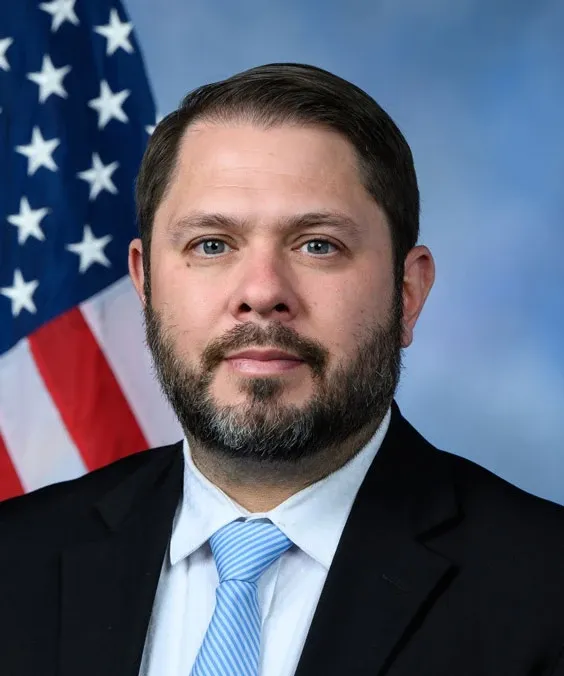
Raúl Manuel Grijalva is an American politician serving as the U.S. Representative for Arizona's 3rd congressional district since 2003. A member of the Democratic Party, Grijalva has been an advocate for environmental protection, education, and healthcare reform throughout his tenure in Congress. He has played a significant role in various legislative initiatives, particularly those aimed at addressing climate change and promoting social justice.
I would support a discussion about the best way to stop the worst effects of climate change.
It's a classic case of environmental injustice because Native American communities typically do the least among us to contribute to climate change, but they bear the impacts first and worst.
We can't afford the luxury of playing political games with our climate. Time is up.
Those arguments help us understand what this hearing is really about--climate denial.
It's disappointing that we aren't doing our jobs and having hearings on the impacts of climate change on our Nation.
Human caused climate change is not a belief, a hoax, or a conspiracy. It is a physical reality.
It is disappointing that we are not doing our jobs and having hearings on the impacts of climate change on our Nation.
To be clear, I think we need to clarify that, because the American people are already heavily subsidizing the privilege of grazing cattle on U.S. public land.
Wolves are not a public safety hazard. Bees, domestic dogs, and deer kill far more people each year than the zero killed by wolves.
Wolves are not depleting populations of other wildlife to dangerously low levels.
The science is clear that these species are not foreign imports or hybrids. They are as American as mom and apple pie.
I am disappointed in the Fish and Wildlife Service's decision to abandon red wolf recovery efforts in North Carolina, and I hope we can learn more today about how the Service should approach bringing this critically endangered species back…
Mr. Chairman, having visited with Sioux leadership and the folks at the encampment at Standing Rock, a word of both caution and to look at this question with an entirely different set of eyes.
I believe there is language in the bill to make things whole for the tribe and for the trust lands at the same time.
So, to some extent SITLA is betting on Uncompahgre. If the litigation goes a certain way, then those lands would be there to appropriate into whatever value SITLA feels those 100,000 acres have--possibly to develop gas and oil, who knows?
It is my understanding that the Ute Indian Tribe is very directly impacted by these land exchanges that are being mandated.
Time and again, the proposal tilts the scales dramatically in favor of development and motorized use.
This legislation impacts the administration of about 18 million acres of public land.
H.R. 5780 also includes proposals with significant impacts on Indian land, including the transfer of 100,000 acres of the Ute Indian Tribe's reservation to the state of Utah.
In too many instances, rather than seeking appropriate management of Federal lands in Utah, H.R. 5780 seeks to resolve the management conflicts by simply giving Federal land away.
H.R. 5780 falls far short of what it would take to reach a legitimate compromise and leaves many of the stakeholders, including the region's Native American communities, no choice but to oppose the legislation.
Unfortunately, this bill, which resulted from that process, is a non-starter.
This is a grand bargain for public lands in Utah that has been a priority for Chairman Bishop for almost 5 years now.
Politicians like Raúl Grijalva