May 8, 2018
What message would we be sending if we didn't confirm you to the CIA to the men and women of the CIA?
The Public Record
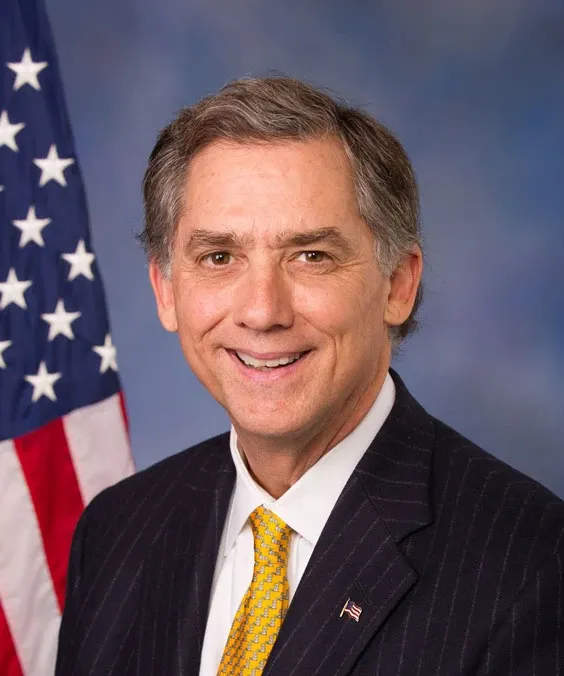
Tom Cotton is an American politician and attorney serving as the junior United States senator from Arkansas since January 2015. A member of the Republican Party, he has been a prominent voice on various national security and foreign policy issues. Cotton is known for his strong stance on military matters and has advocated for a robust U.S. presence abroad, particularly in relation to China and Russia. He has also focused on immigration reform and economic policies aimed at supporting American workers.
What message would we be sending if we didn't confirm you to the CIA to the men and women of the CIA?
Do you believe, acting under the legal approval of the Attorney General, that you or any other CIA officer should have gone to jail?
These programs were, to the best of your understanding, approved by the Commander in Chief, legally approved by the Attorney General, and supported by the Director of the CIA?
It is also important to ensure that U.S. sovereignty prevails in the regulation of our financial institutions.
I suspect the Trump administration would have a slightly different approach to this matter.
Can I get your commitment to take a review of it and to ensure that it does not create an unequal playing field between smaller broker-dealers and larger bank-affiliated firms?
I would say that certainly as a general principle, a level playing field is important.
Thus, broker-dealers can use their banking arm to evade the requirement, which can create an unfair and uneven playing field.
There is no question that the ability to surveil and strike any target on earth is vital to our national security.
I hope the House passes it and the President can sign it into law in short order, so when vulnerable consumers are targeted by these scam loans, they will at least know the true terms that they are facing for the loans.
FHA can no longer tolerate putting taxpayers at risk by allowing obligations like these to be placed ahead of the mortgage itself ahead of default.
I think we should take a serious second look at extending the New START Treaty.
Do you think it makes sense in this set of circumstances to extend the New START Treaty if Russia remains in violation of almost every other international agreement that they have made?
I think it's a strategic approach. I think that they are limiting their strategic nuclear weapons while they circumvent this by building up their non-strategic nuclear weapons that are not limited by the treaty.
I think they scorn their international commitments, and they're bent on upsetting the status quo.
I strongly support that as well. But I think that we have a real opportunity in the very short term...
I think it's an extremely high priority, and most people probably underestimate how close we are to that kind of solution.
It's very risky to transfer nuclear, chemical, or biological technology if you care for the preservation--the long-term preservation of your regime.
So, we shouldn't play Charlie Brown to their Lucy once again on that football.
It's one thing to sit down and talk with an adversary. We did that with the Soviet Union throughout the Cold War. It's another thing to bribe that adversary to sit down and talk with us.
I do not think that is good for American citizens. I do not think that is good for our economy, and I will continue to work hard to make sure that those workers share in the prosperity that all Americans in the upper-income brackets…
Politicians like Tom Cotton