Jun 16, 2010
I remain of the view that we have been too anxious to obtain this treaty, which is not the most important thing we need to be doing at this time to deal with the proliferation of nuclear weapons.
The Public Record
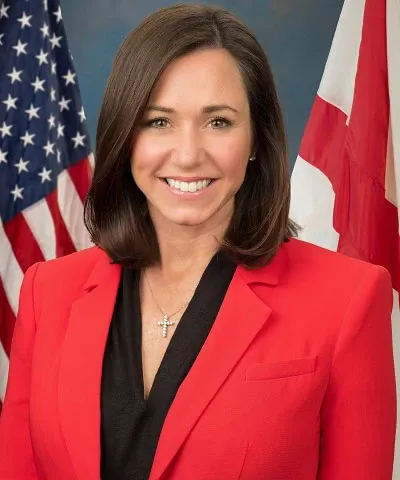
Jeff Sessions is an American politician and lawyer who served as the 84th Attorney General of the United States from 2017 to 2018. A member of the Republican Party, he was previously a U.S. Senator from Alabama from 2007 to 2017. During his tenure in the Senate, Sessions was known for his strong stance on immigration and law enforcement issues, advocating for stricter immigration policies and supporting various measures to combat drug trafficking and crime. He also served as the U.S. Attorney for the Southern District of Alabama from 2001 to 2002.
I remain of the view that we have been too anxious to obtain this treaty, which is not the most important thing we need to be doing at this time to deal with the proliferation of nuclear weapons.
A limited system that could protect us from a rogue state or an accidental launch is not a threat to Russian strategic nuclear weapons.
Why shouldn't we conclude in Congress that as part of your negotiations with Russia, who have consistently objected to the deployment of these kind of missiles, why shouldn't we conclude that you have, indeed, conceded an important…
I am uneasy about that. The protestations from the administration notwithstanding.
Let me tell you what concerns me. We have deployed a missile system in Alaska and several in California that could defend us potentially against most of the world and particularly the Pacific, North Korea-type launch, a limited launch…
It appears to me we will be in a situation, if we actually go forward with a system in Europe, that the Russians will threaten to get out of the treaty.
I do believe, however, that Russia's stockpile of short-range nuclear weapons vastly exceeds any reasonable political or military requirements and that Russia should be convinced to carry out dramatic reductions of those weapons.
I do not believe that our allies and friends will have any reason to doubt the credibility of U.S. nuclear security guarantees at the 700/1,550 New START limits.
Allied doubts about the credibility of U.S. security commitments could undermine alliance relations and encourage nuclear proliferation among some allies and friends.
I do believe it was a mistake. I think it could really help our security and not cause the problems some suggested.
I think the negotiations were further weakened by the clearly stated goal of this administration of moving toward a nuclear-free world, which is unrealistic.
I have several fundamental concerns. First, the administration has been far too anxious, in my view, to sign and get the New START treaty done.
I don't think that's a sound policy. But it's been part of the anxiousness, I believe, that has been affecting these negotiations.
Are you saying the New START treaty would enhance the United States' ability to monitor the actions of the Russians?
I think it's clear with regard to the New START treaty that this treaty will not be ratified unless we have confidence that we have a plan in place to maintain and modernize and replace, if needed, our nuclear weapons.
I would just share my colleague, Senator Inhofe's, concern about the out-years.
The only problem is that if the President had his way, the three of you wouldn't have jobs because he wants no nuclear weapons.
Why wouldn't we treat everybody we capture, at least initially, as a prisoner of war, as a combatant that meets the evidence of that?
It seems to me that it just makes common sense that the presumption would be that that individual would be held as a combatant.
Without any doubt, we would be better treating them under the military commissions until we decide otherwise.
But if you hold them in a military commission, they do not have to be given a lawyer, they do not have to be warned of rights, and they do not have to be even set for trial.
Politicians like Jeff Sessions