A legislative chamber is greedy and covetous; it acquires as much, it concedes as little as possible.
Walter Bagehot
The Public Record
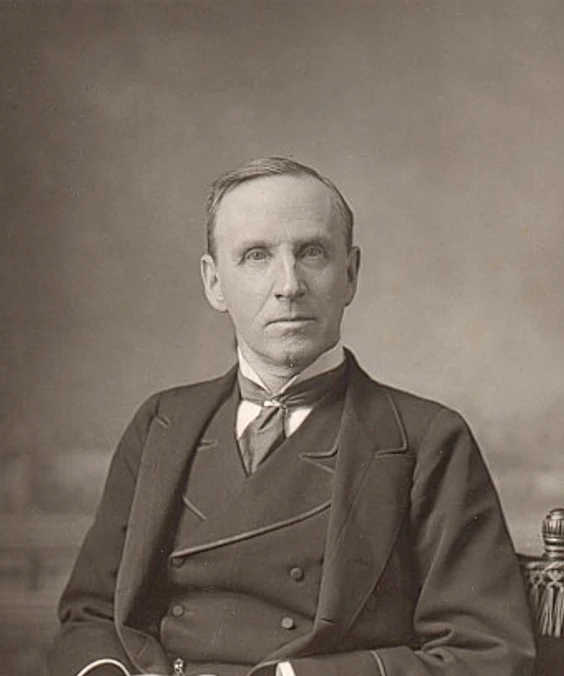
Walter Bagehot was an English journalist, businessman, and essayist, who wrote extensively about government, economics, literature and race. He is known for co-founding the National Review in 1855, and for his works The English Constitution and Lombard Street: A Description of the Money Market (1873).
gutenberg.org
The passions of its members are its rulers; the law-making faculty, the most comprehensive of the imperial faculties, is its instrument; it will take the administration if it can take it.
Tried by their own aims, the founders of the United States were wise in excluding the Ministers from Congress.
Unless a member of the legislature be sure of something more than speech, unless he is incited by the hope of action, and chastened by the chance of responsibility, a first-rate man will not care to take the place, and will not do much if…
To belong to a debating society adhering to an executive (and this is no inapt description of a congress under a Presidential Constitution) is not an object to stir a noble ambition, and is a position to encourage idleness.
The members of a Parliament excluded from office can never be comparable, much less equal, to those of a Parliament not excluded from office.
The Presidential Government, by its nature, divides political life into two halves, an executive half and a legislative half; and, by so dividing it, makes neither half worth a man's having--worth his making it a continuous career--worthy…
The statesmen from whom a nation chooses under a Presidential system are much inferior to those from whom it chooses under a Cabinet system, while the selecting apparatus is also far less discerning.
But in addition to this, a Parliamentary or Cabinet Constitution possesses an additional and special advantage in very dangerous times.
It has what we may call a reserve of power fit for and needed by extreme exigencies.
The principle of popular government is that the supreme power, the determining efficacy in matters political, resides in the people--not necessarily or commonly in the whole people, in the numerical majority, but in a CHOSEN people, a…
Under a Cabinet Constitution at a sudden emergency this people can choose a ruler for the occasion.
The great qualities, the imperious will, the rapid energy, the eager nature fit for a great crisis are not required--are impediments--in common times; A Lord Liverpool is better in everyday politics than a Chatham--a Louis Philippe far…
By the structure of the world we often want, at the sudden occurrence of a grave tempest, to change the helmsman--to replace the pilot of the calm by the pilot of the storm.
We have not needed a Cavour to rule a revolution--a representative man above all men fit for a great occasion, and by a natural legal mode brought in to rule.
But even in England, at what was the nearest to a great sudden crisis which we have had of late years--at the Crimean difficulty--we used this inherent power.
The American Government calls itself a Government of the supreme people; but at a quick crisis, the time when a sovereign power is most needed, you cannot FIND the supreme people.
You have got a Congress elected for one fixed period, going out perhaps by fixed instalments, which cannot be accelerated or retarded--you have a President chosen for a fixed period, and immovable during that period: all the arrangements…
Come what may, you can quicken nothing, and can retard nothing.
You have bespoken your Government in advance, and whether it suits you or not, whether it works well or works ill, whether it is what you want or not, by law you must keep it.
In a country of complex foreign relations it would mostly happen that the first and most critical year of every war would be managed by a peace Premier, and the first and most critical years of peace by a war Premier.
In each case the period of transition would be irrevocably governed by a man selected not for what he was to introduce, but what he was to change--for the policy he was to abandon, not for the policy he was to administer.
It may be summed up--it was government by an UNKNOWN QUANTITY.
The leading statesmen under the system of Cabinet government are not only household words, but household IDEAS.
We have simply no notion what it would be to be left with the visible sovereignty in the hands of an unknown man.
Politicians like Walter Bagehot