The central administration, the Treasury, never asked any account of the moneys the courts thus received; so long as it was not asked to pay anything, it was satisfied.
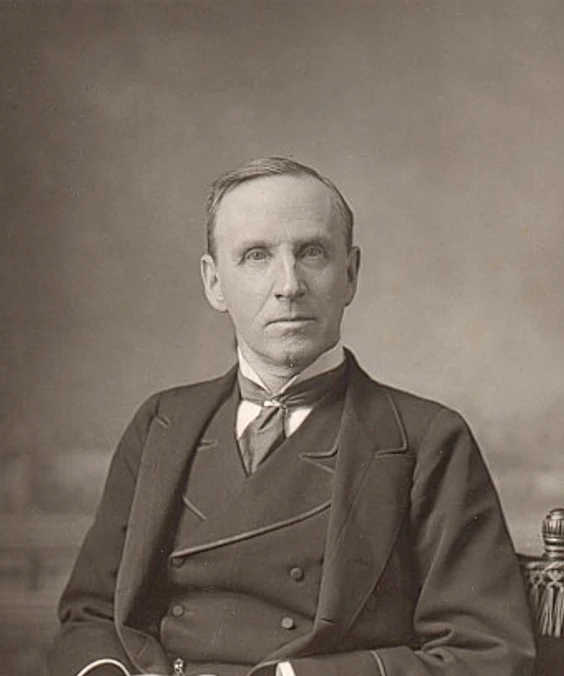
Walter Bagehot
The Public Record
Walter Bagehot was an English journalist, businessman, and essayist, who wrote extensively about government, economics, literature and race. He is known for co-founding the National Review in 1855, and for his works The English Constitution and Lombard Street: A Description of the Money Market (1873).
gutenberg.org
According to our system the Chancellor of the Exchequer is the enemy of the Exchequer; a whole series of enactments try to protect it from him.
The whole office of the Lord Chancellor is a heap of anomalies.
He is a judge, and it is contrary to obvious principle that any part of administration should be entrusted to a judge; it is of very grave moment that the administration of justice should be kept clear of any sinister temptations.
Of course one could give an historical reason, but I mean an administrative reason a reason which would show, not how it came to have the duty, but why in future it should keep it.
But the unsystematic and casual arrangement of our public offices is not more striking than their difference of arrangement for the one purpose they have in common.
Yet there are almost no two offices which are exactly alike in the defined relations of the permanent official to the Parliamentary chief.
Any of these varied Constitutions may be right, but all of them can scarcely be right.
There ought to be on record skilled evidence on the subject before a person without any specific experience can to any purpose think about it.
If he has to renew Exchequer bills, or operate anyhow in the City, he takes the opinion, oral or written, of the ablest and most responsible person at the National Debt Office, and the ablest and most responsible at the Treasury.
The more a man knows himself, the more habituated he is to action in general, the more sure he is to take and to value responsible counsel emanating from ability and suggested by experience.
We have, by unequivocal admission, the best budget in the world.
Why should not the rest of our administration be as good if we did but apply the same method to it?
Recent experience seems, however, to show that in all great administrative departments there ought to be some one permanent responsible head through whom the changing Parliamentary chief always acts, from whom he learns everything, and to…
I showed that at the formation of a Ministry, and during the continuance of a Ministry, a really sagacious monarch might be of rare use.
I ascertained that it was a mistake to fancy that at such times a constitutional monarch had no rule and no duties.
But I proved likewise that the temper, the disposition, and the faculties then needful to fit a constitutional monarch for usefulness were very rare, at least as rare as the faculties of a great absolute monarch, and that a common man in…
It appears to me that the functions of our executive in dissolving the Commons and augmenting the Peers are among the most important, and the least appreciated, parts of our whole government, and that hundreds of errors have been made in…
Hobbes told us long ago, and everybody now understands, that there must be a supreme authority, a conclusive power, in every State on every point somewhere.
In one the supreme determining power is upon all points the same: in the other, that ultimate power is different upon different points--now resides in one part of the Constitution and now in another.
The Americans thought that they were imitating the English in making their Constitution upon the last principle--in having one ultimate authority for one sort of matter, and another for another sort.
But in truth the English Constitution is the type of the opposite species; it has only one authority for all sorts of matters.
And the whole recent history of the Union--perhaps all its history--has been more determined by that enactment than by any other single cause.
The sovereignty of the principal matters of State has rested not with the highest Government, but with the subordinate Government.
The progress of the military art is the most conspicuous, I was about to say the most SHOWY, fact in human history.
Politicians like Walter Bagehot