The degree of local freedom desirable in a country varies according to many circumstances, and a Parliamentary government may consist with any degree of it.
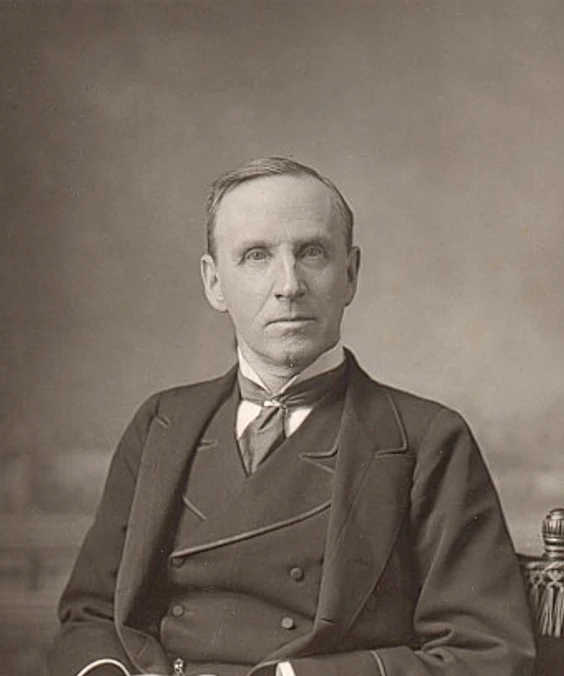
Walter Bagehot
The Public Record
Walter Bagehot was an English journalist, businessman, and essayist, who wrote extensively about government, economics, literature and race. He is known for co-founding the National Review in 1855, and for his works The English Constitution and Lombard Street: A Description of the Money Market (1873).
gutenberg.org
We certainly ought not to debit Parliamentary government as a general and applicable polity with the particular vices of the guardians of the poor in England, though it is so debited every day.
Abroad a man under Government is a superior being: he is higher than the rest of the world; he is envied by almost all of it.
All clever people are eager to be under Government, and are hardly to be satisfied elsewhere.
But in England there is no such superiority, and the English have no such feeling.
Our Government cannot buy for minor clerks the best ability of the nation in the cheap currency of pure honour, and no Government is rich enough to buy very much of it in money.
The foreign bureaux are filled with a selection from the ablest men of the nation, but only a very few of the best men approach the English offices.
A free government is essentially a government by persuasion; and as are the people to be persuaded, and as are the persuaders, so will that government be.
The foreign policy of England has for many years been, according to the judgment now in vogue, inconsequent, fruitless, casual; aiming at no distinct pre-imagined end, based on no steadily pre-conceived principle.
But would it not have been a miracle if the English people, directing their own policy, and being what they are, had directed a good policy?
Are they not above all nations divided from the rest of the world, insular both in situation and in mind, both for good and for evil?
Who could expect such a people to comprehend the new and strange events of foreign places?
So far from wondering that the English Parliament has been inefficient in foreign policy, I think it is wonderful, and another sign of the rude, vague imagination that is at the bottom of our people, that we have done so well as we have.
They are like the additional and solely-ornamental wheels introduced into the clocks of the Middle Ages, which tell the then age of the moon or the supreme constellation; which make little men or birds come out and in theatrically.
All such ornamental work is a source of friction and error; it prevents the time being marked accurately; each new wheel is a new source of imperfection.
So if authority is given to a person, not on account of his working fitness, but on account of his imaginative efficiency, he will commonly impair good administration.
But no man would select the cadets of an aristocratic house as desirable administrators.
They have peculiar disadvantages in the acquisition of business knowledge, business training, and business habits, and they have no peculiar advantages.
The sort of education which fits a man for the higher posts of practical life is still very rare; there is not even a good agreement as to what it is.
But strong as is our ignorance in deteriorating our administration, another cause is stronger still.
There are but two foreign administrations probably better than ours, and both these have had something which we have not had.
But what we are concerned with now is, not Napoleon's originality, but his work.
He undoubtedly settled the administration of France upon an effective, consistent, and enduring system; the succeeding governments have but worked the mechanism they inherited from him.
The English offices have never, since they were made, been arranged with any reference to one another; or rather they were never made, but grew as each could.
The progress of the military art is the most conspicuous, I was about to say the most SHOWY, fact in human history.
Politicians like Walter Bagehot