And the difficulty of matching a Ministry is more than that of fitting a puzzle, because the Ministers to be put in can object, though the bits of a puzzle cannot.
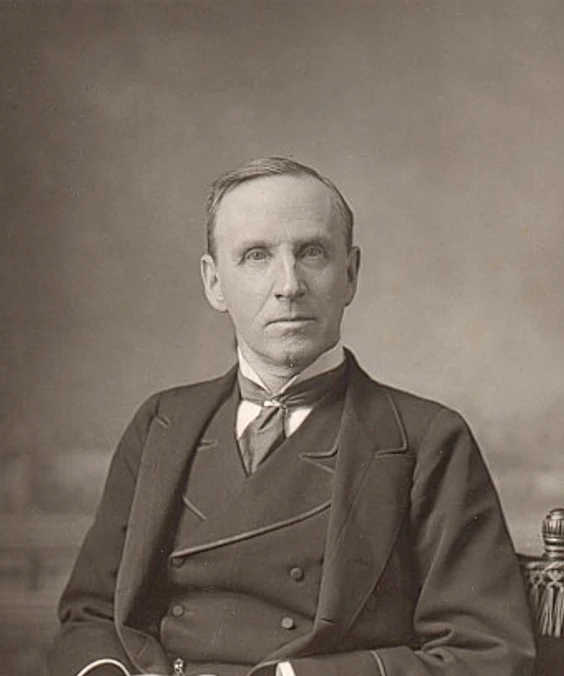
Walter Bagehot
The Public Record
Walter Bagehot was an English journalist, businessman, and essayist, who wrote extensively about government, economics, literature and race. He is known for co-founding the National Review in 1855, and for his works The English Constitution and Lombard Street: A Description of the Money Market (1873).
gutenberg.org
It almost never happens that the Ministry-maker can put into his offices exactly whom he would like; a number of placemen are always too proud, too eager, or too obstinate to go just where they should.
Again, this system not only makes new Ministers ignorant, but keeps present Ministers indifferent.
The new man put into a fresh office ought to have the best motive to learn his task thoroughly, but, in fact, in England, he has not at all the best motive.
Many a battered Minister may be seen to think much more of the vicissitudes which make him and unmake him, than of any office matter.
Lastly, a sudden change of Ministers may easily cause a mischievous change of policy.
In many matters of business, perhaps in most, a continuity of mediocrity is better than a hotch-potch of excellences.
For example, now that progress in the scientific arts is revolutionising the instruments of war, rapid changes in our head-preparers for land and sea war are most costly and most hurtful.
A single competent selector of new inventions would probably in the course of years, after some experience, arrive at something tolerable; it is in the nature of steady, regular, experimenting ability to diminish, if not vanquish, such…
They do not learn from each other's experience;--you might as well expect the new head boy at a public school to learn from the experience of the last head boy.
The most valuable result of many years is a nicely balanced mind instinctively heedful of various errors; but such a mind is the incommunicable gift of individual experience, and an outgoing Minister can no more leave it to his successor…
Thus a desultory and incalculable policy may follow from a rapid change of Ministers.
A Parliament is nothing less than a big meeting of more or less idle people.
In proportion as you give it power it will inquire into everything, settle everything, meddle in everything.
Mostly there is only a very small part of political business which he cares to understand, and much of it (with the shrewd sensual sense belonging to the race) he knows that he will never understand.
When you establish a predominant Parliament, you give over the rule of the country to a despot who has unlimited time--who has unlimited vanity--who has, or believes he has, unlimited comprehension, whose pleasure is in action, whose life…
There is one thing which no one will permit to be treated lightly--himself.
And so there is one too which a sovereign assembly will never permit to be lessened or ridiculed--its own power.
Fifty members of Parliament may be zealous for a particular policy affecting the department, and fifty others for another policy, and between them they may divide its action, spoil its favourite aims, and prevent its consistently working…
We think as we read, "Thank God, I am not as that man; I did not send green coffee to the Crimea; I did not send patent cartridge to the common guns, and common cartridge to the breech loaders.
The Opposition have the unrestricted selection of the point of attack, and they seldom choose a case in which the department, upon the surface of the matter, seems to be right.
The case of first impression will always be that something shameful has happened; that such and such men did die; that this and that gun would not go off; that this or that ship will not sail.
Nothing is more helpless than such a department in Parliament if it has no authorised official defender.
The wasps of the House fasten on it; here they perceive is something easy to sting, and safe, for it cannot sting in return.
The progress of the military art is the most conspicuous, I was about to say the most SHOWY, fact in human history.
Politicians like Walter Bagehot