A free government is that which the people subject to it voluntarily choose.
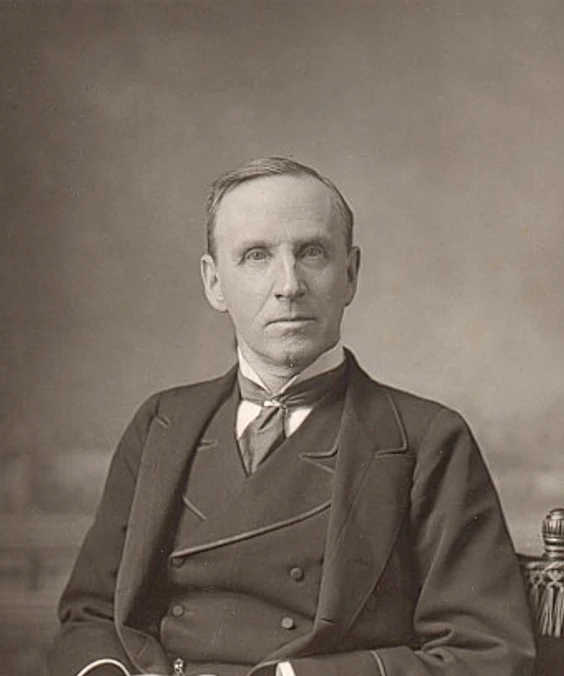
Walter Bagehot
The Public Record
Walter Bagehot was an English journalist, businessman, and essayist, who wrote extensively about government, economics, literature and race. He is known for co-founding the National Review in 1855, and for his works The English Constitution and Lombard Street: A Description of the Money Market (1873).
gutenberg.org
In a casual collection of loose people the only possible free government is a democratic government.
Where no one knows, or cares for, or respects any one else all must rank equal; no one's opinion can be more potent than that of another.
Certain persons are by common consent agreed to be wiser than others, and their opinion is, by consent, to rank for much more than its numerical value.
We may in these happy nations weigh votes as well as count them, though in less favoured countries we can count only.
But in free nations, the votes so weighed or so counted must decide.
Public opinion is the test of this polity; the best opinion which with its existing habits of deference, the nation will accept: if the free government goes by that opinion, it is a good government of its species; if it contravenes that…
It chooses rulers as we wish rulers to be chosen.
When the choice of a nation is really fixed on a statesman, Parliament will fix upon him too.
The moderate men of both parties were satisfied that Lord Palmerston's was the best Government, and they therefore preserved it though it was hated by the immoderate on both sides.
If happily, by its intelligence and attractiveness, a Cabinet can gain a hold upon the great middle part of Parliament, it will continue to exist notwithstanding the hatching of small plots and the machinations of mean factions.
On the whole, I think it indisputable that the selecting task of Parliament is performed as well as public opinion wishes it to be performed; and if we want to improve that standard, we must first improve the English nation, which imposes…
At such times government by a public meeting displays its inherent defects, and is little restrained by its necessary checks.
Subject to two considerable defects I think Parliament passes laws as the nation wishes to have them passed.
The nation had outgrown its institutions, and was cramped by them.
There is no worse trade than agitation at this time.
Not only does the nation endure a Parliamentary government, which it would not do if Parliament were immoderate, but it likes Parliamentary government.
But the manner in which it was hurried through the House savoured of despotism.
But what is curious is that the landed interest gives no seats to other classes, but takes plenty of seats FROM other classes.
Half the boroughs in England are represented by considerable landowners, and when rent is in question, as in the cattle case, they think more of themselves than of those who sent them.
Men who study the structure of Parliament, not in abstract books, but in the concrete London world, wonder not that the landed interest is very powerful, but that it is not despotic.
I believe it would be despotic if it were clever, or rather if its representatives were so, but it has a fixed device to make them stupid.
The counties not only elect landowners, which is natural, and perhaps wise, but also elect only landowners OF THEIR OWN COUNTY, which is absurd.
There is no free trade in the agricultural mind; each county prohibits the import of able men from other counties.
The progress of the military art is the most conspicuous, I was about to say the most SHOWY, fact in human history.
Politicians like Walter Bagehot