No polity can get out of a nation more than there is in the nation.
Walter Bagehot
The Public Record
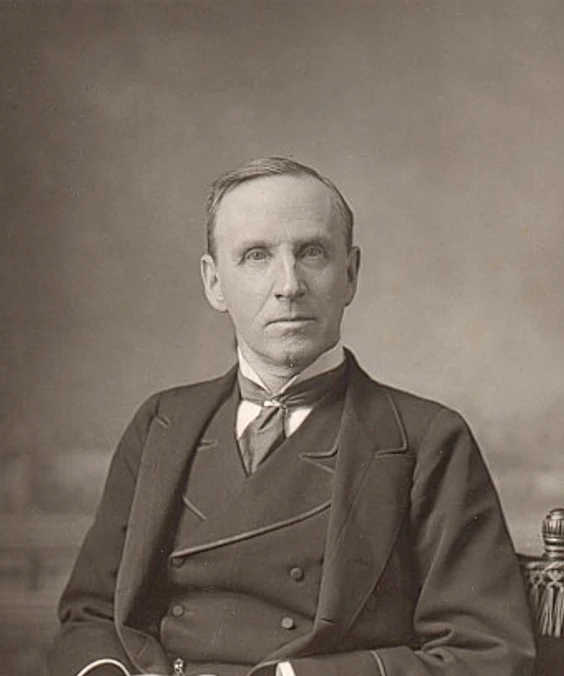
Walter Bagehot was an English journalist, businessman, and essayist, who wrote extensively about government, economics, literature and race. He is known for co-founding the National Review in 1855, and for his works The English Constitution and Lombard Street: A Description of the Money Market (1873).
gutenberg.org
The foreign bureaux are filled with a selection from the ablest men of the nation, but only a very few of the best men approach the English offices.
Our Government cannot buy for minor clerks the best ability of the nation in the cheap currency of pure honour, and no Government is rich enough to buy very much of it in money.
But in England there is no such superiority, and the English have no such feeling.
All clever people are eager to be under Government, and are hardly to be satisfied elsewhere.
Abroad a man under Government is a superior being: he is higher than the rest of the world; he is envied by almost all of it.
We certainly ought not to debit Parliamentary government as a general and applicable polity with the particular vices of the guardians of the poor in England, though it is so debited every day.
The degree of local freedom desirable in a country varies according to many circumstances, and a Parliamentary government may consist with any degree of it.
When the metropolitan executive most wishes to act, it cannot act effectually because these lesser bodies hesitate, deliberate, or even disobey.
Any large accumulation of vessels or guns is sure to contain much that will be useless, unfitting, antediluvian, when it comes to be tried.
The naval art and the military art are both in a state of transition; the last discovery of to-day is out of date, and superseded by an antagonistic discovery to-morrow.
Our War Office attempts what foreign War Offices (perhaps rightly) would not try at; their officers have means of incalculable force denied to ours, though ours is set to harder tasks.
I have no doubt too that any accomplished soldier of the Continent would reject as impossible what we after a fashion effect.
The continental monarchies have only to defend compact European territories by the many soldiers whom they force to fight; the English try to defend without any compulsion--only by such soldiers as they persuade to serve--territories far…
But, then, what we attempt is incalculably more difficult.
Objectors say we spend much more on our army than the great military monarchies, and yet with an inferior result.
I admit that such a despot is a better selector of administrators than a Parliament; that he will know how to mix fresh minds and used minds better; that he is under a stronger motive to combine them well; that here is to be seen the best…
It must give way to attractive novelties which do not hurt; it must resist such as are dangerous; it must maintain old things which are good and fitting; it must alter such as cramp and give pain.
The executive must be like a steel shirt of the Middle Ages--extremely hard and extremely flexible.
The most difficult of all political problems is to be solved--the people are to be at once thoroughly restrained and thoroughly pleased.
He is sure to be active, because he knows that his power, and perhaps his head, may be lost if he be negligent.
The head of the Government must be a man of the most consummate ability.
And such a Government is likely, whatever be its other defects, to have a far better and abler administration than any other Government.
The idea of the Government is that the Emperor represents the people in capacity, in judgment, in instinct.
Flatterers may suggest that the democratic empire will become hereditary, but close observers know that it cannot.
Politicians like Walter Bagehot