But what shall we say of certain proposals for revolutionising the law of prize, which still remain for consideration, notably for the establishment of an international Court of Appeal, and for the abolition of contraband?
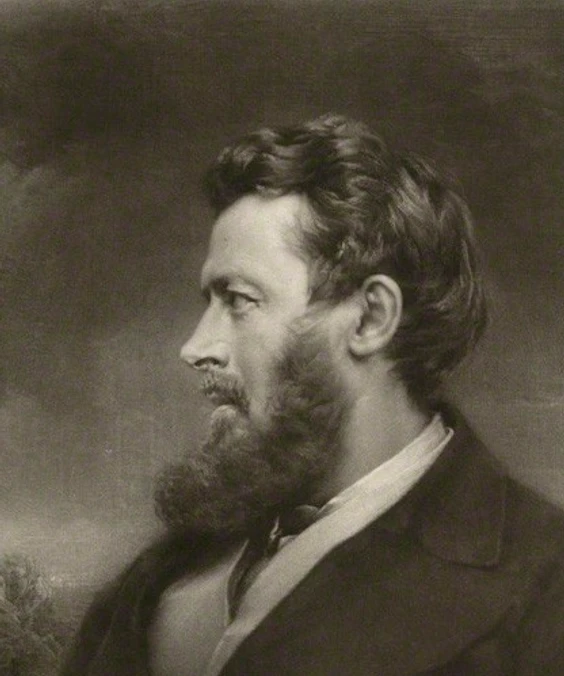
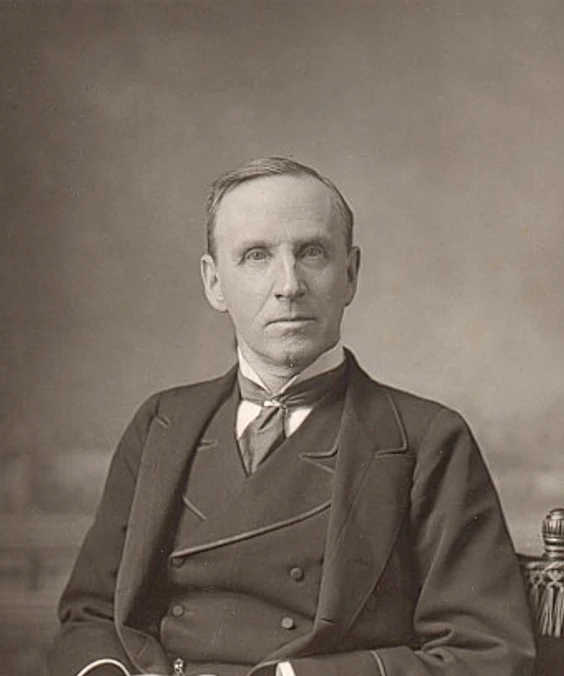
Thomas Erskine Holland
The Public Record
Sir Thomas Erskine Holland KC, FBA was a British jurist.
gutenberg.org
A complete body of law, by which States have agreed to be bound, must, one would think, necessarily precede the establishment of a mixed Court by which that law is to be interpreted.
While the several delegations are vying with one another in devising new definitions of contraband, there would seem to be little likelihood that the British proposal for its total abandonment will be seriously entertained.
Such a step could be justified, if at all, from the point of view of national interest, only on the ground that it might possibly throw increased difficulties in the way of an enemy desirous, even by straining the existing law, of…
If so, what has become of our existing right to detain any vessel which has sailed for a blockaded port, or is carrying, as a commercial venture, or even ignorantly, hostile troops or despatches?
I would venture to suggest that the motto of a reformer of prize law should be festina lente.
The existing system is the fruit of practical experience extending over several centuries, and, though it may need, here and there, some readjustment to new conditions, brought about by the substitution of steam for sails, is not one which…
My contention was that the establishment of an international prize Court, assuming it to be under any circumstances desirable, should follow, not precede, a general international agreement as to the law which the Court is to administer.
The Courts of a given country in evolving new rules of law are almost certain to do so in accordance with the views of public policy generally entertained in that country.
Far different would be the effect of the decision of an international Court, in which, though it might run directly counter to British theory and practice, Great Britain would have bound herself beforehand to acquiesce.
In such cases the ultimate adjustment of differences of view is the appropriate work, not of a law Court, but of diplomacy.
The purpose of the Declaration of London (itself the subject of much difference of opinion) was to curtail this licence of decision, by providing the Court with so much ascertained Prize Law as to render action under the too-elastic phrase…
Into this has now been incongruously thrust a set of clauses intended to give effect to a novel and highly controversial proposal for the creation of an International Prize Court.
Of such a step I have already written that it "would be calamitous should a practice be introduced of attempting to cure the imperfect expression of a treaty by tacking on to it an equally authoritative reasoned commentary.
The result would be obscurum per obscurius, a remedy worse than the disease.
May I venture to recommend that the Bill should contain merely the half-dozen clauses needed for this purpose, leaving untouched for subsequent uncontroversial passage, the Naval Prize Consolidation with Amendments Bill?
I would submit that such a Report as that which accompanies the Declaration of London has no claim to the sort of interpretative authority which has been attributed to it; nor is it desirable that the requisite steps should be taken for…
It would be calamitous should a practice be introduced of attempting to cure the imperfect expression of a treaty by tacking on to it an equally authoritative reasoned commentary, likely, as in the present case, to be enormously longer…
The fact is that the vitally important questions of theory and practice raised by the Convention and the Declaration need calmer and better instructed discussion than they have yet received.
Ought they not to be referred to a Royal Commission, on which should be placed representatives of the Navy and Merchant Service, of the corn trade, and of the Colonies, together with international lawyers, in touch with the views of their…
This power has been so freely exercised, and large portions of the Declaration, not thereby affected, have proved to be so inapplicable to modern conditions, as disclosed by the war, that the document, so far from providing reliable…
To put an end to this confusion, I venture to suggest that, in concert with our Allies, the Declaration should be finally consigned to oblivion.
Its admirers have, however, too long preserved it, perhaps sub spe rati, in a state of suspended animation, using it by way of, as they supposed, a convenient handbook of maritime law for the purposes of the present war, though subject to…
The elaborate classification of contraband had to be at once thrown overboard, and most of the remaining provisions of the Declaration proved to be inapplicable to modern warfare.
Either let its place be taken by some clear and simple statement of unquestioned prize law, for the use of commanders and Officials, ... or established principles take care of themselves, certain doubtful points only being dealt with from…
Politicians like Thomas Erskine Holland