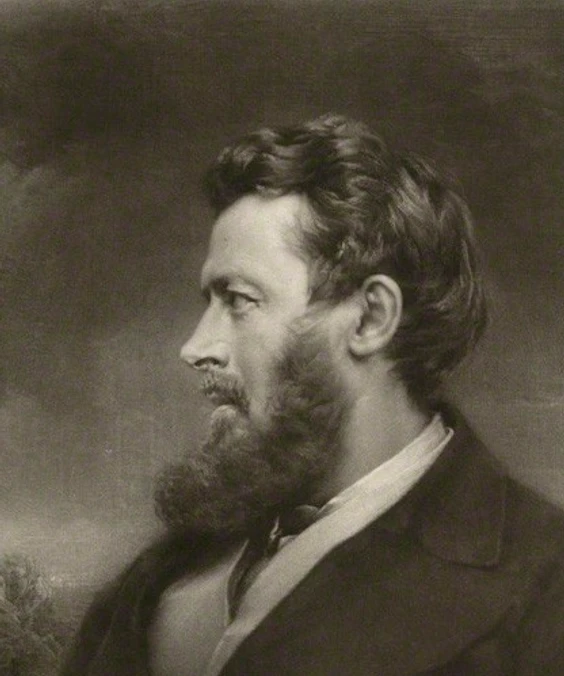
I would rather see Ireland disunited than see it Parnellite.
John Morley
The Public Record
John Morley, 1st Viscount Morley of Blackburn,, was a British Liberal statesman, writer and newspaper editor.
gutenberg.org
Turning for a moment to the larger outlook, I am extremely indisposed to any harking back in the matter of home rule; we are now, I think, freed from the enormous danger of seeing P. master in Ireland; division and its consequences in…
I consider the Parnell chapter of politics finally closed for us, the British liberals, at least during my time.
If I am able to effect in the world anything useful, be assured I know how much of it is owed to the counsel and consort of my friends.
No more lamentable chapter is to be found in all the demented scroll of aimless and untoward things, that seem as if they made up the history of Ireland.
Of all the numberless sorts of bad taste and want of tact, perhaps the worst is to insist, no matter where you are or with whom you are, on arguing about the hardest subjects to the full pitch of elaboration and detail.
I suppose all feel that those deaths which reverse the order of nature have a sharpness of their own.
I can only wish that I may become less unworthy to have been his father.
Yes, ours is a tribulation, and a sore one, but yet we feel we ought to find ourselves carried out of ourselves by sympathy with the wife whose noble and absorbing devotion had become like an entire life of itself, and who is now face to…
The grief of children too, which passes, is very sharp while it remains.
And most largely has human, as well as divine compassion, flowed in upon us, from none more conspicuously than from yourself, whom we hope to count among near friends for the short remainder of our lives.
With respect to the franchise, my belief is that the objection taken to my speech really turned not upon the doctrine of prima facie title, but upon the fact that it was a speech decisively and warmly in favour of the £6 franchise or…
In thinking and acting otherwise I feel myself to be upholding principles essential to the confidence of the people in governments and parliaments, and also a measure which promises by reasonably widening the basis of our institutions to…
In proposing the repeal of the last remaining excise duty upon a simple article of manufacture, I adopted a principle which had already received an unanimous acceptance.
In resisting to the uttermost of my power the encroachment of the House of Lords, I acted, as I believe, on the only principle which makes it practicable to defend the true, legitimate, and constitutional powers of that House itself…
It was Maynooth that originally cut from under his feet the principle of establishment in Ireland as an obligation of the state.
It is an insight into the facts of particular eras, and their relation one to another, which generates in the mind a conviction that the materials exist for forming a public opinion and for directing it to a particular end.
Yet if an opportunist be defined as a statesman who declines to attempt to do a thing until he believes that it can really be done, what is this but to call him a man of common sense?
Gladstone’s courage not to muffle up plain truth, from any spurious notions of national self-esteem.
He never had much patience with people who cannot bear to hear what they cannot fail to see.
At Southport (Dec. 19) he first raised his standard, and proclaimed an Irish policy on Irish lines, that should embrace the promotion of higher education in a backward country, the reform of its religious institutions, the adjustment of…
For his own part he would never despair of redeeming the reproach of total incapacity to assimilate to ourselves an island within three hours of our shores, that had been under our dominating influence for six centuries.
Politics are at once a game and a high art; he allowed the excitements of the game to draw him off from the sustained and exhausting efforts of the high art.
But this was the occasional deviation of an honourable man, not the fixed mental habit of an unprincipled one.
He had culture, imagination, fancy, and other gifts of a born man of letters; the faculty of slow reflective brooding was his, and he often saw both deep and far; he was artificial, but he was no pharisee, and he was never petty.
Politicians like John Morley