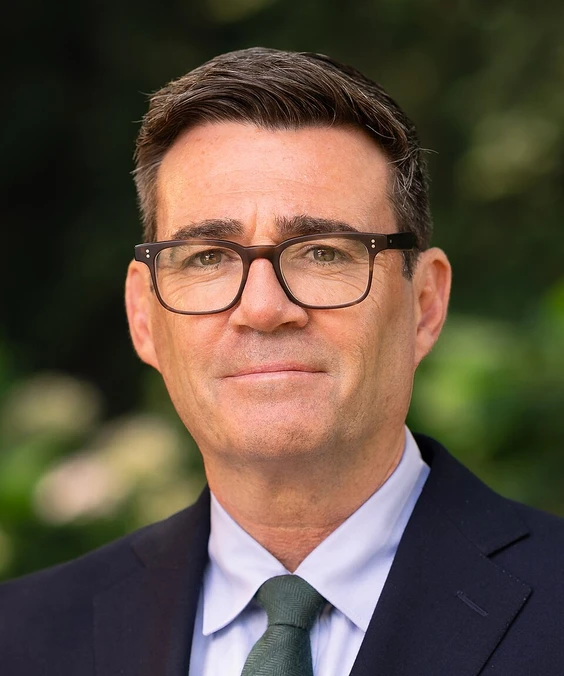
Opposes Public Worship Regulation bill, explains his Six Resolutions.
John Morley
The Public Record
John Morley, 1st Viscount Morley of Blackburn,, was a British Liberal statesman, writer and newspaper editor.
gutenberg.org
The reproaches aimed at you now are merely aimed at the government through you, and you are chosen to be the point of attack because the nation is sore on military matters in times of crisis, and the press which ought to check excitement…
You were chosen for your office, not because you would do tolerably for easy times, and then could walk out, but because you were the best man the party could supply for the post.
In my opinion the qualities of a good administrator and statesman go to make a good war minister, especially at this juncture, far more than those of a good soldier.
If we have committed gross errors, it has been owing to an excess much more than to a defect of professional influence and counsel.
For centuries, through the lifetime of our great schools this classical culture has been made the lapis angularis of all secular culture of the highest class.
But one thing I do think, namely, that it is desirable that, as far as may be, the members of the commission should have some answer to that question in their minds, and should write their report with reference to it.
I will not say you are not prudent in suggesting that you should not even give an opinion upon the great question: What is the true place of the old classical learning in the human culture of the nineteenth century?
Paul is the apostle of the Gentiles, and is in his own person a symbol of this great wedding—the place, for example, of Aristotle and Plato in Christian education is not arbitrary nor in principle mutable.
That truth I take to be that the modern European civilisation from the middle age downwards is the compound of two great factors, the Christian religion for the spirit of man, and the Greek, and in a secondary degree the Roman discipline…
All these are but partial and fragmentary statements, so many narrow glimpses of a great and comprehensive truth.
Is it because we find it established? because it improves memory or taste, or gives precision, or develops the faculty of speech?
I deny their right to a parallel or equal position; their true position is auxiliary, and as auxiliary it ought to be limited and restrained without scruple, as a regard to the paramount matter of education may dictate.
This recognition of title is just what I would refuse.
The low utilitarian argument in matter of education, for giving it what is termed a practical direction, is so plausible that I think we may on the whole be thankful that the instincts of the country have resisted what in argument it has…
I hold that we ought not to set up this machinery, in order to create three infant schools, where all the other wants of some 2000 people are already provided for.
For myself, I said, not in education only but in all things including education, I prefer voluntary to legal machinery, when the thing can be well done either way.
It always seemed to me that there was a treasure-house within him, which he kept closed against the eyes of men.
But there was a certain region of character which was, so to speak, all his own; and there other men do seem more or less dwarfed beside him.
It is no reproach to other statesmen of this or other periods, to say that scarcely any of them have had a celebrity so entirely unaided by a transitory glare.
He will be remembered in connection with great passages of European policy not only as a man of singularly searching, large, and calm intelligence, but yet more as the just man, the man that used only true weights and measures, and ever…
Yet I never knew any one who was so impressive in brief utterances conveying the sum of the matter....
For the grand characteristic of suspicion after all, as of superstition, is to see things that are not.
He always took words in their direct and simple meaning, and assumed them to be the index of the mind; and its full index too, so that he did not speculate to learn what undiscovered residue might still remain in its dark places.
I am far from thinking statesmen, or politicians, less honourable than other men, quite the reverse; but the habit of their life renders them suspicious.
Politicians like John Morley