Though Church and State are thus distinct, they act for a reciprocal benefit; and it is thus important to see why Locke insists on the invalidity of persecution.
Harold J. Laski
The Public Record
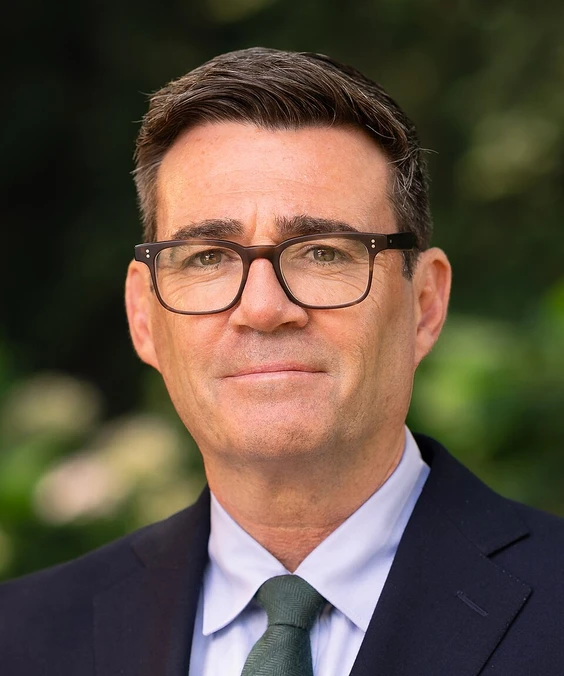
Harold Joseph Laski was an English political theorist and economist. He was active in politics and served as the chairman of the British Labour Party from 1945 to 1946 and was a professor at the London School of Economics from 1926 to 1950. He first promoted pluralism by emphasising the importance of local voluntary communities such as trade unions. After 1930, he began to emphasize the need for a workers' revolution, which he hinted might be violent. Laski's position angered Labour leaders who promised a nonviolent democratic transformation. Laski's position on democracy-threatening violence came under further attack from Prime Minister Winston Churchill in the 1945 UK general election, and the Labour Party had to disavow Laski, its own chairman.
gutenberg.org
Where, indeed, opinions destructive of the State are entertained or a party subversive of peace makes its appearance, the magistrate has the right of suppression; though in the latter case force is the worst and last of remedies.
The magistrate is concerned only with the preservation of social peace and does not deal with the problem of men's souls.
He proceeds by a denial that any element of theocratic government can claim political validity.
The religious freedom of Holland was narrow, as Spinoza had found, but it was still freedom.
Revolution should not, he urges, be the act of a minority; for the contract is the action of the major portion of the people and its consent should likewise obtain to the dissolution of the covenant.
But a limitation without the means of enforcement would be worthless, and revolution remains as the reserve power in society.
All government is a moral trust, and the idea of limitation is therein implied.
It lacks the essential element of consent without which the binding force of law is absent.
But Locke retorts that an absolute government is no government at all since it proceeds by caprice instead of reason; and it is comparable only to a state of war since it implies the absence of judgment upon the character of power.
The substitution of arbitrary will for law, the corruption of Parliament by packing it with the prince's instruments, betrayal to a foreign prince, prevention of the due assemblage of Parliament--all these are a perversion of the trust…
To deny the right of revolution was to justify the worst demands of James, and it is in its favor that he exerts his ablest controversial power.
There is thus a standard of right and wrong superior to all powers within the State.
For at the back of each governmental act, there is, in his own mind, an active citizen body occupied in judging it with single-minded reference to the law of nature and their own natural rights.
The formulation of the rules by which life, liberty and property are to be secured is legislation and this, from the terms of the original contract, is the supreme function of the State.
We have a means for securing impartial justice between members of civil society, and to that means the force of men has been surrendered.
The main thing was to be rid of the Divine Right of kings.
Democracy alone proffers adequate safeguards of an enduring good rule; a democracy, that is to say, which is in the hands of delegates controlled by popular election.
It seems, in his view, always to degenerate into the hands of lesser men who betray the contract they were appointed to observe.
And though Locke admits that monarchy, from its likeness to the family, is the most primitive type of government, he denies Hobbes' assertion that it is the best.
Nor, as Hobbes argued, is the form of government permanent in character; the supreme community is as capable of making temporary as of registering irrevocable decisions.
The disposition of the legislative power is the fundamental test of type; for executive and judiciary are clearly dependent on it.
Where the power of making laws is in a single hand we have a monarchy; where it is exercised by a few or all we have alternatively oligarchy and democracy.
Government there must be if political society is to endure; but its form and substance are dependent upon popular institution.
For Locke was above all anxious to leave supreme power in a community whose single will, as manifested by majority-verdict, could not be challenged by any lesser organ than itself.
Politicians like Harold J. Laski