A merely legal theory of the State can never, therefore, exhaust the problems of political philosophy.
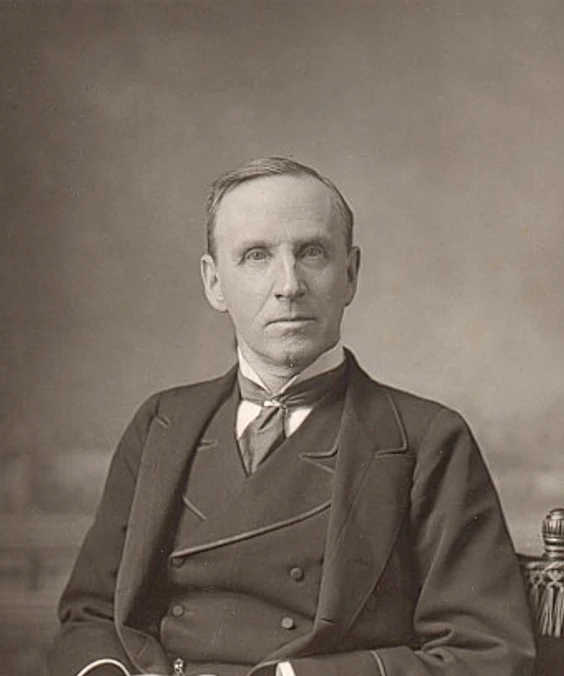
Harold J. Laski
The Public Record
Harold Joseph Laski was an English political theorist and economist. He was active in politics and served as the chairman of the British Labour Party from 1945 to 1946 and was a professor at the London School of Economics from 1926 to 1950. He first promoted pluralism by emphasising the importance of local voluntary communities such as trade unions. After 1930, he began to emphasize the need for a workers' revolution, which he hinted might be violent. Laski's position angered Labour leaders who promised a nonviolent democratic transformation. Laski's position on democracy-threatening violence came under further attack from Prime Minister Winston Churchill in the 1945 UK general election, and the Labour Party had to disavow Laski, its own chairman.
gutenberg.org
For so long as we regard rights as no more than the creatures of law, there is at no point adequate safeguard against their usurpation.
Active consent on the part of the mass of men emphasizes the contingent nature of all power and is essential to the full realization of freedom; and the purpose of the State, in any sense save the mere satisfaction of material appetite…
The theory of consent is vital because without the provision of channels for its administrative expression, men tend to become the creatures of a power ignorant at once and careless of their will.
Yet Locke's insistence on consent and natural rights has received new meaning from each critical period of history since he wrote.
The problem, as we now know, is far more complex than the older thinkers imagined.
The historical research of the nineteenth century has long since made an end of the social contract as an explanation of state-origins; and with it, of necessity, has gone the conception of natural rights as anterior to organized society.
Therein we have a sense, less clear in any previous writer save Machiavelli, of the real result of the decay of medieval ideals.
The central problem is with him political, and all other questions are subsidiary to it.
He is attempting, that is to say, a separation between Church and State not merely in that Scoto-Jesuit sense which aimed at ecclesiastical independence, but in order to assert the pre-eminence of the State as such.
But it is clear enough that Locke was shifting to very different ground from that which arrested the attention of his predecessors.
Locke is, in fact, the first of English thinkers the basis of whose argument is mainly secular.
And, Sydney apart, the resistance they had justified was always resistance to a religious tyrant; and Cartwright was as careful to exclude political oppression from the grounds of revolution as Locke was to insist upon it as the…
What differentiates Locke from all his predecessors is the manner of his writing on the one hand, and the fact of the Revolution on the other.
Even his theory of toleration had in every detail been anticipated by one or other of a hundred controversialists; and his argument can hardly claim either the lofty eloquence of Jeremy Taylor or the cogent simplicity of William Penn.
Goodman and Knox among Presbyterians, Suarez and Mariana among Catholics, the author of the Vindiciæ and Francis Hotman among the Huguenots, had all of them emphasized the concept of public power as a trust; with, of course, the necessary…
The theory of a state of nature, with the rights therein implied, is the contribution, through Stoicism, of the Roman lawyers, and the great medieval contrast to Aristotle's experimentalism.
The social contract is at least as old as when Glaucon debated with Socrates in the market-place at Athens.
Its eldest child is charity, and without it there can be no honesty of opinion.
It may use its own ceremonies, but it cannot impose them on the unwilling; and since persecution is alien from the spirit of Christ, exclusion from membership must be the limit of ecclesiastical disciplinary power.
It becomes merely a voluntary society, which can exert no power save over its members.
Nor can the implication that the magistrate has the keys of heaven be accepted.
But even if that were possible, force would still be mistaken; for the majority of the world is not Christian, yet it would have the right to persecute in the belief that it was possessed of truth.
He cannot, on other grounds, use force for the simple reason that it does not produce internal conviction.
For such an end as the cure of souls, he argues, the magistrate has no divine legation.
Politicians like Harold J. Laski