Jan 1, 1790
They reduce men to loose counters, merely for the sake of simple telling, and not to figures, whose power is to arise from their place in the table.
The Public Record
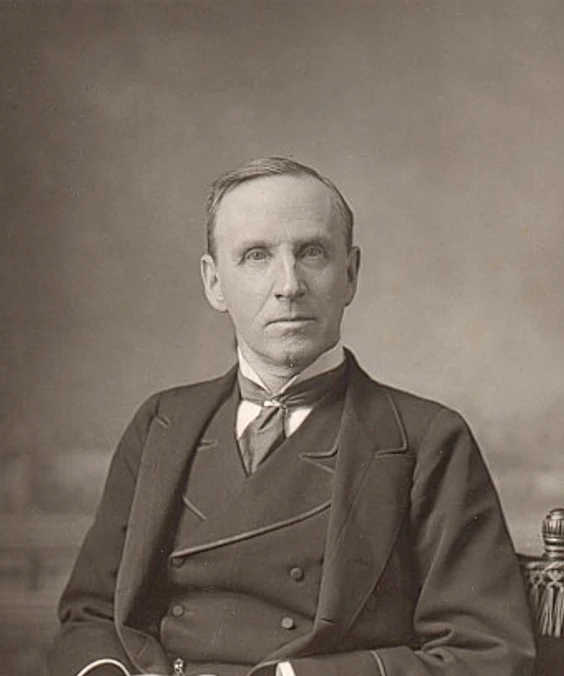
Edmund Burke was an Anglo-Irish writer, philosopher, and politician who is widely credited as the founder of the cultural and political philosophy of conservatism. Regarded as one of the most influential conservative thinkers and political writers of the 18th century, Burke spent the majority of his career in Great Britain and was elected as a member of Parliament (MP) from 1766 to 1794 in the House of Commons of Great Britain with the Whig Party. His writings played a significant role in influencing public views and opinions in both Great Britain and France following the French Revolution in 1789, and he remains a major figure in modern conservative circles.
They reduce men to loose counters, merely for the sake of simple telling, and not to figures, whose power is to arise from their place in the table.
They have attempted to confound all sorts of citizens, as well as they could, into one homogeneous mass; and then they divided this their amalgama into a number of incoherent republics.
It is here that your modern legislators have gone deep into the negative series, and sunk even below their own nothing.
They had to do with citizens, and they were obliged to study the effects of those habits which are communicated by the circumstances of civil life.
The legislators who framed the ancient republics knew that their business was too arduous to be accomplished with no better apparatus than the metaphysics of an undergraduate and the mathematics and arithmetic of an exciseman.
But in this, as well as almost every instance, your new commonwealth is born and bred and fed in those corruptions which mark degenerated and worn-out republics.
Magistrates and collectors of revenue are now no longer acquainted with their districts, bishops with their dioceses, or curates with their parishes.
The electors and elected throughout, especially in the rural cantons, will be frequently without any civil habitudes or connections, or any of that natural discipline which is the soul of a true republic.
They destroyed the bonds of their union, under color of providing for the independence of each of their cities.
They have made France free in the manner in which those sincere friends to the rights of mankind, the Romans, freed Greece, Macedon, and other nations.
Acting as conquerors, they have imitated the policy of the harshest of that harsh race.
It is impossible not to observe, that, in the spirit of this geometrical distribution and arithmetical arrangement, these pretended citizens treat France exactly like a country of conquest.
But such associations, rather than bodies politic, have generally been the effect of necessity, not choice; and I believe the present French power is the very first body of citizens who, having obtained full authority to do with their…
It is remarkable, that, in a great arrangement of mankind, not one reference whatsoever is to be found to anything moral or anything politic,--nothing that relates to the concerns, the actions, the passions, the interests of men.
Such is the fantastical and unjust inequality between mass and mass, in this curious repartition of the rights of representation arising out of territory and contribution.
As they have contrived matters, their taxation does not so much depend on their constitution as their constitution on their taxation.
For, if it be one of the objects to secure the weak from being crushed by the strong, (as in all society undoubtedly it is,) how are the smaller and poorer of these masses to be saved from the tyranny of the more wealthy?
The more the objects of ambition are multiplied and become democratic, just in that proportion the rich are endangered.
I readily admit (indeed, I should lay it down as a fundamental principle) that in a republican government, which has a democratic basis, the rich do require an additional security above what is necessary to them in monarchies.
An individual is not of the same importance in a mass represented by a few as in a mass represented by many.
It is easy to perceive, by the course of their reasonings, how much they were embarrassed by their contradictory ideas of the rights of men and the privileges of riches.
A principle totally different from the equality of men, and utterly irreconcilable to it, is thereby admitted: but no sooner is this principle admitted than (as usual) it is subverted; and it is not subverted (as we shall presently see) to…
In all this process, which in its fundamental elements affects to consider only population, upon a principle of natural right, there is a manifest attention to property,--which, however just and reasonable on other schemes, is on theirs…
Of all these qualifying barriers we must think alike: that they are impotent to secure independence, strong only to destroy the rights of men.
Politicians like Edmund Burke