The moment a sovereign removes the idea of security and protection from his subjects, and declares that he is everything and they nothing, when he declares that no contract he makes with them can or ought to bind him, he then declares war…
Edmund Burke
The Public Record
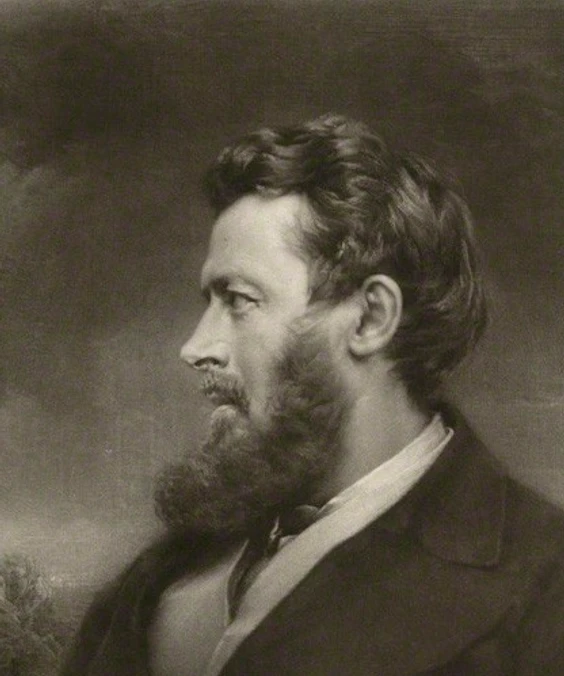
Edmund Burke was an Anglo-Irish writer, philosopher, and politician who is widely credited as the founder of the cultural and political philosophy of conservatism. Regarded as one of the most influential conservative thinkers and political writers of the 18th century, Burke spent the majority of his career in Great Britain and was elected as a member of Parliament (MP) from 1766 to 1794 in the House of Commons of Great Britain with the Whig Party. His writings played a significant role in influencing public views and opinions in both Great Britain and France following the French Revolution in 1789, and he remains a major figure in modern conservative circles.
gutenberg.org
Despotism, if it means anything that is at all defensible, means a mode of government bound by no written rules, and coerced by no controlling magistracies or well-settled orders in the state.
Despotism does not in the smallest degree abrogate, alter, or lessen any one duty of any one relation of life, or weaken the force or obligation of any one engagement or contract whatsoever.
We may bite our chains, if we will, but we shall be made to know ourselves, and be taught that man is born to be governed by law; and he that will substitute will in the place of it is an enemy to GOD.
Judges are guided and governed by the eternal laws of justice, to which we are all subject.
It is a contradiction in terms, it is blasphemy in religion, it is wickedness in politics, to say that any man can have arbitrary power.
Name me a magistrate, and I will name property; name me power, and I will name protection.
Law and arbitrary power are in eternal enmity.
Nothing but absolute impotence can justify men in not resisting it to the utmost of their ability.
It is a crime to bear it, when it can be rationally shaken off.
Those who give and those who receive arbitrary power are alike criminal; and there is no man but is bound to resist it to the best of his power, wherever it shall show its face to the world.
Those who give to others such rights perform acts that are void as they are given,--good indeed and valid only as tending to subject themselves, and those who act with them, to the Divine displeasure; because morally there can be no such…
Neither by compact, covenant, or submission,--for men cannot covenant themselves out of their rights and their duties,--nor by any other means, can arbitrary power be conveyed to any man.
Nor can any sovereign have it by succession; for no man can succeed to fraud, rapine, and violence.
No, my Lords, this arbitrary power is not to be had by conquest.
It has been his ambition and his policy to reconcile the vanquished to his fortune, to show that they had gained by the change, to convert their momentary suffering into a long benefit, and to draw from the humiliation of his enemies an…
To this at least he is strictly bound: he ought to govern them as he governs his own subjects.
No conquest can give such a right; for conquest, that is, force, cannot convert its own injustice into a just title, by which it may rule others at its pleasure.
Every good gift is of God; all power is of God; and He who has given the power, and from whom alone it originates, will never suffer the exercise of it to be practised upon any less solid foundation than the power itself.
This great law does not arise from our conventions or compacts; on the contrary, it gives to our conventions and compacts all the force and sanction they can have.
No man can lawfully govern himself according to his own will; much less can one person be governed by the will of another.
We have no arbitrary power to give, because arbitrary power is a thing which neither any man can hold nor any man can give.
My Lords, the East India Company have not arbitrary power to give him; the king has no arbitrary power to give him; your Lordships have not; nor the Commons, nor the whole legislature.
No! it will be your pride and glory to teach men intrusted with power, that, in their use of it, they are to conform to principles, and not to draw their principles from the corrupt practice of any man whatever.
Here he has declared his opinion, that he is a despotic prince, that he is to use arbitrary power; and of course all his acts are covered with that shield.
Politicians like Edmund Burke