That very thing which is held out to you as your cure is that which makes your malady, and renders it, if once it happens, utterly incurable.
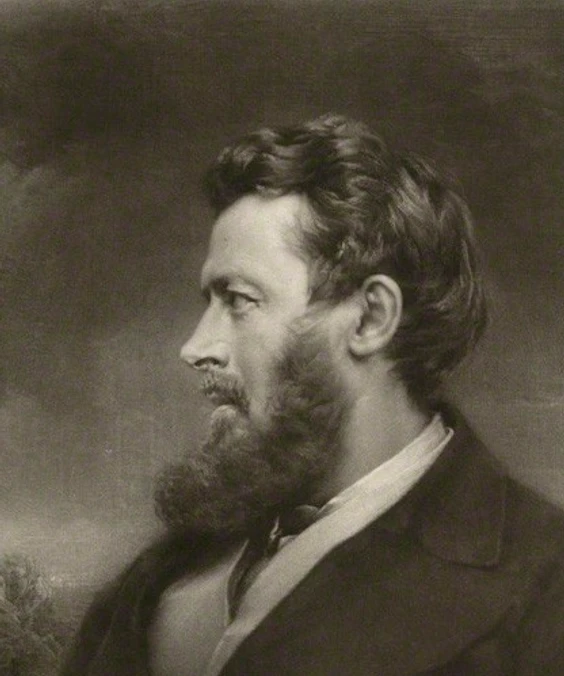
Edmund Burke
The Public Record
Edmund Burke was an Anglo-Irish writer, philosopher, and politician who is widely credited as the founder of the cultural and political philosophy of conservatism. Regarded as one of the most influential conservative thinkers and political writers of the 18th century, Burke spent the majority of his career in Great Britain and was elected as a member of Parliament (MP) from 1766 to 1794 in the House of Commons of Great Britain with the Whig Party. His writings played a significant role in influencing public views and opinions in both Great Britain and France following the French Revolution in 1789, and he remains a major figure in modern conservative circles.
gutenberg.org
It is not to soften us to suffering innocence and virtue, but to mollify us to the crimes and to the society of robbers and ruffians.
But I trust that our countrymen will not be softened to that kind of crimes and criminals; for, if we should, our hearts will be hardened to everything which has a claim on our benevolence.
A kind Providence has placed in our breasts a hatred of the unjust and cruel, in order that we may preserve ourselves from cruelty and injustice.
The pretended gentleness which excludes that charitable rancor produces an indifference which is half an approbation.
They never will love where they ought to love, who do not hate where they ought to hate.
There is another piece of policy, not more laudable than this, in reading these moral lectures, which lessens our hatred to criminals and our pity to sufferers by insinuating that it has been owing to their fault or folly that the latter…
By flattering us that we are not subject to the same vices and follies, it induces a confidence that we shall not suffer the same evils by a contact with the infamous gang of robbers who have thus robbed and butchered our neighbors before…
Enmity to us, and to all civilized nations, is wrought into the very stamina of its Constitution.
Their hostility is to break us to their dominion; their amity is to debauch us to their principles.
When under the name of peace the war of intrigue begins, we do not contend against our enemies with the whole force of the kingdom.
No,--we shall have to fight, (if it should be a fight at all, and not an ignominious surrender of everything which has made our country venerable in our eyes and dear to our hearts,) we shall have to light with but a portion of our…
Now a complete act of oblivion is passed about the Jacobins of England, though one would naturally imagine it would make a principal object in all fair deliberation upon the merits of a project of amity with the Jacobins of France.
But however others may choose to forget the faction, the faction does not choose to forget itself, nor, however gentlemen may choose to flatter themselves, it does not forget them.
When the Jacobins of France, by their studied, deliberated, catalogued files of murders with the poniard, the sabre, and the tribunal, have shocked whatever remained of human sensibility in our breasts, then it was they distinguished the…
They attempted to assassinate the memory of those whose bodies their friends had massacred, and to consider their murder as a less formal act of justice.
They endeavored even to debauch our pity, and to suborn it in favor of cruelty.
In order to reconcile us the better to this republican tyranny, they confounded the bloodshed of war with the murders of peace; and they computed how much greater prodigality of blood was exhibited in battles and in the storm of cities…
That you may not doubt that they look on this war as a civil war, and the Jacobins of France as of their party, and that they look upon us, though locally their countrymen, in reality as enemies, they have never failed to run a parallel…
They justify their partiality to those Jacobins by the partiality which was shown by several here to the Colonies, and they sanction their cry for peace with the Regicides of France by some of our propositions for peace with the English in…
We cannot be blind to the advantage which such a party affords to Regicide France in all her views,--and, on the other hand, what an advantage Regicide France holds out to the views of the republican party in England.
The silence of these writers is dreadfully expressive.
It is but too plain that our Constitution cannot exist with such a communication.
The Constitution is made by those things, and for those things: without them it cannot exist; and without them it is no matter whether it exists or not.
He is a strange visionary (but he is nothing worse) who fancies that any one part of our Constitution, whatever right of primogeniture it may claim, or whatever astrologers may divine from its horoscope, can possibly survive the others.
Politicians like Edmund Burke