The new habit of the Directory is so charmingly fancied, that it is impossible not to fall in love with so well-dressed a Constitution;--the costume of the sans-culotte Constitution of 1793 was absolutely insufferable.
Edmund Burke
The Public Record
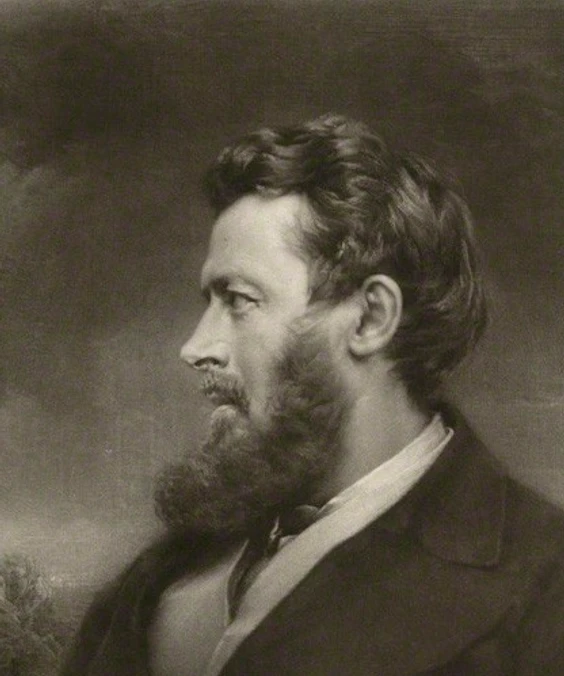
Edmund Burke was an Anglo-Irish writer, philosopher, and politician who is widely credited as the founder of the cultural and political philosophy of conservatism. Regarded as one of the most influential conservative thinkers and political writers of the 18th century, Burke spent the majority of his career in Great Britain and was elected as a member of Parliament (MP) from 1766 to 1794 in the House of Commons of Great Britain with the Whig Party. His writings played a significant role in influencing public views and opinions in both Great Britain and France following the French Revolution in 1789, and he remains a major figure in modern conservative circles.
gutenberg.org
But, with great deference to the new diplomatic taste, we old people must retain some square-toed predilection, for the fashions of our youth.
The Parisians (and I am much of their mind) think that a thief with a crape on his visage is much worse than a barefaced knave, and that such robbers richly deserve all the penalties of all the black acts.
In effect, then, it was not with the men, or their principles, or their polities, that we quarrelled: our sole dislike was to the cut of their clothes.
What warehouses of masks and dominoes furnished a cover to the nakedness of their shame?
But in this the French Republic has followed, as they always affect to do, and have hitherto done with success, the example of the ancient Romans, who shook all governments by listening to the complaints of their subjects, and soon after…
None but dead monarchs are so much as mentioned by them, and those only to insult the living by an invidious comparison.
What a pity it is, that he, who loved France so well as to chastise it, was not now alive, by an unsparing use of the rod (which, indeed, he would have spared little) to give them another instance of his paternal affection!
These are not days in which monarchs value themselves upon the title of great: they are grown philosophic: they are satisfied to be good.
I hope that those who yet wear royal, imperial, and ducal crowns will learn to feel as men and as kings: if not, I predict to them, they will not long exist as kings or as men.
All authority, in a great degree, exists in opinion: royal authority most of all.
The supreme majesty of a monarch cannot be allied with contempt.
Men would reason, not unplausibly, that it would be better to get rid of the monarchy at once than to suffer that which was instituted, and well instituted, to support the glory of the nation, to become the instrument of its degradation…
For my part, I do not believe the fact to be so as they represent it.
I have a moral assurance that the representation of the Regicide Directory is absolutely false and groundless.
It shows in what part it is, and with what a weapon, they mean a deadly blow at the heart of Great Britain.
With them everything else perishes almost as soon as it is formed; this hatred alone is immortal.
This is their impure Vestal fire that never is extinguished: and never will it be extinguished, whilst the system of Regicide exists in France.
Men are too apt to be deceitful enough in their professions of friendship, and this makes a wise man walk with some caution through life.
But when a man declares himself your unalterable enemy!
No man ever declared to another a rancor towards him which he did not feel.
We would not treat with the monarchy, weakened as it must obviously be in any circumstance of restoration, without a reservation of something for indemnity and security,--and that, too, in words of the largest comprehension.
You treat with the Regicides without any reservation at all.
On their part, they assure you formally and publicly, that they will give you nothing in the name of indemnity or security, or for any other purpose.
It is impossible not to pause here for a moment, and to consider the manner in which such declarations would have been taken by your ancestors from a monarch distinguished for his arrogance,--an arrogance which, even more than his…
Politicians like Edmund Burke