To what a state of savage, stupid, servile insensibility must your people be reduced, who can endure such proceedings in their Church, their state, and their judicature, even for a moment!
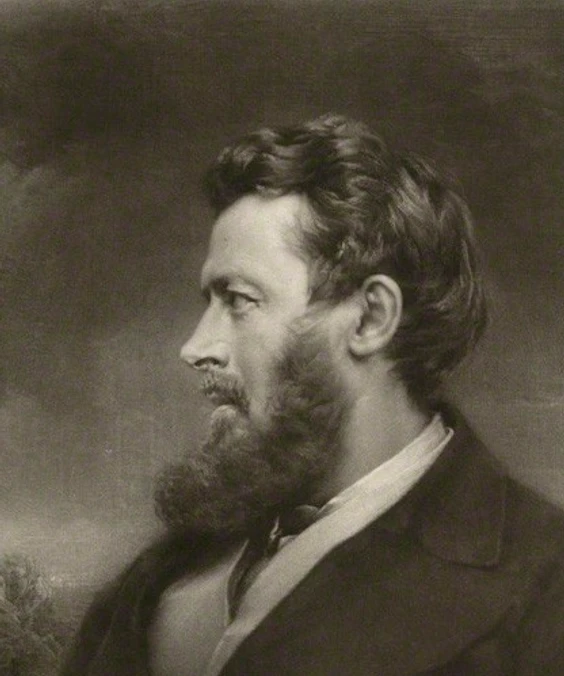
Edmund Burke
The Public Record
Edmund Burke was an Anglo-Irish writer, philosopher, and politician who is widely credited as the founder of the cultural and political philosophy of conservatism. Regarded as one of the most influential conservative thinkers and political writers of the 18th century, Burke spent the majority of his career in Great Britain and was elected as a member of Parliament (MP) from 1766 to 1794 in the House of Commons of Great Britain with the Whig Party. His writings played a significant role in influencing public views and opinions in both Great Britain and France following the French Revolution in 1789, and he remains a major figure in modern conservative circles.
gutenberg.org
On a view of their consequences, it is almost inhuman to treat them lightly.
We see, too, who it is that brings them in again.
We know who it was that drove the money-changers out of the temple.
Burnet tells us, that nothing tended to reconcile the English nation to the government of King William so much as the care he took to fill the vacant bishoprics with men who had attracted the public esteem by their learning, eloquence, and…
One would think, that, after an honest and necessary revolution, (if they had a mind that theirs should pass for such,) your masters would have imitated the virtuous policy of those who have been at the head of revolutions of that glorious…
Accordingly, we are indebted to this act of his for the preservation of our laws, which some senseless assertors of the rights of men were then on the point of entirely erasing, as relics of feudality and barbarism.
For Cromwell was a man in whom ambition had not wholly suppressed, but only suspended, the sentiments of religion, and the love (as far as it could consist with his designs) of fair and honorable reputation.
Cromwell knew how to separate the institutions expedient to his usurpation from the administration of the public justice of his country.
Cromwell, when he attempted to legalize his power, and to settle his conquered country in a state of order, did not look for dispensers of justice in the instruments of his usurpation.
One would think, that, out of common decency, they would have given you men who had not been in the habit of trampling upon law and justice in the Assembly, neutral men, or men apparently neutral, for judges, who are to dispose of your…
Their tyranny is complete in their justice; and their lanterne is not half so dreadful as their court.
We see that in future you are to be destroyed with more form and regularity.
Nothing seems to me to render your internal situation more desperate than this one circumstance of the state of your judicature.
Judicature, which above all things should awe them, is their creature and their instrument.
Its arms, its treasures, its all are in their hands.
Government itself, which ought to constrain the more bold and dexterous of these robbers, is their accomplice.
From the forced repentance of invalid mutineers and disbanded thieves you can hope for no resource.
Scantily fed for a while with the offal of plunder, they will drop off by degrees; they will be driven out of sight and out of thought; and they will be left to perish obscurely, like rats, in holes and corners.
When did distress ever oblige a prince to abdicate his authority?
They may be distressed in the midst of all their power; but they will never look to anything but power for their relief.
Those who have been once intoxicated with power, and have derived any kind of emolument from it, even though but for one year, never can willingly abandon it.
The people of France, almost generally, have been taught to look for other resources than those which can be derived from order, frugality, and industry.
Desperate situations produce desperate councils and desperate measures.
Men are as much blinded by the extremes of misery as by the extremes of prosperity.
Politicians like Edmund Burke