They were so: but every man must answer in his estimation for the advice he gives, when he puts the conduct of his measure into hands who he does not know will execute his plans according to his ideas.
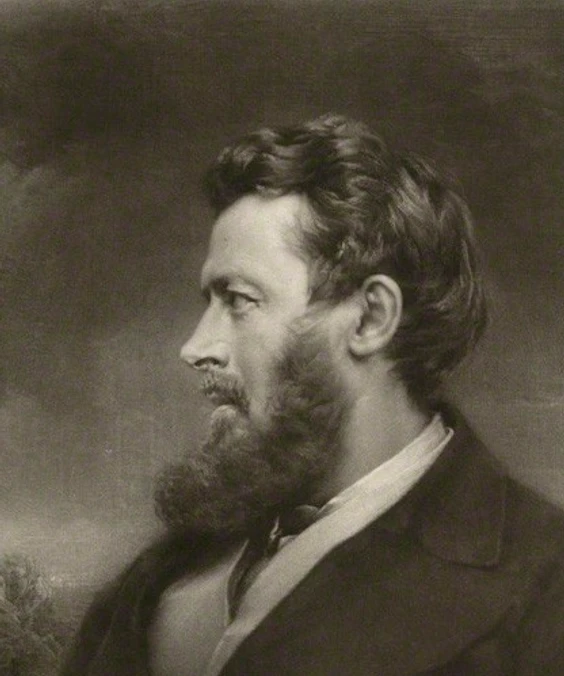
Edmund Burke
The Public Record
Edmund Burke was an Anglo-Irish writer, philosopher, and politician who is widely credited as the founder of the cultural and political philosophy of conservatism. Regarded as one of the most influential conservative thinkers and political writers of the 18th century, Burke spent the majority of his career in Great Britain and was elected as a member of Parliament (MP) from 1766 to 1794 in the House of Commons of Great Britain with the Whig Party. His writings played a significant role in influencing public views and opinions in both Great Britain and France following the French Revolution in 1789, and he remains a major figure in modern conservative circles.
gutenberg.org
It was therefore necessary first to put government out of danger, whilst at its own desire it suffered such an operation as a general reform at the hands of those who were much more filled with a sense of the disease than provided with…
The very confession that a government wants either amendment in its conformation or relief to great distress causes it to lose half its reputation, and as great a proportion of its strength as depends upon that reputation.
In the condition in which France was found three years ago, what better system could be proposed, what less even savoring of wild theory, what fitter to provide for all the exigencies whilst it reformed all the abuses of government, than…
To illustrate the mischief of a wise plan, without any attention to means and circumstances, it is not necessary to go farther than to your recent history.
Statesmen of a more judicious prescience look for the fortunate moment too; but they seek it, not in the conjunctions and oppositions of planets, but in the conjunctions and oppositions of men and things.
We cannot think of making men, and binding Nature to our designs.
I must see with my own eyes, I must, in a manner, touch with my own hands, not only the fixed, but the momentary circumstances, before I could venture to suggest any political project whatsoever.
But I dare not risk a speculation with no better view of your affairs than at present I can command; my caution is not from disregard, but from solicitude for your welfare.
For my part, I honor them for not having carried mistake into crime.
If those gentlemen stopped, when they came to the brink of the gulf of guilt and public misery that yawned before them in the abyss of these dark and bottomless speculations, I forgive their first error: in that they were involved with…
What was this, but to unchain the fury of rash speculation amongst a people of itself but too apt to be guided by a heated imagination and a wild spirit of adventure?
Monarchs, in general, respect some settled order of things, which they find it difficult to move from its basis, and to which they are obliged to conform, even when there are no positive limitations to their power.
And when will men, young or old, if suddenly raised to far higher power than that which absolute kings and emperors commonly enjoy, learn anything like moderation?
They were young and inexperienced; and when will young and inexperienced men learn caution and distrust of themselves?
But your talents disappear in my admiration of your virtues.
Something very high must fortify men to that proof.
Minds sore with the poignant sense of insulted virtue, filled with high disdain against the pride of triumphant baseness, often have it not in their choice to stand their ground.
No, no! mankind has no title to demand that we should be slaves to their guilt and insolence, or that we should serve them in spite of themselves.
If, at this distance, sitting quietly by my fire, I cannot read their decrees and speeches without indignation, shall I condemn those who have fled from the actual sight and hearing of all these horrors?
Last, and, worst, who could endure to hear this unnatural, insolent, and savage despotism called liberty?
I have expressed myself ill, if I have given you cause to imagine that I prefer the conduct of those who have retired from this warfare to your behavior, who, with a courage and constancy almost supernatural, have struggled against…
It was under this conviction that the very first regular step which we took, on the Revolution of 1688, was to fill the throne with a real king; and even before it could be done in due form, the chiefs of the nation did not attempt…
Yet the restoration of our monarchy, even in the person of such a prince, was everything to us; for without monarchy in England, most certainly we never can enjoy either peace or liberty.
The person given to us by Monk was a man without any sense of his duty as a prince, without any regard to the dignity of his crown, without any love to his people,--dissolute, false, venal, and destitute of any positive good quality…
Politicians like Edmund Burke