On that hypothesis, let any set of men be strong enough to set their duties at defiance, and they cease to be duties any longer.
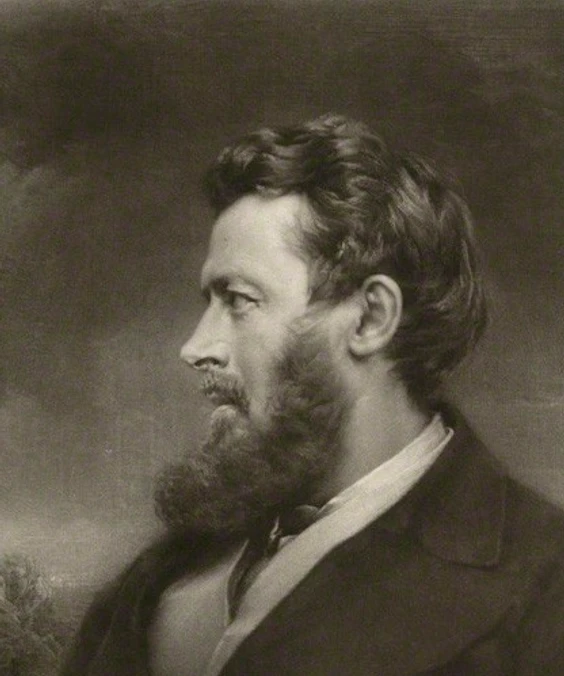
Edmund Burke
The Public Record
Edmund Burke was an Anglo-Irish writer, philosopher, and politician who is widely credited as the founder of the cultural and political philosophy of conservatism. Regarded as one of the most influential conservative thinkers and political writers of the 18th century, Burke spent the majority of his career in Great Britain and was elected as a member of Parliament (MP) from 1766 to 1794 in the House of Commons of Great Britain with the Whig Party. His writings played a significant role in influencing public views and opinions in both Great Britain and France following the French Revolution in 1789, and he remains a major figure in modern conservative circles.
gutenberg.org
I allow, that, if no Supreme Ruler exists, wise to form, and potent to enforce, the moral law, there is no sanction to any contract, virtual or even actual, against the will of prevalent power.
Much the strongest moral obligations are such as were never the results of our option.
Men without their choice derive benefits from that association; without their choice they are subjected to duties in consequence of these benefits; and without their choice they enter into a virtual obligation as binding as any that is…
Now, though civil society might be at first a voluntary act, (which in many cases it undoubtedly was,) its continuance is under a permanent standing covenant, coexisting with the society; and it attaches upon every individual of that…
I cannot too often recommend it to the serious consideration of all men who think civil society to be within the province of moral jurisdiction, that, if we owe to it any duty, it is not subject to our will.
The ostracism could not very long save itself, and much less the state which it was meant to guard, from the attempts of ambition,--one of the natural, inbred, incurable distempers of a powerful democracy.
Whenever, in states which have had a democratic basis, the legislators have endeavored to put restraints upon ambition, their methods were as violent as in the end they were ineffectual,--as violent, indeed, as any the most jealous…
As the exorbitant exercise of power cannot, under popular sway, be effectually restrained, the other great object of political arrangement, the means of abating an excessive desire of it, is in such a state still worse provided for.
The people are the natural control on authority; but to exercise and to control together is contradictory and impossible.
For this reason, no legislator, at any period of the world, has willingly placed the seat of active power in the hands of the multitude; because there it admits of no control, no regulation, no steady direction whatsoever.
The best method of obtaining these two great points forms the important, but at the same time the difficult problem to the true statesman.
But it is very expedient that by moral instruction they should be taught, and by their civil constitutions they should be compelled, to put many restrictions upon the immoderate exercise of it, and the inordinate desire.
Whether they desire it to be vested in the many or the few depends with most men upon the chance which they imagine they themselves may have of partaking in the exercise of that arbitrary sway, in the one mode or in the other.
Indeed, arbitrary power is so much to the depraved taste of the vulgar, of the vulgar of every description, that almost all the dissensions which lacerate the commonwealth are not concerning the manner in which it is to be exercised, but…
I am well aware that men love to hear of their power, but have an extreme disrelish to be told of their duty.
The number engaged in crimes, instead of turning them into laudable acts, only augments the quantity and intensity of the guilt.
But, as no one of us men can dispense with public or private faith, or with any other tie of moral obligation, so neither can any number of us.
To flatter them into a contempt of faith, truth, and justice is to ruin them; for in these virtues consists their whole safety.
The people are not to be taught to think lightly of their engagements to their governors; else they teach governors to think lightly of their engagements towards them.
And the votes of a majority of the people, whatever their infamous flatterers may teach in order to corrupt their minds, cannot alter the moral any more than they can alter the physical essence of things.
The Constitution of a country being once settled upon some compact, tacit or expressed, there is no power existing of force to alter it, without the breach of the covenant, or the consent of all the parties.
Neither the few nor the many have a right to act merely by their will, in any matter connected with duty, trust, engagement, or obligation.
The French Revolution, say they, was the act of the majority of the people; and if the majority of any other people, the people of England, for instance, wish to make the same change, they have the same right.
They are masters of the commonwealth, because in substance they are themselves the commonwealth.
Politicians like Edmund Burke