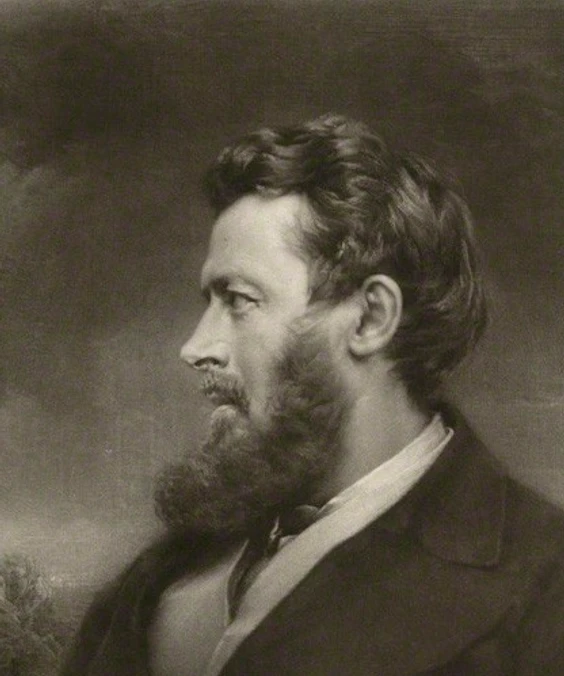
Edmund Burke
The Public Record
Edmund Burke was an Anglo-Irish writer, philosopher, and politician who is widely credited as the founder of the cultural and political philosophy of conservatism. Regarded as one of the most influential conservative thinkers and political writers of the 18th century, Burke spent the majority of his career in Great Britain and was elected as a member of Parliament (MP) from 1766 to 1794 in the House of Commons of Great Britain with the Whig Party. His writings played a significant role in influencing public views and opinions in both Great Britain and France following the French Revolution in 1789, and he remains a major figure in modern conservative circles.
Jan 1, 1790
Shall we be more tender of the tyrants of our own time, when we see them acting worse tragedies under our eyes?
Jan 1, 1790
Shall we not use the same liberty that they do, when we can use it with the same safety, when to speak honest truth only requires a contempt of the opinions of those whose actions we abhor?
Jan 1, 1790
These professors of the rights of men are so busy in teaching others, that they have not leisure to learn anything themselves; otherwise they would have known that it is to the property of the citizen, and not to the demands of the…
Jan 1, 1790
The claim of the citizen is prior in time, paramount in title, superior in equity.
Jan 1, 1790
The spoil of the Church was now become the only resource of all their operations in finance, the vital principle of all their politics, the sole security for the existence of their power.
Jan 1, 1790
To cut off all appearance of connection between the crown and public justice, and to bring the whole under implicit obedience to the dictators in Paris, the old independent judicature of the Parliaments, with all its merits and all its…
Jan 1, 1790
Whilst the Parliaments existed, it was evident that the people might some time or other come to resort to them, and rally under the standard of their ancient laws.
Jan 1, 1790
We found these old institutions, on the whole, favorable to morality and discipline; and we thought they were susceptible of amendment, without altering the ground.
Jan 1, 1790
We thought that they were capable of receiving and meliorating, and above all of preserving, the accessions of science and literature, as the order of Providence should successively produce them.
Jan 1, 1790
It is from our attachment to a Church establishment, that the English nation did not think it wise to intrust that great fundamental interest of the whole to what they trust no part of their civil or military public service,--that is, to…
Jan 1, 1790
The people of England think that they have constitutional motives, as well as religious, against any project of turning their independent clergy into ecclesiastical pensioners of state.
Jan 1, 1790
They tremble for their liberty, from the influence of a clergy dependent on the crown; they tremble for the public tranquillity, from the disorders of a factious clergy, if it were made to depend upon any other than the crown.
Jan 1, 1790
They therefore made their Church, like their king and their nobility, independent.
Jan 1, 1790
They have ordained that the provision of this establishment might be as stable as the earth on which it stands, and should not fluctuate with the Euripus of funds and actions.
Jan 1, 1790
The men of England, the men, I mean, of light and leading in England, whose wisdom (if they have any) is open and direct, would be ashamed, as of a silly, deceitful trick, to profess any religion in name, which by their proceedings they…
Jan 1, 1790
If by their conduct (the only language that rarely lies) they seemed to regard the great ruling principle of the moral and the natural world as a mere invention to keep the vulgar in obedience, they apprehend that by such a conduct they…
Jan 1, 1790
They would find it difficult to make others believe in a system to which they manifestly gave no credit themselves.
Jan 1, 1790
The Christian statesmen of this land would, indeed, first provide for the multitude, because it is the multitude, and is therefore, as such, the first object in the ecclesiastical institution, and in all institutions.
Jan 1, 1790
They have been taught that the circumstance of the Gospel's being preached to the poor was one of the great tests of its true mission.
Jan 1, 1790
They think, therefore, that those do not believe it who do not take care it should be preached to the poor.
Jan 1, 1790
But as they know that charity is not confined to any one description, but ought to apply itself to all men who have wants, they are not deprived of a due and anxious sensation of pity to the distresses of the miserable great.
Jan 1, 1790
They are not repelled, through a fastidious delicacy, at the stench of their arrogance and presumption, from a medicinal attention to their mental blotches and running sores.
Jan 1, 1790
The English people are satisfied, that to the great the consolations of religion are as necessary as its instructions.
Politicians like Edmund Burke