The alembic, in my mind, has furnished to the world a far greater benefit and blessing than if the opus maximum had been really found by chemistry, and, like Midas, we could turn everything into gold.
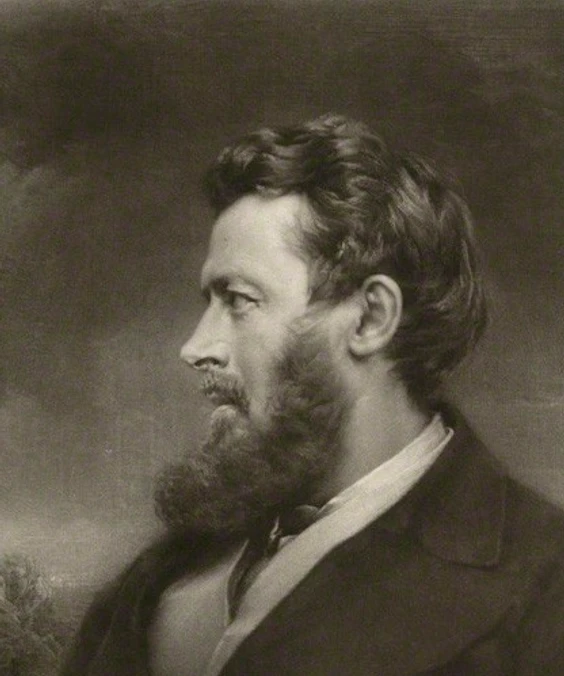
Edmund Burke
The Public Record
Edmund Burke was an Anglo-Irish writer, philosopher, and politician who is widely credited as the founder of the cultural and political philosophy of conservatism. Regarded as one of the most influential conservative thinkers and political writers of the 18th century, Burke spent the majority of his career in Great Britain and was elected as a member of Parliament (MP) from 1766 to 1794 in the House of Commons of Great Britain with the Whig Party. His writings played a significant role in influencing public views and opinions in both Great Britain and France following the French Revolution in 1789, and he remains a major figure in modern conservative circles.
gutenberg.org
As to what is said, in a physical and moral view, against the home consumption of spirits, experience has long since taught me very little to respect the declamations on that subject.
The domestic consumption of spirits produced, without complaints, a very great revenue, applicable, if we pleased, in bounties, to the bringing corn from other places, far beyond the value of that consumed in making it, or to the…
It is an odd way of making flesh cheap, to stop or check the distillery.
It is one that on many accounts cannot be too much regretted, and the rather, as it was the sole cause of a scarcity in that article which arose from the proceedings of men themselves: I mean the stop put to the distillery.
All the sources of plenty, in all and every article, were dried or frozen up.
All the productions of the earth link in with each other.
The demand of the year must depend solely on its own produce; and the price of the spring corn is not to be expected to fall very soon, or at any time very low.
We, the people, ought to be made sensible that it is not in breaking the laws of commerce, which are the laws of Nature, and consequently the laws of God, that we are to place our hope of softening the Divine displeasure to remove any…
To avoid that evil, government will redouble the causes of it; and then it will become inveterate and incurable.
And having looked to government for bread, on the very first scarcity they will turn and bite the hand that fed them.
If once they are habituated to it, though but for one half-year, they will never be satisfied to have it otherwise.
This example of Rome, which has been derived from the most ancient times, and the most flourishing period of the Roman Empire, (but not of the Roman agriculture,) may serve as a great caution to all governments not to attempt to feed the…
The next cause which renders this evil incurable is the jobs which have grown out of it, and which, in spite of all precautions, would grow out of such things even under governments far more potent than the feeble authority of the Pope.
But the quiet of the town is purchased by the ruin of the country and the ultimate wretchedness of both.
This preserves quiet among the numerous poor, idle, and naturally mutinous people of a very great capital.
The reformation of this evil system is in a manner impracticable.
That ruin may be traced with certainty to this sole cause; and it appears indubitably by a comparison of their state and condition with that of the other part of the ecclesiastical dominions, not subjected to the same regulations, which…
If in both these trades they should succeed, so as to exclude those who trade on natural and private capitals, then they will have a monopoly in their hands, which, under the appearance of a monopoly of capital, will, in reality, be a…
I don't know whether the farmer will suffer by it, as long as there is a tolerable market of competition; but I am sure, that, in the first place, the trading government will speedily become a bankrupt, and the consumer in the end will…
The moment that government appears at market, all the principles of market will be subverted.
He contributes to government, he receives nothing from it but protection, and to this he has a claim.
This, and the barn, enjoying many of the same advantages, have been the sole granaries of England from the foundation of its agriculture to this day.
The best, and indeed the only good granary, is the rick-yard of the farmer, where the corn is preserved in its own straw, sweet, clean, wholesome, free from vermin and from insects, and comparatively at a trifle of expense.
The waste, decay, and corruption would be a dreadful drawback on the whole dealing; and the dissatisfaction of the people, at having decayed, tainted, or corrupted corn sold to them, as must be the case, would be serious.
Politicians like Edmund Burke