France is considered as merely a foreign power, and the seditious English only as a domestic faction.
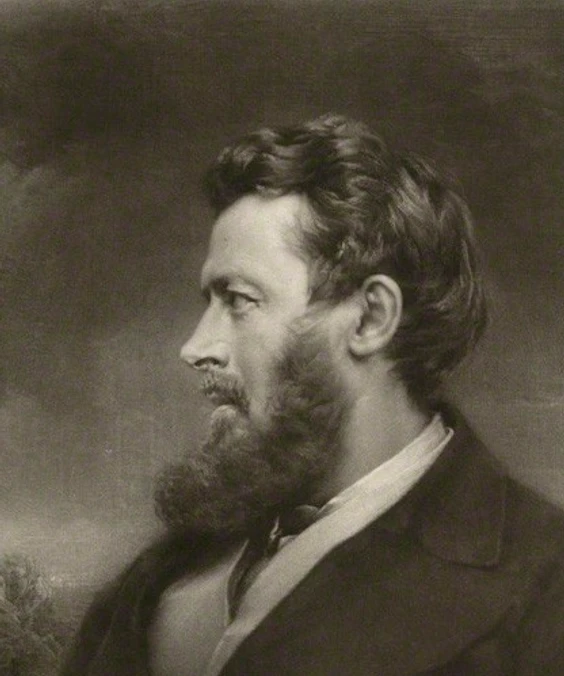
Edmund Burke
The Public Record
Edmund Burke was an Anglo-Irish writer, philosopher, and politician who is widely credited as the founder of the cultural and political philosophy of conservatism. Regarded as one of the most influential conservative thinkers and political writers of the 18th century, Burke spent the majority of his career in Great Britain and was elected as a member of Parliament (MP) from 1766 to 1794 in the House of Commons of Great Britain with the Whig Party. His writings played a significant role in influencing public views and opinions in both Great Britain and France following the French Revolution in 1789, and he remains a major figure in modern conservative circles.
gutenberg.org
They throw the light on one side only of their case; though it is impossible they should not observe that the other side, which is kept in the shade, has its importance too.
They who weakly yield to them will be condemned by history.
They who stir up the people to improper desires, whether of peace or war, will be condemned by themselves.
They perfectly satisfied me of the extreme injustice of that war, and of the falsehood of the colors which, to his own ruin, and guided by a mistaken policy, he suffered to be daubed over that measure.
His adversaries had the better of the argument as he handled it, not as the reason and justice of his cause enabled him to manage it.
The weaker he is in the fund of motives which apply to our avarice, to our laziness, and to our lassitude, if he means to carry the war to any end at all, the stronger he ought to be in his addresses to our magnanimity and to our reason.
Whilst he holds out no inducements to the wise nor bribes to the avaricious, he may be forced by a vulgar cry into a peace ten times more ruinous than the most disastrous war.
He can only maintain it by an appeal to the higher; and to those in whom that higher part is the most predominant he must look the most for his support.
The crowd readily followed the politicians in the cry for a war which threatened little bloodshed, and which promised victories that were attended with something more solid than glory.
As for us, who compose the far larger, and what I call the far better part of the people, let me say, that we have not been quite fairly dealt with, when called to this deliberation.
The more forcibly I drive my arguments against their system, so as to make an impression where I wish to make it, the more strongly I rivet them in their sentiments.
How comes it, that now, for the first time, men think it right to be governed by the counsels of their enemies?
On our part, why are all the rules of prudence, as sure as the laws of material Nature, to be, at this time reversed?
If I have reason to conceive that my enemy, who, as such, must have an interest in my destruction, is also a person of discernment and sagacity, then I must be quite sure, that, in a contest, the object he violently pursues is the very…
I have a good opinion of the general abilities of the Jacobins: not that I suppose them better born than others; but strong passions awaken the faculties; they suffer not a particle of the man to be lost.
They who wish to unite themselves to your enemies naturally desire that you should disarm yourself by a peace with these enemies.
Above all, good men do not suspect that their destruction is attempted through their virtues.
All men that are ruined are ruined on the side of their natural propensities.
The majority, the other four fifths, is perfectly sound, and of the best possible disposition to religion, to government, to the true and undivided interest of their country.
We must not always judge of the generality of the opinion by the noise of the acclamation.
This minority is numerous enough to make a mighty cry for peace, or for war, or for any object they are led vehemently to desire.
If they cannot have it by English cabal, they will make no sort of scruple of having it by the cabal of France, into which already they are virtually incorporated.
On these, no reason, no argument, no example, no venerable authority, can have the slightest influence.
Of these four hundred thousand political citizens, I look upon one fifth, or about eighty thousand, to be pure Jacobins, utterly incapable of amendment, objects of eternal vigilance, and, when they break out, of legal constraint.
Politicians like Edmund Burke