By these hazarded speculations France is more approximated to us in constitution than in situation; and in proportion as we recede from the ancient system of Europe, we approach to that connection which alone can remain to us, a close…
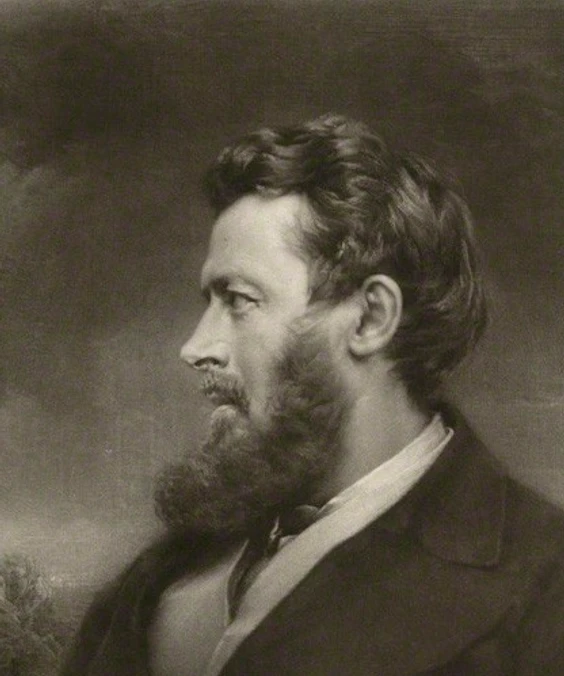
Edmund Burke
The Public Record
Edmund Burke was an Anglo-Irish writer, philosopher, and politician who is widely credited as the founder of the cultural and political philosophy of conservatism. Regarded as one of the most influential conservative thinkers and political writers of the 18th century, Burke spent the majority of his career in Great Britain and was elected as a member of Parliament (MP) from 1766 to 1794 in the House of Commons of Great Britain with the Whig Party. His writings played a significant role in influencing public views and opinions in both Great Britain and France following the French Revolution in 1789, and he remains a major figure in modern conservative circles.
gutenberg.org
We have discovered, it seems, that all which the boasted wisdom of our ancestors has labored to bring to perfection for six or seven centuries is nearly, or altogether, matched in six or seven days, at the leisure hours and sober intervals…
Let them open their own eyes, which degeneracy and pusillanimity have shut from the light that pains them, and let them not vainly seek their security in a voluntary ignorance of their danger.
At the close of the war, almost in every instance victorious, all Europe was astonished, even those who received them were astonished, at his concessions.
Whatever his inward intentions may have been, did Louis the Fourteenth ever make a declaration that the true bounds of France were the ocean, the Mediterranean, and the Rhine?
It is impossible not to pause here for a moment, and to consider the manner in which such declarations would have been taken by your ancestors from a monarch distinguished for his arrogance,--an arrogance which, even more than his…
On their part, they assure you formally and publicly, that they will give you nothing in the name of indemnity or security, or for any other purpose.
You treat with the Regicides without any reservation at all.
We would not treat with the monarchy, weakened as it must obviously be in any circumstance of restoration, without a reservation of something for indemnity and security,--and that, too, in words of the largest comprehension.
No man ever declared to another a rancor towards him which he did not feel.
But when a man declares himself your unalterable enemy!
Men are too apt to be deceitful enough in their professions of friendship, and this makes a wise man walk with some caution through life.
This is their impure Vestal fire that never is extinguished: and never will it be extinguished, whilst the system of Regicide exists in France.
With them everything else perishes almost as soon as it is formed; this hatred alone is immortal.
It shows in what part it is, and with what a weapon, they mean a deadly blow at the heart of Great Britain.
I have a moral assurance that the representation of the Regicide Directory is absolutely false and groundless.
For my part, I do not believe the fact to be so as they represent it.
Men would reason, not unplausibly, that it would be better to get rid of the monarchy at once than to suffer that which was instituted, and well instituted, to support the glory of the nation, to become the instrument of its degradation…
The supreme majesty of a monarch cannot be allied with contempt.
All authority, in a great degree, exists in opinion: royal authority most of all.
When by insult after insult they have rendered the character of sovereigns vile in the eyes of their subjects, they know there is but one step more to their utter destruction.
The conduct of the Regicide faction is perfectly systematic in every particular, and it appears absurd only as it is strange and uncouth, not as it has an application to the ends and objects of their policy.
I hope that those who yet wear royal, imperial, and ducal crowns will learn to feel as men and as kings: if not, I predict to them, they will not long exist as kings or as men.
These are not days in which monarchs value themselves upon the title of great: they are grown philosophic: they are satisfied to be good.
What a pity it is, that he, who loved France so well as to chastise it, was not now alive, by an unsparing use of the rod (which, indeed, he would have spared little) to give them another instance of his paternal affection!
Politicians like Edmund Burke